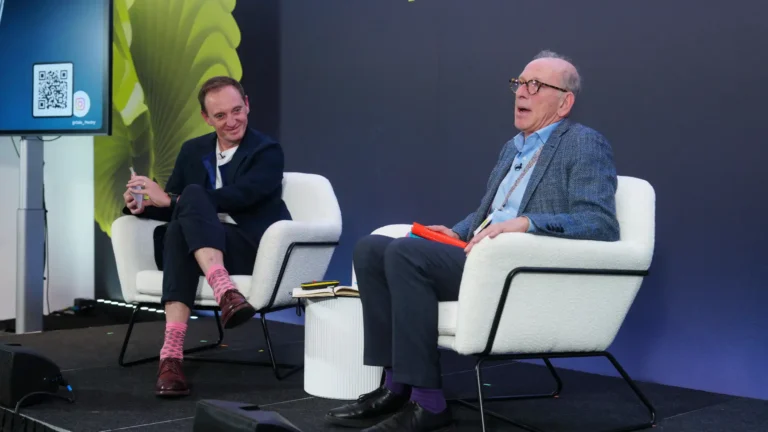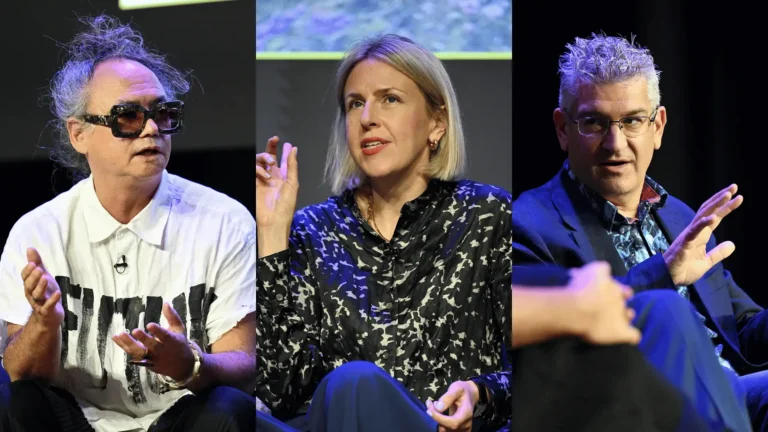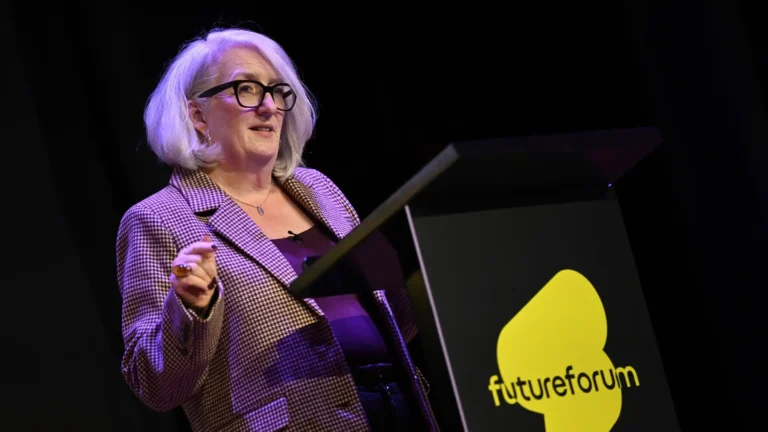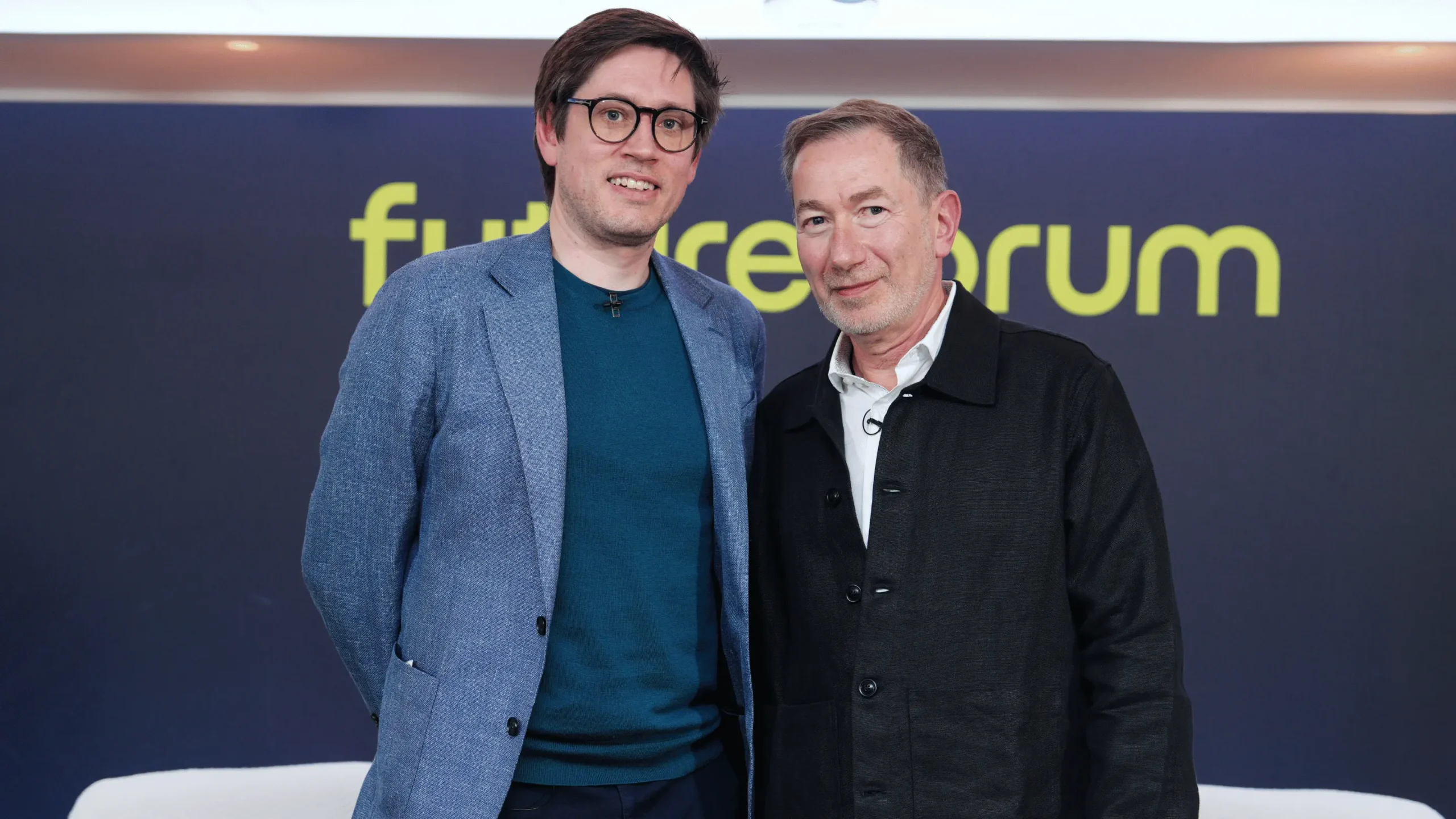
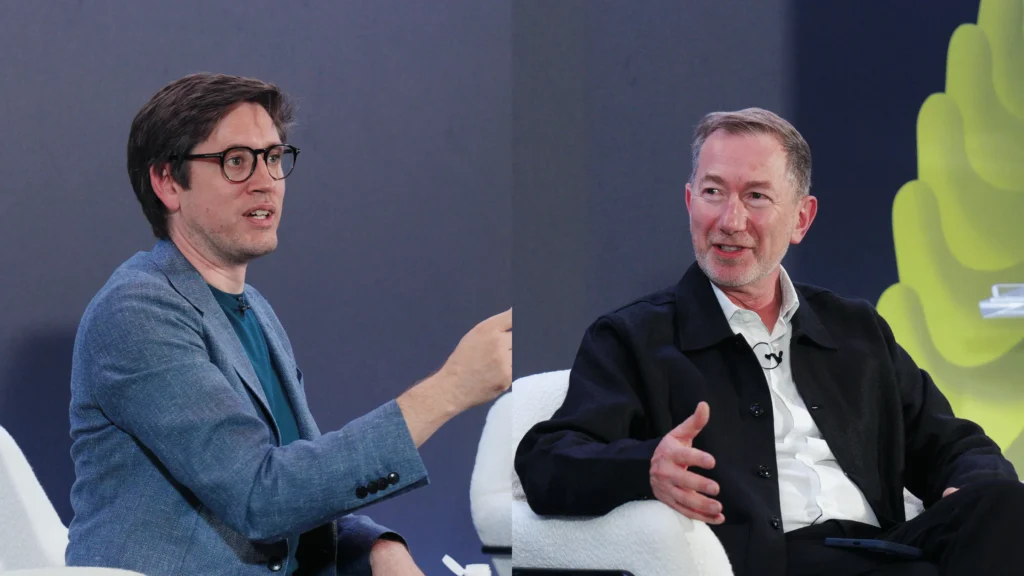
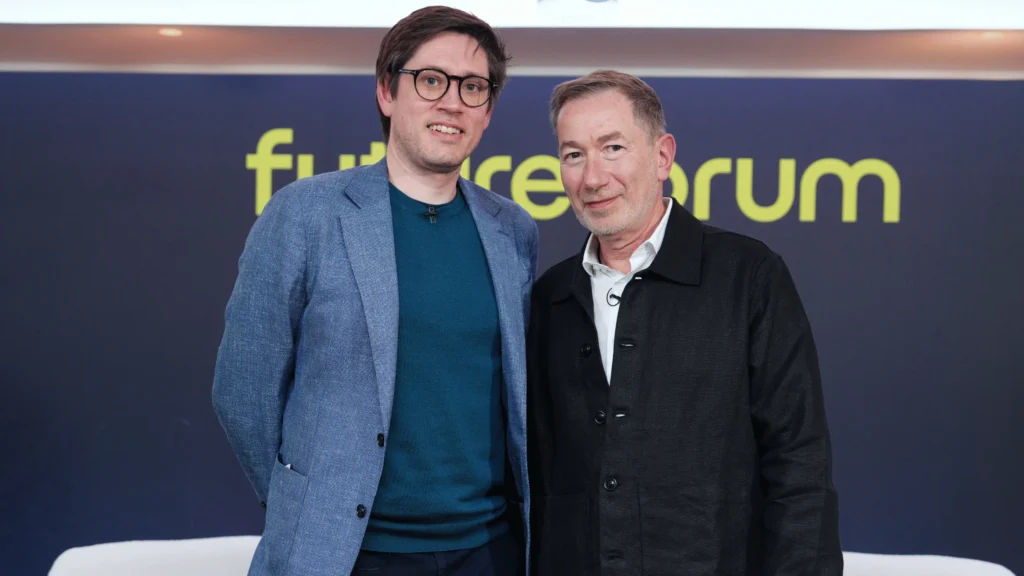
Professor Neil Campbell and Jeremy Silver introduced UCL’s new Creative Intelligence Centre at Future Forum, making the case for technology shaped with creative people rather than imposed upon them.
Much of the discussion about generative AI begins with a threat: will machines replace the work of artists, designers and other creative professionals?
At Future Forum, Jeremy Silver and Professor Neil Campbell offered a different starting point. What if research could put creative people back in control of how these tools are developed?
The pair introduced the thinking behind UCL’s Creative Intelligence Centre, a new interdisciplinary initiative drawing on computer science and collaborations with the arts and creative industries.
From replacement to agency
Campbell and Silver argued that AI systems should not be treated as one-size-fits-all tools. Creative practitioners need meaningful choices over the models, data and processes that shape their work.
One analogy compared AI systems with different paintbrushes: a creator might select a commercial model for one purpose and a more controllable open model for another.
The point was not that technology makes creative judgement unnecessary. It was that judgement should determine which technology is useful and what it should be allowed to do.
Research with the people who will use it
The centre aims to bring researchers into closer contact with artists, designers, organisations and startups. Rather than developing tools in isolation and announcing them when finished, it wants real creative challenges to help shape the research agenda.
The speakers acknowledged difficult questions around intellectual property, consent and control. Existing legal and commercial frameworks have not fully caught up with the possibilities of increasingly capable AI models.
But they argued that uncertainty is a reason to work on better approaches now, not a reason to stop imagining them.
Creativity is collaborative
A recurring theme was the value of people who can work across disciplines. Campbell described researchers learning from artists and artists developing greater technical understanding, with each side influencing the other.
That approach could affect not only the tools produced but the people who go on to use and develop them.
The presentation offered a practical vision of a future where human creativity remains central – not because AI is ignored, but because its possibilities are explored with the people whose work it will affect.
The real opportunity may be to move beyond telling a machine what to generate, and towards building creative systems that expand what people can imagine and make.
Related podcasts

What Should Young People Change About Education? | The BRIT School Students Shaping Their Future
What happens when young creatives are given the freedom to explore, collaborate and find their own voice? In this special edition of TOMORROW: The Future Forum podcast, Oli Barrett MBE speaks with BRIT School students Jaden and Annie about creativity, education, ambition and the future they want to help…
The Future Needs Original Thinkers | Stuart Worden OBE on Curiosity, Creativity & Ambition
What can the BRIT School teach us about the future of education, creativity, leadership and work? In this episode of Future Forum, Oli Barrett MBE is joined by Stuart Worden OBE, Principal of the BRIT School, to explore what it takes to develop original thinkers in a rapidly changing world.…

The Future of Creativity: Why AI Won’t Replace Human Imagination with Julian Douglas
What happens when one of the world’s leading creative agency CEOs looks at the future of AI, creativity and human potential? In this episode of Future Forum, Oli Barrett MBE sits down with Julian Douglas (Dougie), Group CEO of VCCP, Chair of UK Advertising and one of the most influential…
Related speakers
-

Kerensa Samanidis General Manager of BBC iPlayer
Kerensa’s profile -
Stephanie Anani Solutions Engineer of OpenAI
Stephanie’s profile