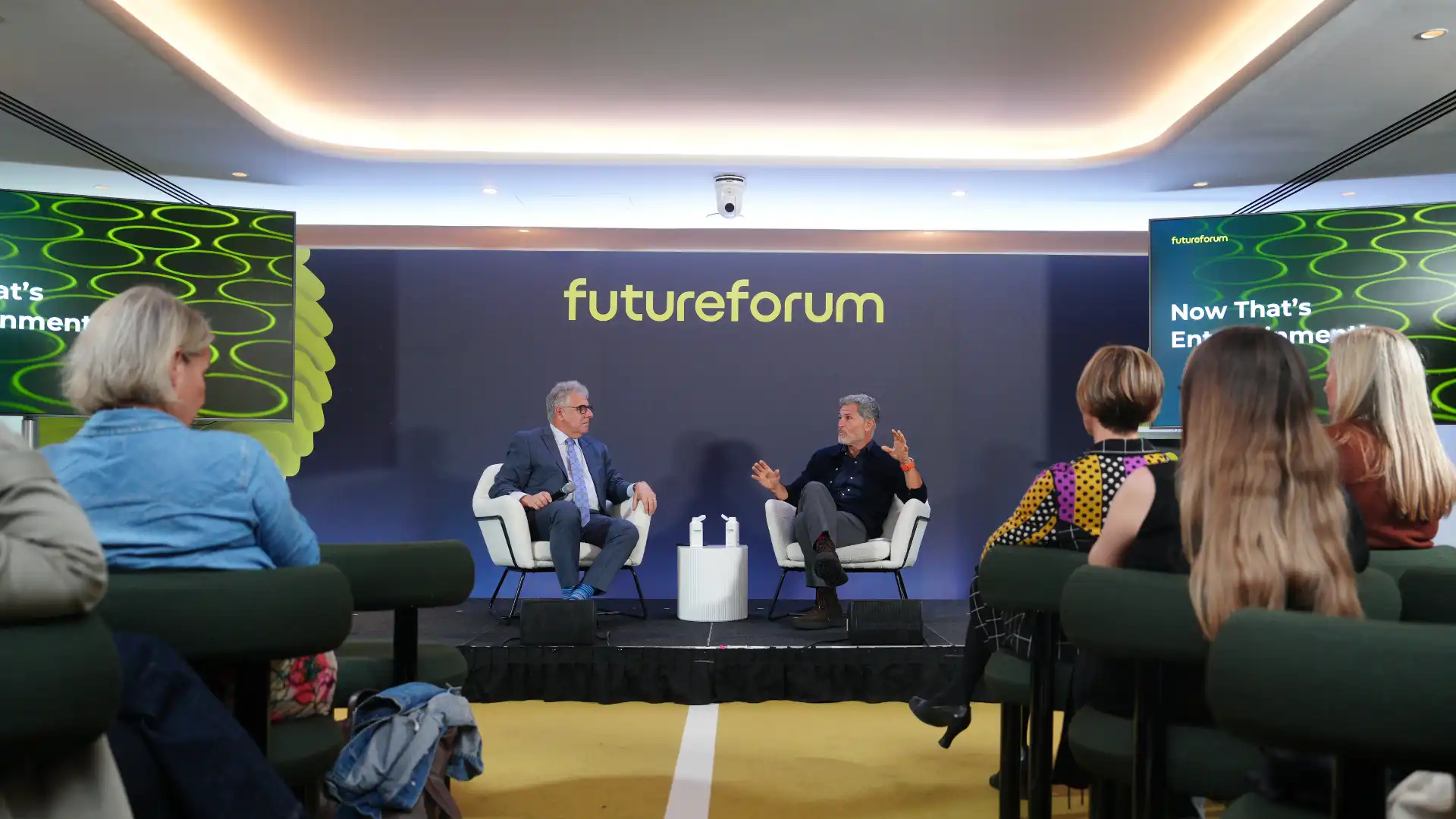
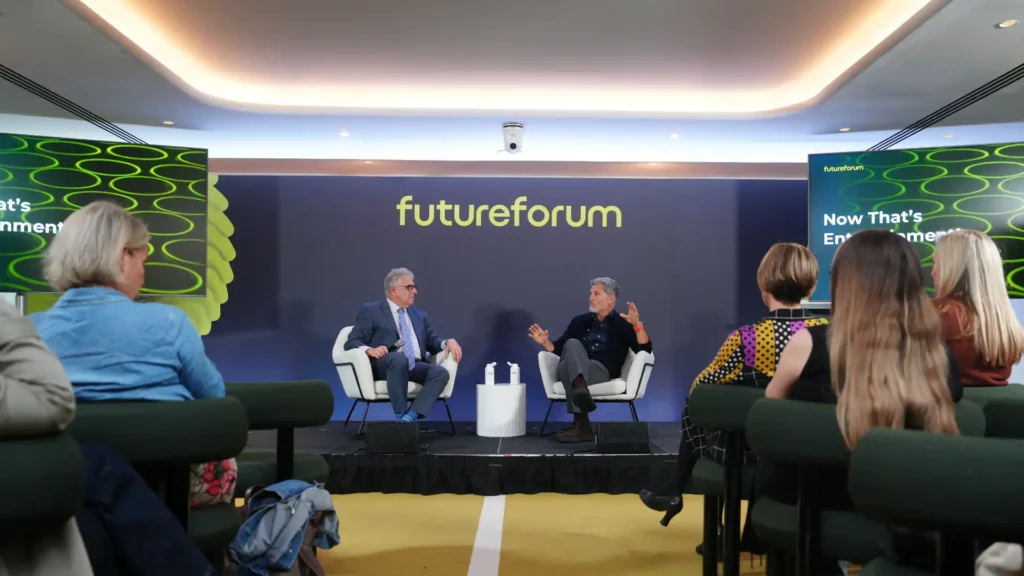
Britain is a creative production powerhouse, but global platforms are rewriting the industry’s economics. Josh Berger CBE joined Future Forum Founder Matt Scheckner to explore what happens to original ideas in a world of consolidation.
The business of entertainment is changing faster than the institutions that helped build it. Streaming platforms have expanded audiences and production budgets, while mergers and technology companies reshape where power sits.
For Josh Berger CBE, whose career included senior leadership at Warner Bros., those changes are both commercial and personal. In conversation with Matt Scheckner, he reflected on the emotional cost of consolidation and what it might mean for the people making films and television.
More content, greater concentration
Berger argued that companies such as Amazon and Apple operate with fundamentally different economics from traditional studios. Entertainment can support much larger businesses, from subscriptions to retail ecosystems, leaving established media companies competing with organisations whose resources and priorities are unlike their own.
That does not make investment from technology companies inherently harmful, he noted. They can employ talented teams and finance ambitious productions. The concern is whether increasing concentration leaves enough room for new creative risks.
Britain’s advantage isn’t guaranteed
The UK has built a formidable film and high-end television production sector, supported by skilled crews, creative talent and its production environment. Yet Berger warned that the industry competes internationally on cost and incentives.
New studio developments reflect decisions made during a production boom. Whether those spaces remain fully occupied depends on how commissioning patterns, tax policy and global competition evolve.
The question for Britain is not simply how much content it can produce. It is how to retain talent, maintain a competitive ecosystem and capture more of the value created here.
The next idea still needs a champion
Berger returned to Harry Potter as an example of something no financial model can manufacture on demand: the original creative spark. The franchise’s reach depended on an imaginative work finding people willing to recognise its potential and invest in bringing it to audiences.
That human chain of discovery, judgement and execution remains vital, even when technology changes the distribution landscape.
He also highlighted the BRIT School and the importance of giving young creative talent space to develop. Great careers don’t begin when someone becomes commercially successful; they begin when potential is recognised and nurtured.
The Future Forum takeaway was less about defending an old entertainment model than protecting the conditions for the next unexpected success. Who will have the freedom – and the confidence – to back it?
Related podcasts

What Should Young People Change About Education? | The BRIT School Students Shaping Their Future
What happens when young creatives are given the freedom to explore, collaborate and find their own voice? In this special edition of TOMORROW: The Future Forum podcast, Oli Barrett MBE speaks with BRIT School students Jaden and Annie about creativity, education, ambition and the future they want to help…
The Future Needs Original Thinkers | Stuart Worden OBE on Curiosity, Creativity & Ambition
What can the BRIT School teach us about the future of education, creativity, leadership and work? In this episode of Future Forum, Oli Barrett MBE is joined by Stuart Worden OBE, Principal of the BRIT School, to explore what it takes to develop original thinkers in a rapidly changing world.…

The Future of Creativity: Why AI Won’t Replace Human Imagination with Julian Douglas
What happens when one of the world’s leading creative agency CEOs looks at the future of AI, creativity and human potential? In this episode of Future Forum, Oli Barrett MBE sits down with Julian Douglas (Dougie), Group CEO of VCCP, Chair of UK Advertising and one of the most influential…
Related speakers
-
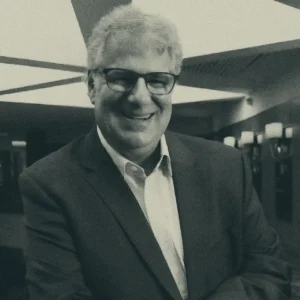
Matt Scheckner Founder of Future Forum
A convenor who has spent his career building the rooms where unlikely worlds meet.
Matt’s profile