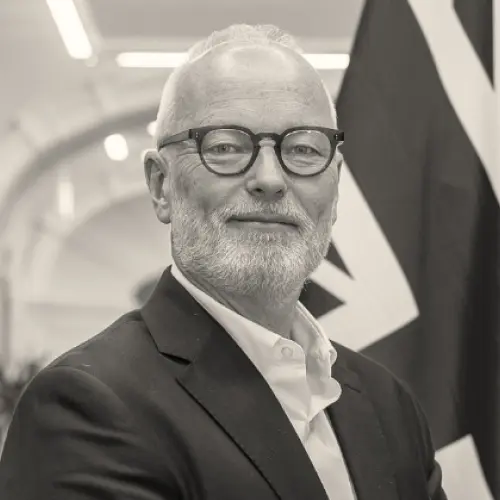
How David 'Shingy' Shing left their lane.
David 'Shingy' Shing moved from graphic design into digital marketing – then created the role of Digital Prophet to explore where technology, culture and creativity were heading next.
David Shing started out as a designer.
He trained at Billy Blue College in Sydney and began his career in creative and digital businesses in Australia and the United States, working through a period when the internet was still inventing its own rules. He has described the progression simply: he started as a designer, “fell” into marketing and gradually moved deeper into digital.
In 2007, he joined AOL as Marketing Director for Europe. Three years later he became VP of Media and Marketing for AOL International, combining responsibility for how the company presented itself with how its content reached audiences.
Then he changed the title.
In 2011, AOL wanted him to move to New York in an evangelist role. Shingy thought the technology industry already had enough evangelists. “Creative Director” didn’t quite fit either. So he called himself The Digital Prophet.
The joke became a serious job.
Shingy’s role was to identify emerging shifts in technology and culture, turn them into stories people could understand and challenge brands to think differently about what was coming next. He became a fixture at events including Cannes Lions, SXSW and TEDx, talking about everything from the attention economy and social media to the relationship between technology and human behaviour.
He left Verizon Media in 2019 and now works independently as what he calls a Creative Omnivore – advising and creating with organisations including LVMH, Chanel and Nike while continuing to speak and write about culture, creativity and technology.
And as AI has moved into creative work, the question has evolved again. Shingy argues that access to the same tools makes human judgement, taste and point of view more important, not less – that technology can accelerate making, but it cannot decide what is worth making.
He made up a title because the existing ones didn’t fit.
Fifteen years later, refusing the obvious category is still largely the point.
Join the conversation with <David 'Shingy' Shing>

Flagship Event 2026
Two days of focused discussion, cross-sector sessions, hands-on studios and unforgettable gatherings.