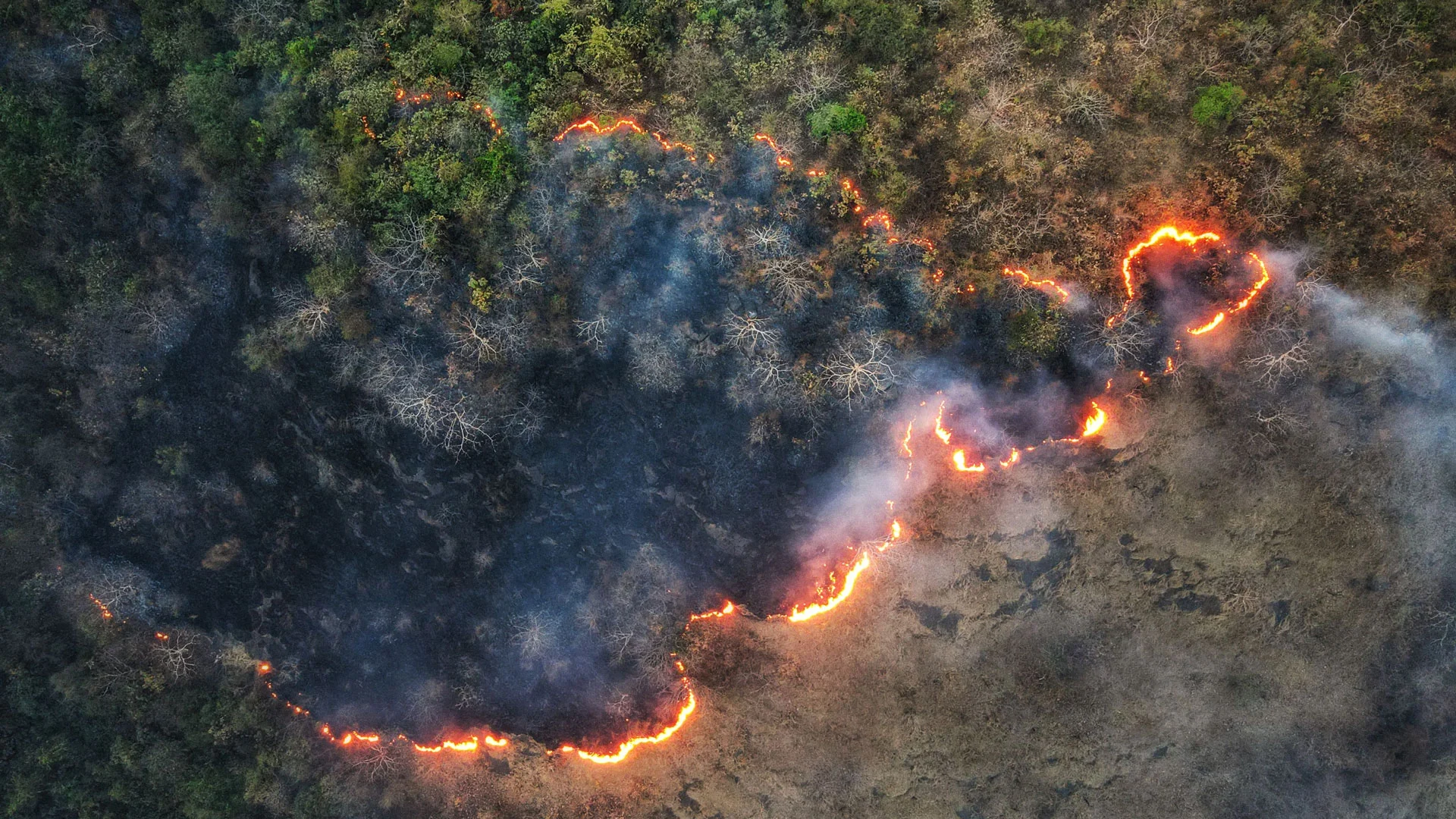
From fighting wildfires to protecting deep-sea ecosystems, artificial intelligence is opening up new possibilities for environmental protection. But turning technological breakthroughs into meaningful action remains the bigger challenge.
Could AI become one of our most powerful tools for tackling climate change and environmental destruction?
A new Forbes article explores how nine pioneering organisations are using artificial intelligence to detect threats, predict disasters and better understand the natural world.
Here are five innovations that caught our attention – and what they tell us about the future of environmental protection.
1. Detecting wildfires before flames appear
Dryad Networks has developed solar-powered sensors that detect gases released by smouldering fires, potentially identifying danger before visible flames emerge.
In July 2026, its technology detected a wildfire in Italy within minutes. But firefighters struggled to reach the remote location, highlighting the importance of connecting early warnings with effective emergency responses.
2. Responding to fires in under ten minutes
During the XPRIZE Wildfire competition, Anduril Industries demonstrated an AI-powered system that detected a fire in just two minutes and 32 seconds and accurately attacked it within ten minutes.
The challenge now is proving such systems can operate reliably beyond controlled demonstrations.
3. Predicting where wildfires will spread
Researchers from the SIRIUS Wildfire Alliance are combining AI, satellite observations and physics-based modelling to forecast how fires might develop.
During testing, technology developed by alliance member Pinepeak generated six-hour fire-spread scenarios in under 20 seconds, potentially helping emergency teams make faster, better-informed decisions.
4. Exploring the ocean nearly 40 times faster
OceanX is using AI to analyse underwater footage and identify marine organisms.
Its SeaSwipe technology processed more than 14,000 video frames in 1.2 hours – a task estimated to take 47.5 hours manually.
The findings could help scientists better understand vulnerable marine ecosystems and inform conservation efforts.
5. Making environmental intelligence more accessible
MyRadar is exploring how satellite data and AI could deliver environmental warnings to wider audiences.
With an established weather platform reaching millions of users, it demonstrates the potential to connect sophisticated environmental intelligence with the people who need it.
From innovation to impact
The common thread across these breakthroughs is that better technology doesn’t automatically deliver better outcomes.
Reliable infrastructure, investment, scientific expertise and collaboration are all essential to translating innovation into protection.
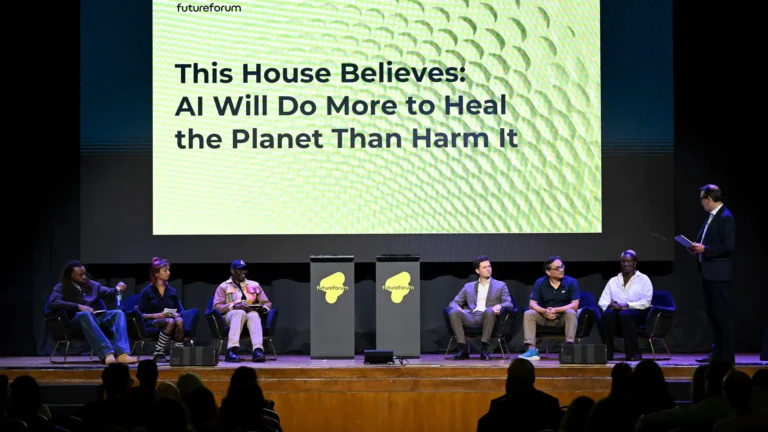
It’s a challenge that speaks directly to Future Forum’s ambition to connect different disciplines and turn ideas into action.
The question isn’t simply what AI can do for the planet, but how we work together to make it happen.
Explore the innovations and the people behind them in the full Forbes article.
Related podcasts

Can Britain Lead the Renewable Energy Revolution? Jürgen Maier CBE on AI, Energy & Manufacturing
Can Britain become the world’s next clean energy superpower? In this episode of Tomorrow – The Future Forum Podcast, Oli Barrett MBE sits down with Jürgen Maier CBE, Chair of Great British Energy and former CEO of Siemens UK, to explore how renewable energy, AI and advanced manufacturing could reshape…
Inside London’s Innovation Hub | Jodie Eastwood on the Future & Why Curiosity Matters
What happens when AI companies, scientists, universities, cultural institutions and local communities become neighbours? Jodie Eastwood, CEO of London’s Knowledge Quarter, believes some of the world’s biggest problems could be solved by bringing very different worlds together. In this episode of Tomorrow: The Future Forum, Jodie joins Oli Barrett MBE…

Universities Are the UK’s Innovation Engine | Vivienne Stern MBE on AI, Skills & the Future of Work
What will universities become in the age of AI? In this episode of Tomorrow: The Future Forum, Oli Barrett MBE sits down with Vivienne Stern MBE, Chief Executive of Universities UK, to explore how universities, technology and the world of work are changing and what the next decade could look…
Related speakers
-

Prof. Tom Oliver Professor of Applied Ecology and Associate Pro-Vice-Chancellor for Research (Environment) of University of Reading
Tom’s profile -

Katherine Zscharnagk Senior Sustainability Strategist of Forum for the Future
Katherine’s profile