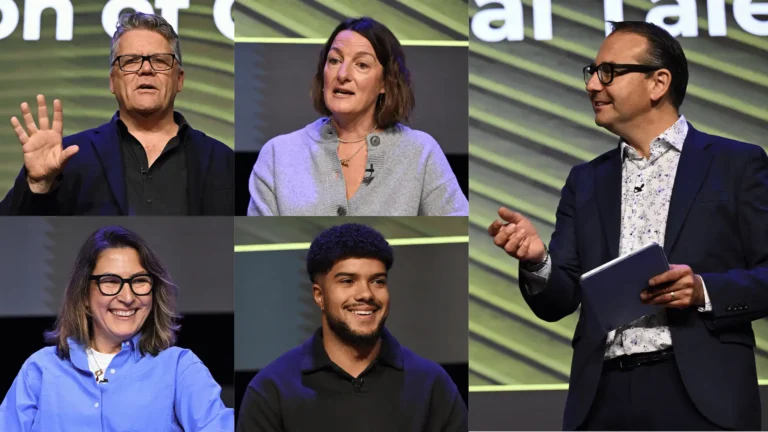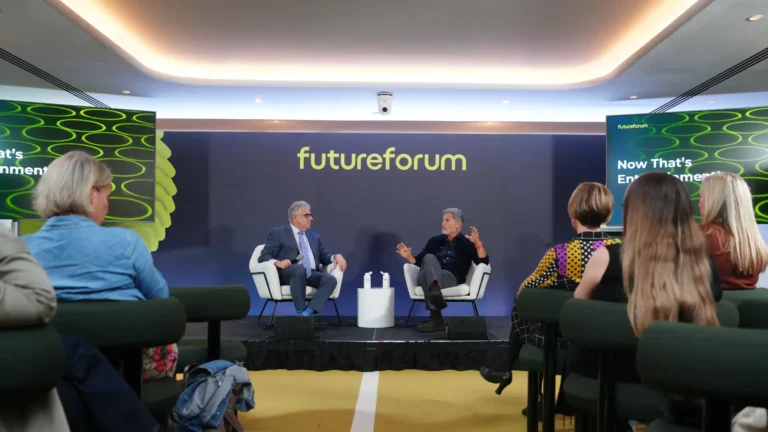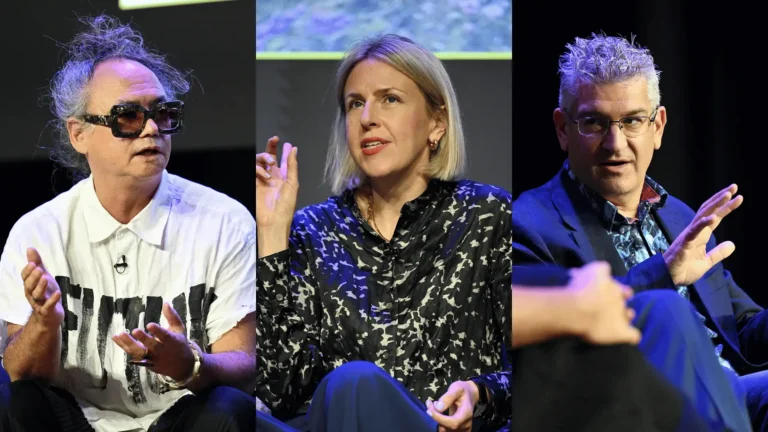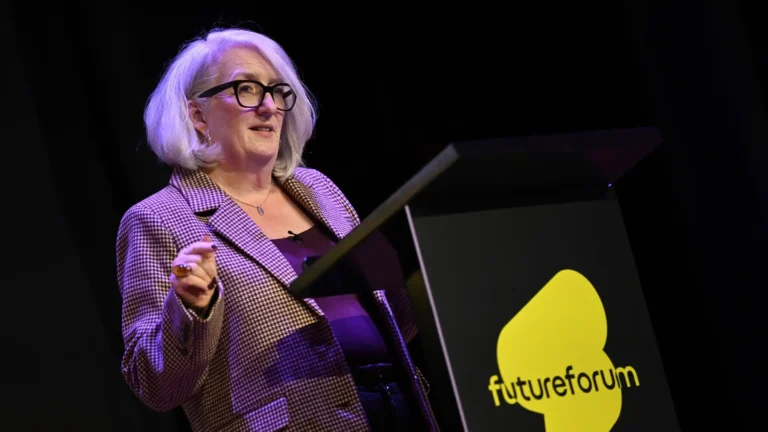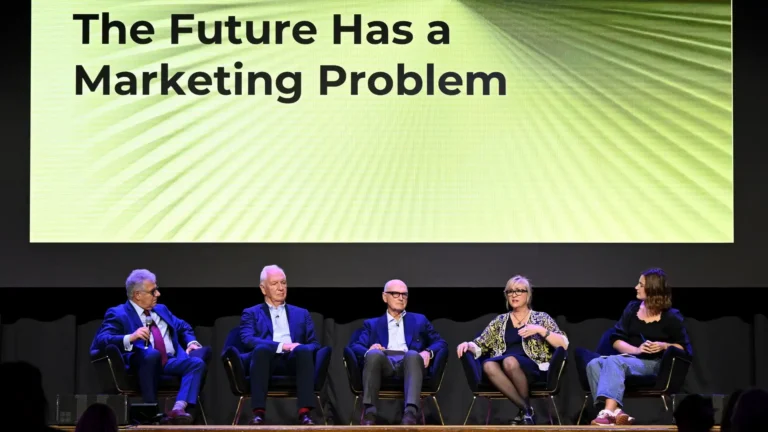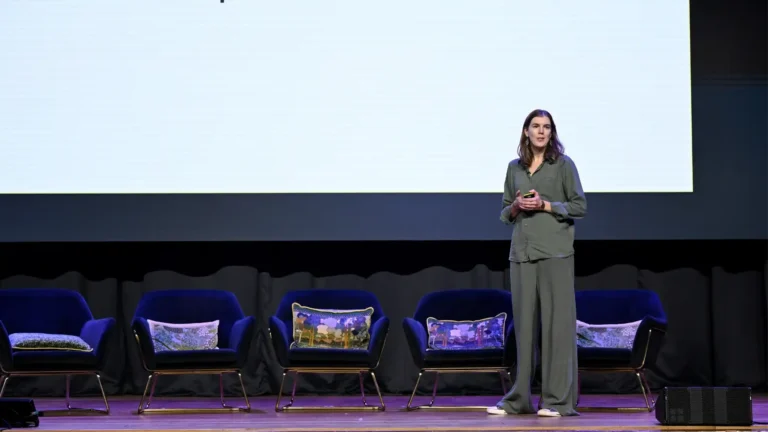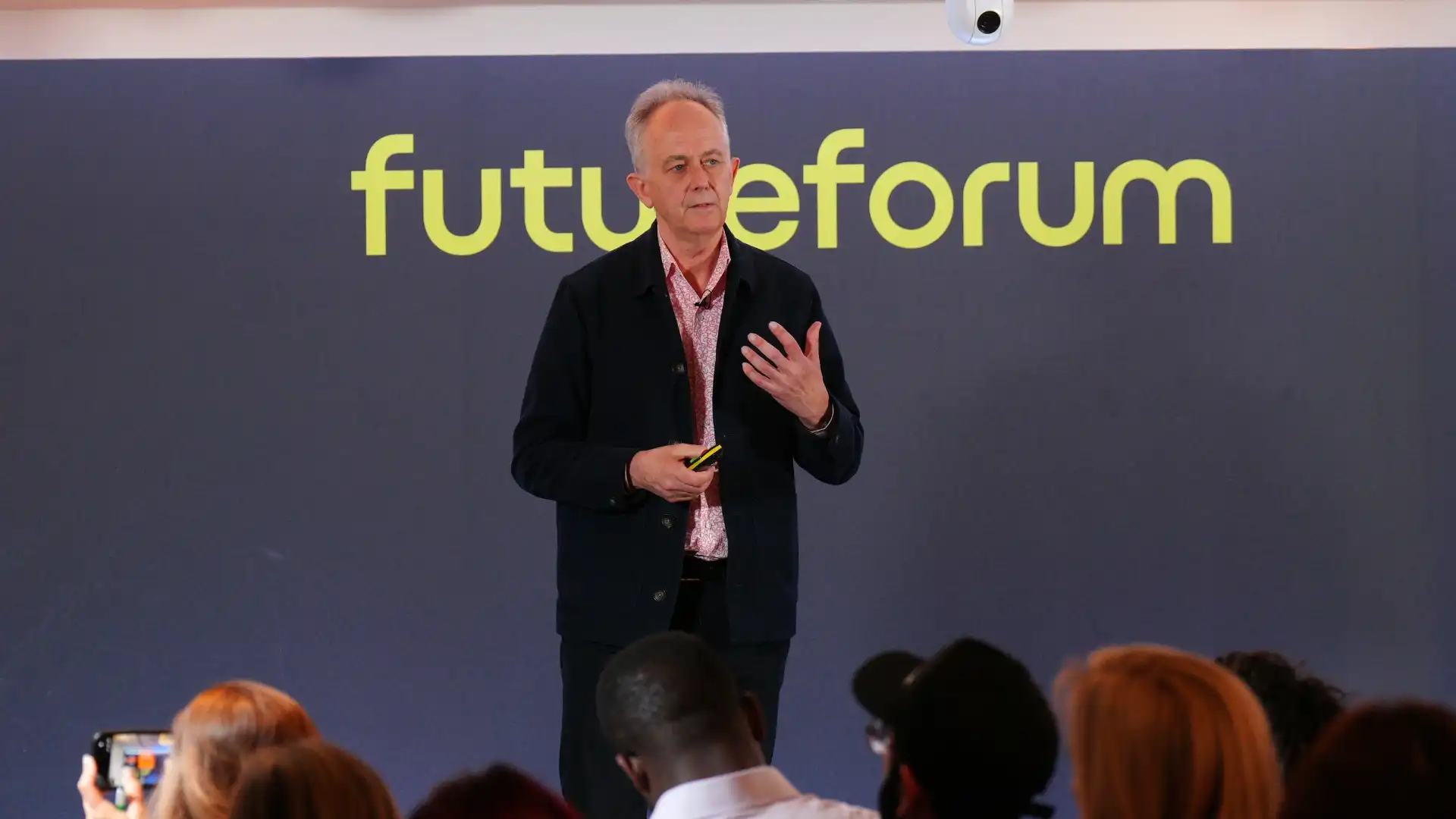
Algorithms are getting better at predicting what we want. But are they making our world less interesting? At Future Forum, Adam Morgan, founder of eatbigfish, explored why surprise could be one of our most powerful tools for creating change.
Open your favourite streaming service and you’ll find an endless selection of things you might enjoy.
Your music, news, shopping and social feeds work much the same way – learning what you like and delivering more of it.
Convenient? Absolutely. But there’s a catch.
As algorithms become better at predicting our preferences, are they removing something we fundamentally need: surprise?
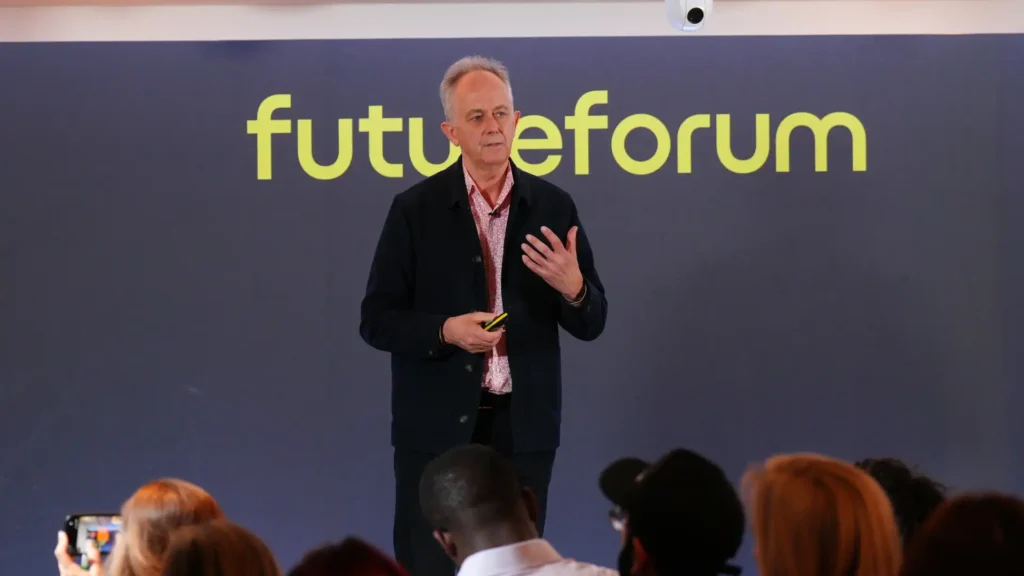
At Future Forum, Adam Morgan, founder of eatbigfish, argued that the unexpected can challenge assumptions, change behaviour and create lasting impact.
Why surprise matters
Morgan described the human brain as a prediction machine, constantly anticipating what comes next.
When something unexpected happens, that process is interrupted. We pay attention, respond emotionally and are more likely to remember the experience.
For Morgan, surprise shouldn’t be an afterthought. It should be part of the strategy from the beginning.
But not all surprises have the same effect.
The short ‘oh’ and the long ‘oh’
The short ‘oh’ is the unexpected moment that grabs attention.
Morgan highlighted a luxury fashion campaign featuring Dame Maggie Smith, whose appearance alongside younger actors made the campaign memorable.
The long ‘oh’ goes further. It challenges an existing belief and makes someone think: I hadn’t considered it like that before.
That shift can change behaviour.
Consider Octopus Energy proactively telling a customer they’re paying too much, or Monzo allowing customers to receive their salary a day early.
Both challenge expectations of how energy companies and banks behave.
The surprise isn’t simply what these organisations do. It’s that they behave differently from what customers have come to expect.
And that can build trust.
Creating the unexpected
Morgan’s argument extends well beyond advertising.
A teacher can use an unexpected fact to spark curiosity. A leader can challenge an accepted assumption. An organisation can present a familiar problem from an entirely different perspective.
The point isn’t to be different for the sake of it. Surprise needs purpose.
And in a world where larger organisations can often outspend smaller competitors, challenging conventions can become an advantage.Making room for surprise
We’re becoming extraordinarily good at making life personalised, predictable and convenient.
But what happens when we’re so good at giving people what they expect that we stop introducing them to anything new?
Progress often begins with something unexpected – a conversation outside our field, an idea borrowed from another industry, or a perspective that challenges our own.
Perhaps our greatest advantage isn’t predicting the future.
It’s remaining open to being surprised by it.
Related podcasts

What Should Young People Change About Education? | The BRIT School Students Shaping Their Future
What happens when young creatives are given the freedom to explore, collaborate and find their own voice? In this special edition of TOMORROW: The Future Forum podcast, Oli Barrett MBE speaks with BRIT School students Jaden and Annie about creativity, education, ambition and the future they want to help…
The Future Needs Original Thinkers | Stuart Worden OBE on Curiosity, Creativity & Ambition
What can the BRIT School teach us about the future of education, creativity, leadership and work? In this episode of Future Forum, Oli Barrett MBE is joined by Stuart Worden OBE, Principal of the BRIT School, to explore what it takes to develop original thinkers in a rapidly changing world.…

The Future of Creativity: Why AI Won’t Replace Human Imagination with Julian Douglas
What happens when one of the world’s leading creative agency CEOs looks at the future of AI, creativity and human potential? In this episode of Future Forum, Oli Barrett MBE sits down with Julian Douglas (Dougie), Group CEO of VCCP, Chair of UK Advertising and one of the most influential…
Related speakers
-

Adam Morgan Founder and Partner of eatbigfish
A strategist who turned being second into a different way of thinking about winning.
Adam’s profile