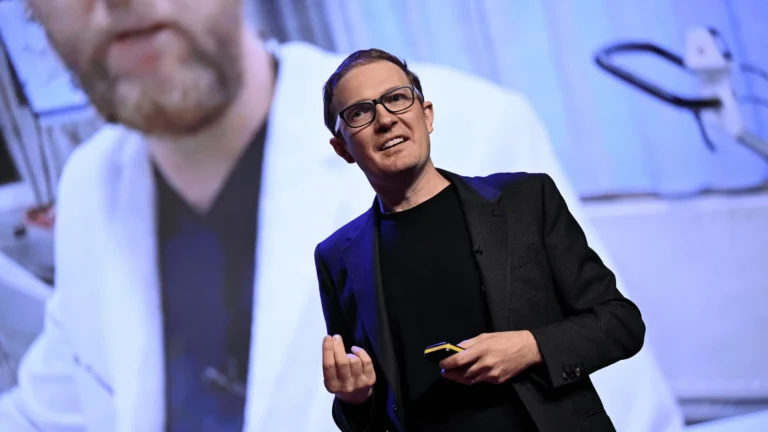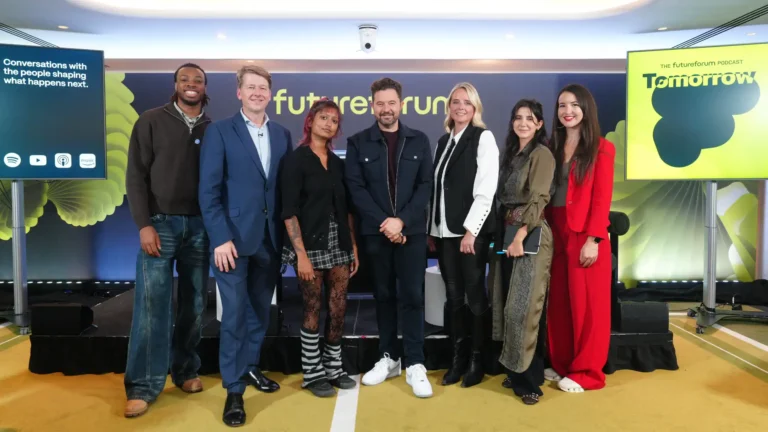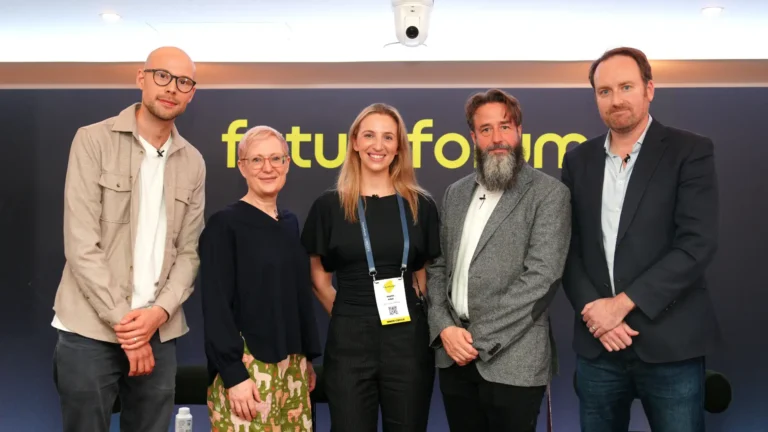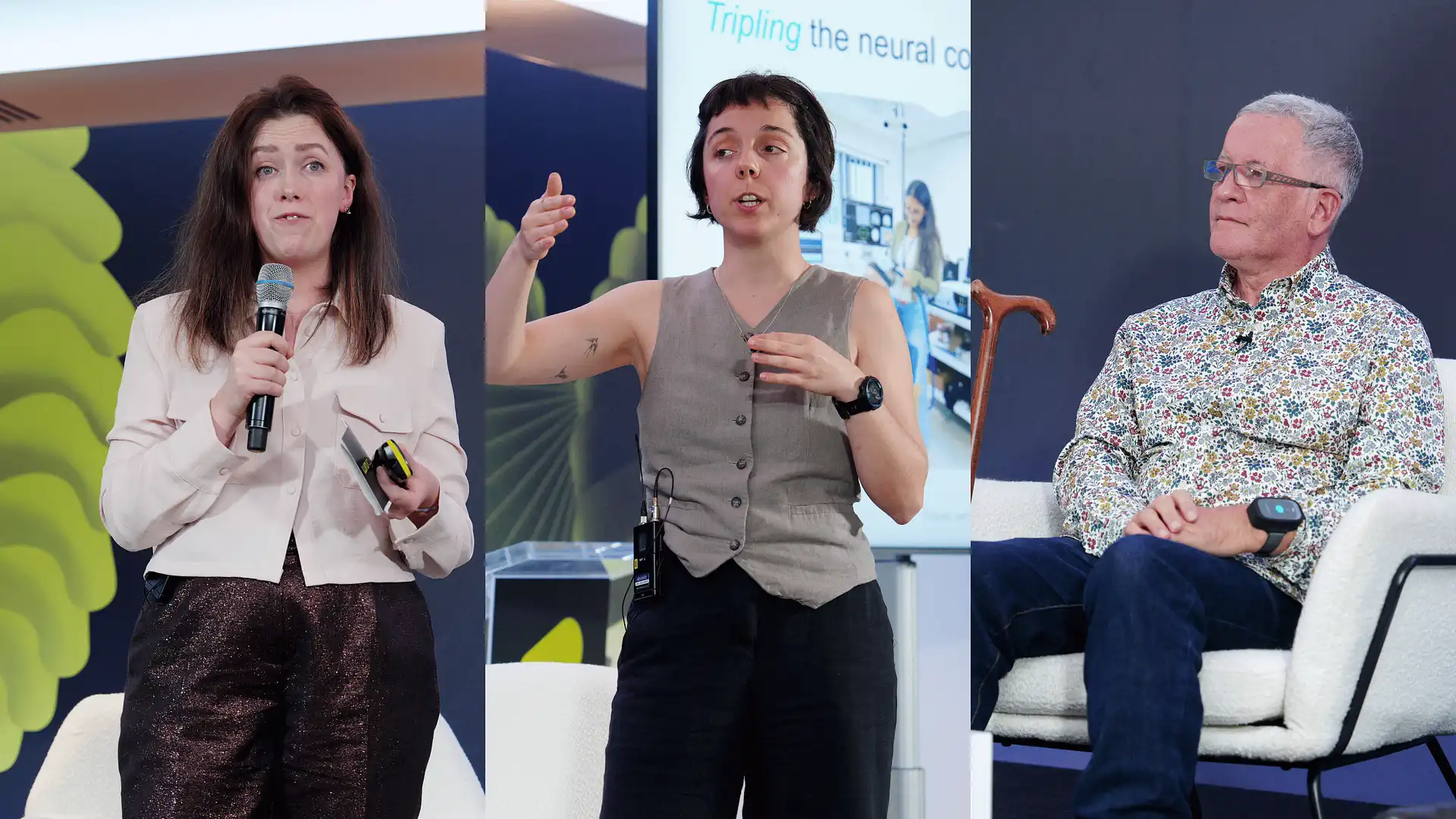
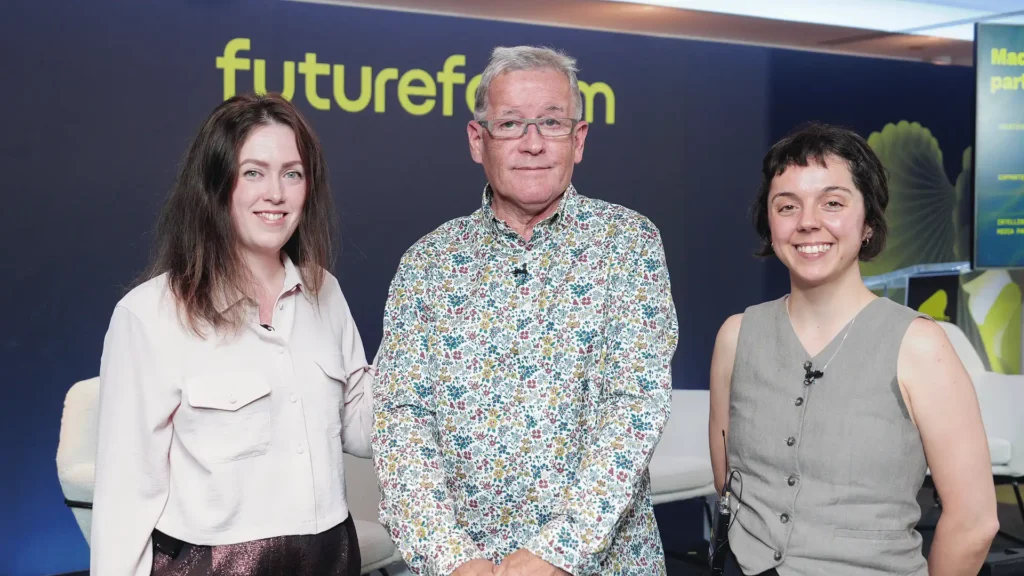
At Future Forum, Dr Laura Salisbury and Mireia Coll explored how emerging rehabilitation technology could help stroke survivors regain movement and independence – with a personal account from Mike, a patient who joined the discussion from the audience.
A stroke can transform someone’s life in moments. Movement, independence and familiar daily tasks may suddenly become difficult or impossible.
At Future Forum, Dr Laura Salisbury, CEO of JUNE, A Platform for Movement, and Mireia Coll, Clinical Researcher and Physiotherapist at UCL, explored whether emerging rehabilitation technology could help the brain and nervous system rebuild abilities that have been lost.
They were joined in the discussion by Mike Poole, a stroke survivor who shared his personal experience of rehabilitation from the audience.
The people left behind by conventional care
The session began with a challenge: not everyone recovers enough movement to access the same rehabilitation opportunities.
For people with very limited initial movement, traditional exercises can be difficult to begin. Salisbury and Coll described their work as an attempt to reach those who have not been able to make sufficient progress through existing rehabilitation pathways.
Their approach focuses on supporting connections between the brain, nerves and movement, with the ambition of making rehabilitation possible for more people.
Recovery has a human story
Mike’s contribution brought the discussion out of the laboratory and into the reality of living with the effects of a stroke.
He described how a stroke abruptly ended his long career as a graphic designer, disrupting not only his professional life but also his independence and everyday routines.
His account offered an important patient perspective on the technology being developed – and a reminder of why progress in rehabilitation matters.
The session also included a demonstration of the technology and explanations of how it is intended to support recovery.
While the early work offers promising possibilities, emerging rehabilitation approaches require careful clinical evaluation to establish their effectiveness across different patient groups.
Stroke recovery varies considerably between individuals, and new technologies must be developed and tested alongside existing specialist care.
What might become possible?
The discussion explored the practical and emotional importance of regaining abilities that others may take for granted. Even modest improvements could make a meaningful difference to someone’s day-to-day life.
It also raised a wider question about the purpose of innovation.
A ‘human upgrade’ doesn’t necessarily mean making someone faster, stronger or more capable than before. Sometimes it means helping someone regain an ability they once had.
By bringing together the perspectives of a technology innovator, a clinical researcher and someone with lived experience of stroke, the session demonstrated why meaningful progress depends on understanding both the science and the people it aims to help.
At Future Forum, that was a powerful reminder: the value of technology should be judged not by how futuristic it looks, but by how well it serves the people who need it.
Related podcasts

How Wearable Tech Is Revolutionising Stroke Recovery with Dr Laura Salisbury
What if millions of people living with paralysis could regain movement—without invasive treatment? In this episode of Tomorrow by Future Forum, host Oli Barrett sits down with Dr Laura Salisbury – Founder and CEO at KnitRegen, to explore a breakthrough in wearable neurotechnology that could transform stroke recovery and rehabilitation.…
Related speakers
-

Dr Laura Salisbury Founder & CEO of JUNE, A Platform for Movement
A designer who took textiles into neuroscience to help restore movement after stroke.
Laura’s profile