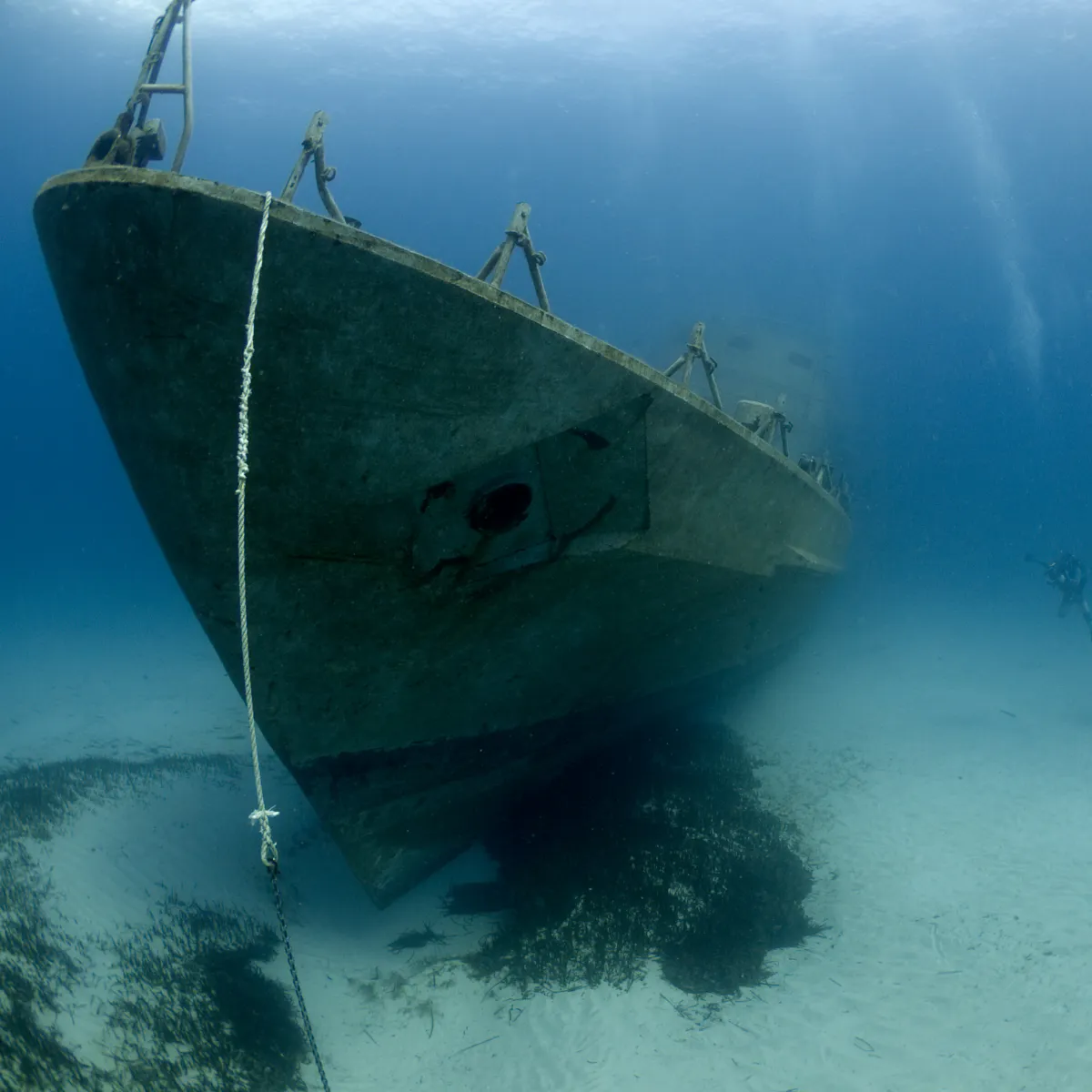
The fastest ocean liner ever built now sits on the Gulf of Mexico seabed. This raises a bigger question: what do we do with big things when their first job is done?
On 11 November, Okaloosa County sank the SS United States off Destin, Florida. The county calls her the world’s largest artificial reef.
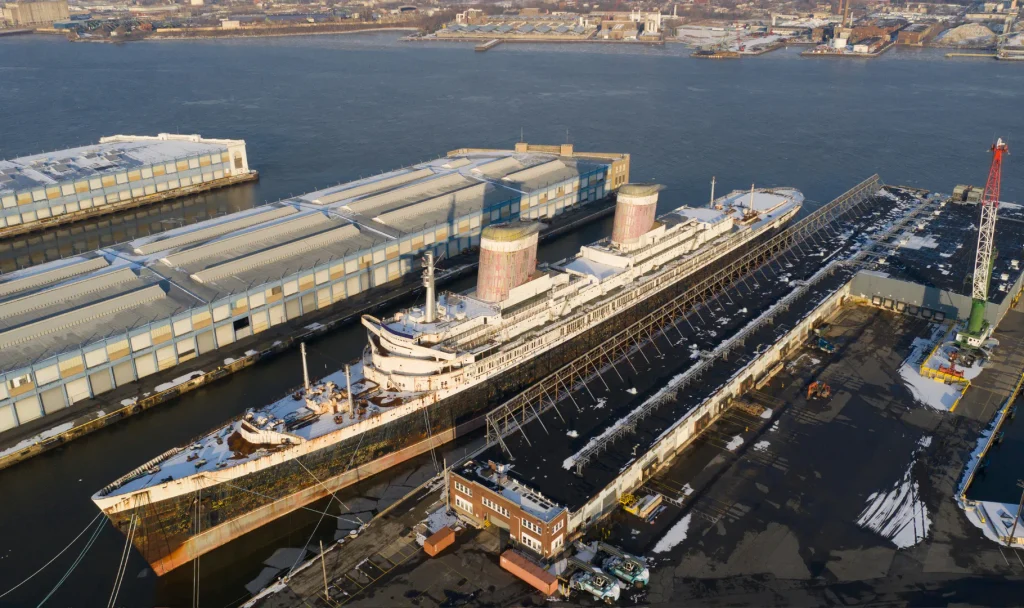
From record-breaking ocean liner to a $1m purchase
She entered service in 1952, set a transatlantic speed record on her maiden voyage and carried passengers across the Atlantic for 17 years and retired in 1969.
For years she sat in Philadelphia while different owners tried to save her. In 2021, port authorities raised the dock fee to $1,700 a day, and the non-profit looking after her could not pay it. In 2024, Okaloosa County bought her for $1m.
How do you sink an ocean liner?
Turning an almost 1,000ft liner into a reef takes serious engineering. Crews hollowed out the ship and cut openings into the hull, so water could flood in and bring her down upright.
The sinking began shortly before 5pm. She reached the seabed around 10pm, at about 180ft. Her upper decks now sit about 55ft below the surface.
A new home for marine life
That covers the Making & Materials side of the story. The Living Planet side starts now. Officials expect red snapper, grouper, amberjack, mackerel and tuna to move in. They also expect divers from around the world to visit.
The debate over sinking ships to make reefs
The story is not settled. Before the sinking, some environmental scientists and preservation groups raised concerns about what an old ship can leave behind. They named PCBs (a group of toxic chemicals once common in industry) and a zinc chromate primer. Okaloosa County says it followed national US government standards for cleaning ships before turning them into reefs.
Scientists also still debate a wider question. Do artificial reefs create new fish, or do they mostly draw in fish that already live nearby? A US National Oceanic and Atmospheric Administration (NOAA) review of 39 studies found that artificial reefs support similar numbers and varieties of fish to nearby natural reefs. The review also found that results depend on location and materials.
What the SS United States says about the end of things we build
Almost every ship, rig and building reaches the end of its first life. Most owners scrap them or leave them to decay. Okaloosa County has given this one a second job, and people will watch closely to see whether it does that job well.
When something we built reaches the end of its first life, what responsibility do we have to make sure what we leave behind has a better future?
- #Living Planet
- #Making & Materials
Related podcasts

Can Britain Lead the Renewable Energy Revolution? Jürgen Maier CBE on AI, Energy & Manufacturing
Can Britain become the world’s next clean energy superpower? In this episode of Tomorrow – The Future Forum Podcast, Oli Barrett MBE sits down with Jürgen Maier CBE, Chair of Great British Energy and former CEO of Siemens UK, to explore how renewable energy, AI and advanced manufacturing could reshape…

How Space Will Transform the Future of Technology with Joshua Western
What if the future of manufacturing isn’t on Earth at all? In this episode of Tomorrow: The Future Forum Podcast, hosts Oli Barrett and Victoria Usher sit down with Joshua Western, CEO of Space Forge, to explore how space is becoming the next frontier for industrial innovation. Joshua explains how…
Related speakers
-

Donna Deegan Mayor of City of Jacksonville
Donna’s profile -

Jürgen Maier Chair of Great British Energy
A production engineer who moved from running industry to reshaping the system around it.
Jürgen’s profile -

Kresse Wesling CBE Co-Founder of Elvis & Kresse
An entrepreneur who sees waste as a failure of imagination – and built a luxury brand to prove it.
Kresse’s profile -

Charlotte Melia CEO and Co-Founder of Bioloon
An events entrepreneur who turned a waste problem into a materials science company.
Charlotte’s profile