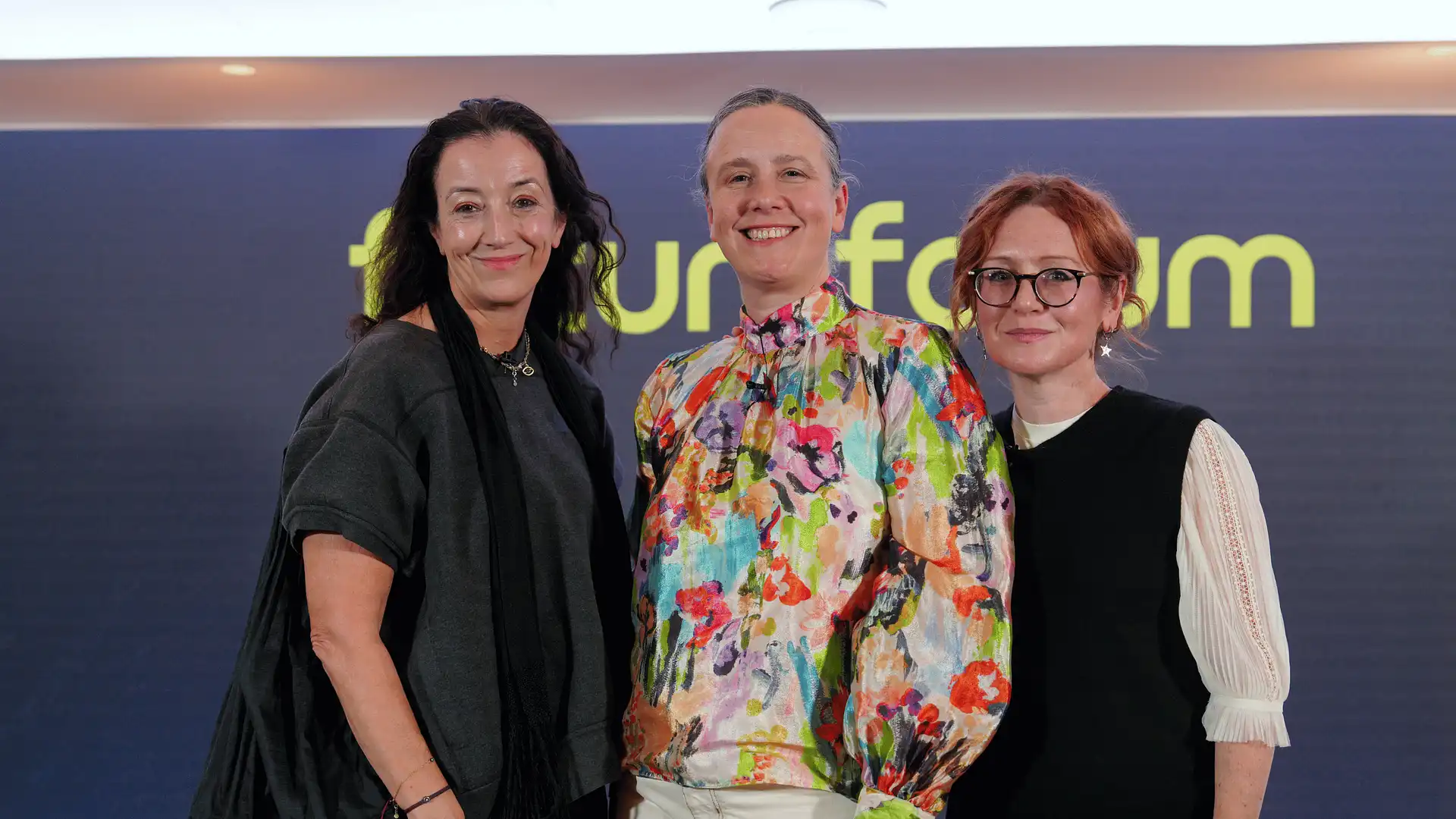
From museums and creative education to scientific research and sustainable materials, Future Forum’s closing Network Central discussion asked whose perspectives shape the world we build.
Every product, building, institution and system reflects choices. But who gets to make them – and whose experiences are left out?
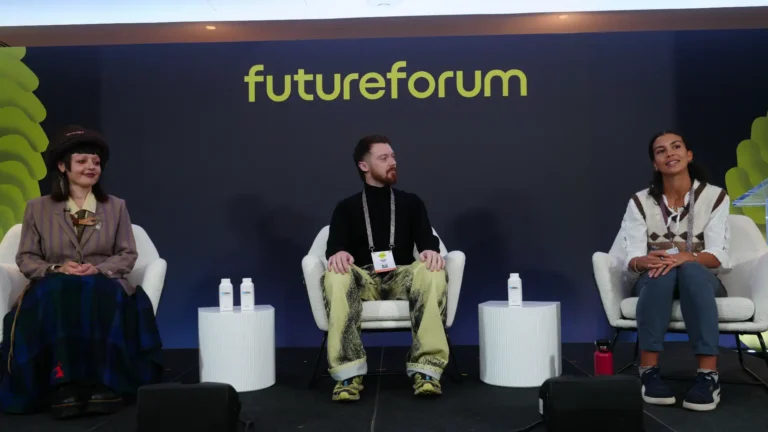
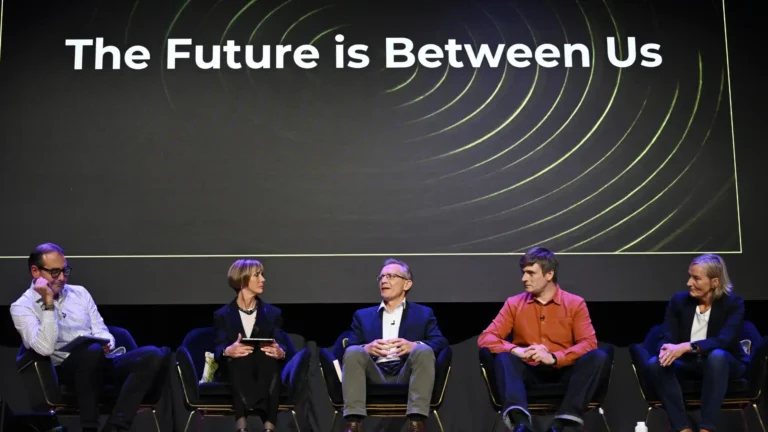
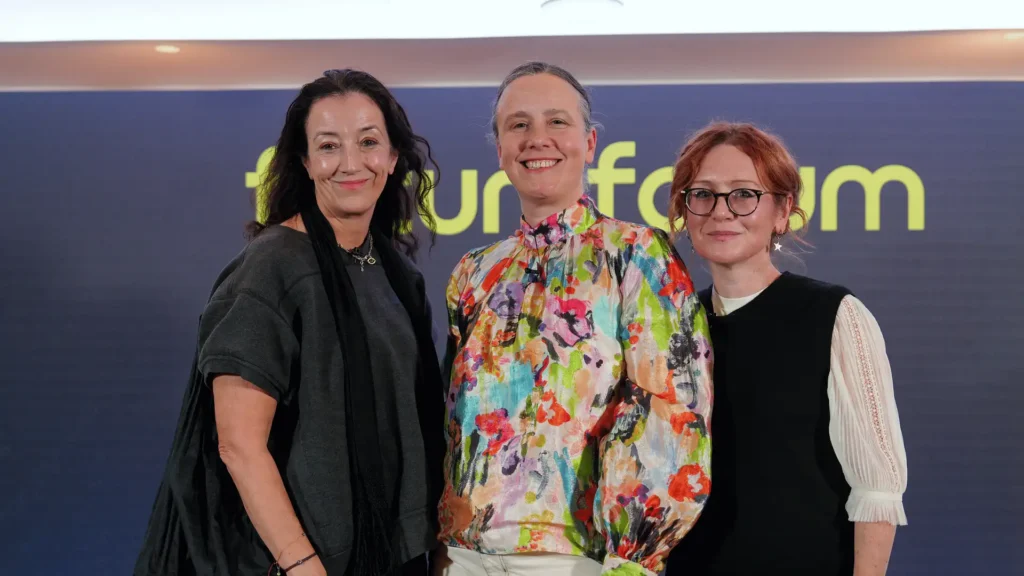
At Future Forum, Josephine Chanter of the Design Museum was joined by Tamara Cincik of Fashion Roundtable and Helen Protheroe, formerly of the Allen Institute, to discuss how design can help shape a more inclusive future.
Design is bigger than objects
Chanter began with the collaborative world-building behind a Wes Anderson exhibition. Film, graphic design, costumes, props and architecture combine to create an entire universe.
The example challenged a narrow view of design as something that happens only after the important decisions are made. Design also shapes the systems, experiences and narratives through which people understand the world.
Talent isn’t the same as opportunity
Cincik questioned who has access to creative education and cultural spaces. If schools reduce opportunities to learn design, textiles and other practical skills, talented young people may never discover possible careers.
She argued for bringing making skills back into education, not only to prepare a workforce but to give people confidence and agency in their everyday lives.
Protheroe echoed the importance of exposure: people are more likely to see a route into a field when they can encounter practitioners, institutions and opportunities that previously felt remote.
Working across boundaries
The discussion brought together arts, science, policy and sustainability. The panellists explored approaches to design that consider people and the planet together, from lower-carbon building materials to the possibilities of hemp and more place-based production.
They also recognised the limits of individual creativity when systems are slow to change. Better ideas need routes into policy, investment and institutions if they are to reach the people who could benefit.
In response to an audience question, Chanter argued that more designers should be involved in government, bringing a collaborative and problem-solving mindset into public decisions.
A wider invitation
The speakers did not promise an easy path. They described a future full of tensions between technology, climate, education, access and the institutions making decisions.
But their shared proposition was hopeful: more people can help shape what comes next if we expand the routes into creative practice and take unfamiliar perspectives seriously.
The final question for Network Central was therefore an invitation rather than a prediction. If the future is designed, who will we invite to help design it?
Related podcasts

The Trillion-Dollar Space Economy Is Just Getting Started | Melissa Quinn on Space & Innovation
What happens when space becomes the next great economic frontier? On this episode of Tomorrow: The Future Forum Podcast, Oli Barrett MBE and Victoria Usher are joined by Melissa Quinn, Senior Director at MDA Space, to explore the rapidly emerging orbital economy — and the huge opportunities and challenges that…

How to Stay Healthier for Longer with Dr Sophia Pathai On The Future of Ageing & Prevention
What if the biggest challenge facing healthcare isn’t helping us live longer—but helping us stay healthier for longer? In this episode of Tomorrow: Future Forum, Oli Barrett MBE is joined by Dr Sophia Pathai, Founder & CEO of AZM, physician, scientist and author of The Longevity Code. Together they explore…

Can Britain Lead the Renewable Energy Revolution? Jürgen Maier CBE on AI, Energy & Manufacturing
Can Britain become the world’s next clean energy superpower? In this episode of Tomorrow – The Future Forum Podcast, Oli Barrett MBE sits down with Jürgen Maier CBE, Chair of Great British Energy and former CEO of Siemens UK, to explore how renewable energy, AI and advanced manufacturing could reshape…
Related speakers
-

Tamara Cincik CEO and Founder of Fashion Roundtable
A fashion insider who crossed into policy to make the industry harder for Westminster to ignore.
Tamara’s profile