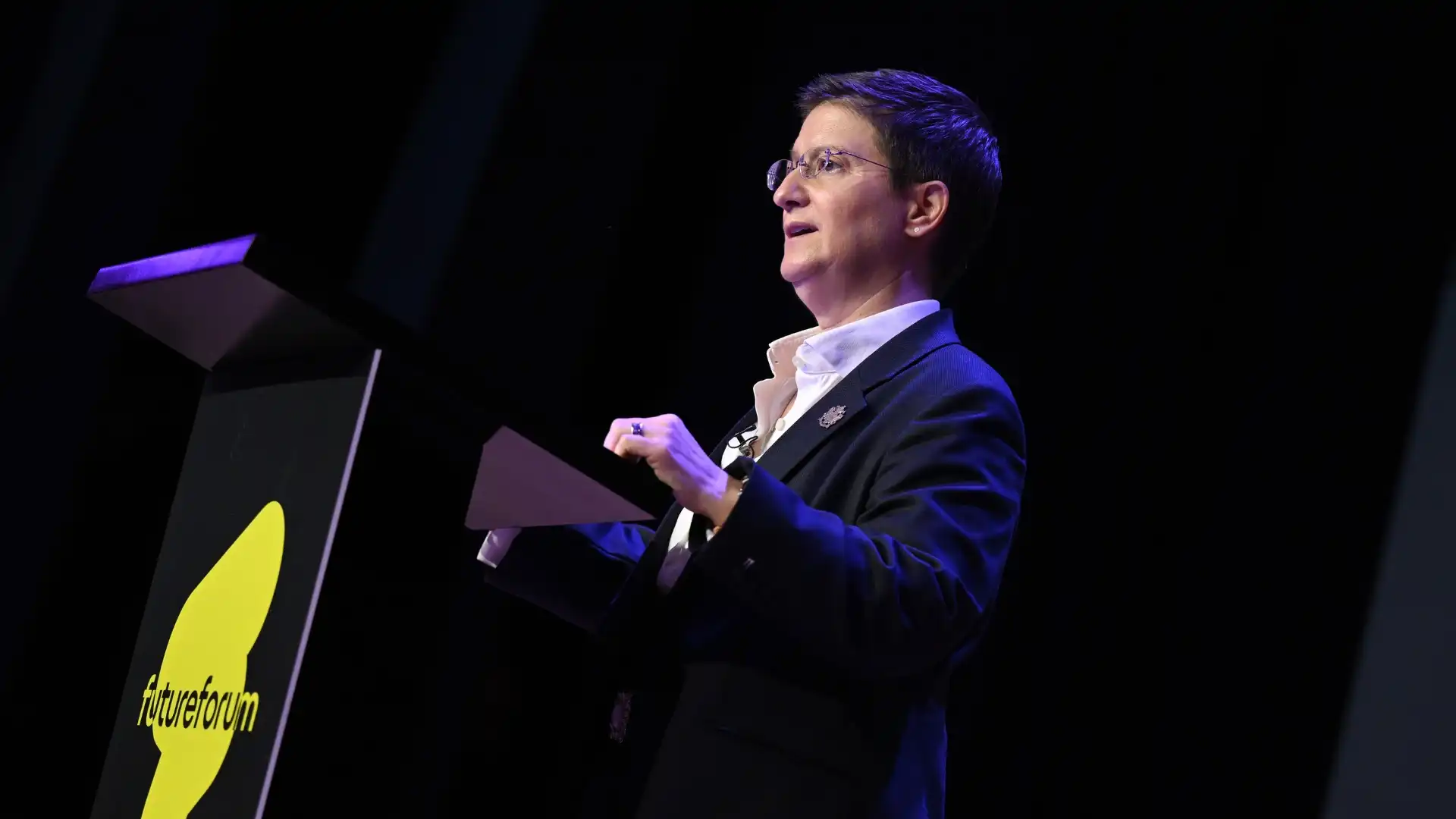
In her Future Forum keynote, Dame Julia Hoggett DBE, CEO of the London Stock Exchange, made the case for renewed confidence in Britain’s economic future – and why turning existing strengths into shared prosperity could be closer than we think.
Britain has world-leading universities, ambitious entrepreneurs, globally competitive businesses and substantial pools of investment capital.
So why are we so reluctant to celebrate our strengths?
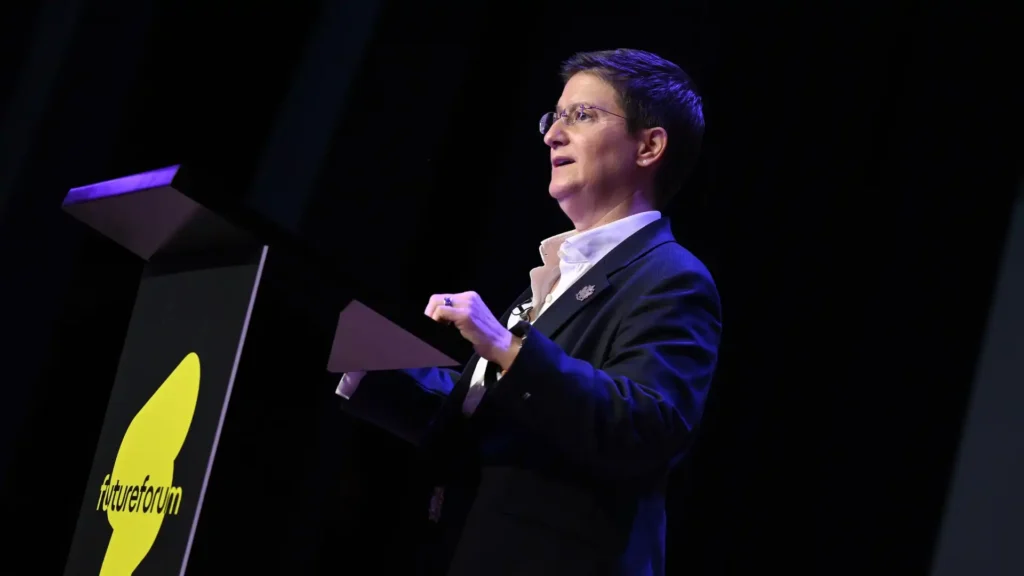
In her Future Forum keynote, Dame Julia Hoggett DBE, CEO of the London Stock Exchange, challenged the country’s tendency towards pessimism and offered a more optimistic perspective on its economic future.
Her message was clear: Britain already has many of the ingredients for success. What matters now is how we bring them together.
A nation with plenty to celebrate
Dame Julia pointed to the UK’s exceptional research institutions, entrepreneurial culture, legal framework and financial services sector.
Britain remains an important home for international businesses and investors, she argued, with advantages that other countries actively seek to replicate.
Yet too often, the national conversation focuses on what isn’t working.
For Dame Julia, that risks obscuring the opportunities already within reach.
Rather than continually questioning whether Britain has the potential to succeed, she encouraged the audience to recognise the strengths that already exist.
Connecting capital with opportunity
One of her central arguments concerned the relationship between Britain’s savings and its businesses.
The UK manages enormous pools of long-term capital through pensions, insurers and investment institutions. But much of that money is invested overseas.
Dame Julia used an analogy of fuel and power stations to explain the consequences.
Britain generates the financial fuel, but when it is invested elsewhere, much of the resulting economic activity – the jobs, innovation and growth – happens elsewhere too.
Financial returns may still flow back to savers, but the wider benefits of investment often remain where that money is put to work.
She wasn’t arguing against international investment. Instead, she questioned whether the balance had shifted too far away from supporting British businesses.
Making markets work for modern businesses
Dame Julia also highlighted reforms to the UK’s capital markets, designed to make it easier for innovative companies to attract investment and grow.
From changes to listing rules to new opportunities for private companies to access liquidity, she described a financial system evolving to reflect the needs of a modern economy.
While these changes may sound technical, their implications reach far beyond the financial sector.
They influence which companies can access capital, how businesses scale and whether the UK remains an attractive place to build globally competitive enterprises.
A reason to be optimistic
Dame Julia’s optimism wasn’t based on ignoring the challenges facing Britain.
It was based on recognising that many of the solutions begin with assets the country already possesses.
The talent exists. The ideas exist. The capital exists.
The task is to connect them more effectively – and ensure that innovation, investment and economic growth translate into opportunities for people across the country.
At Future Forum, where bringing different worlds together is central to the mission, it was a fitting challenge.
Perhaps Britain’s next great opportunity isn’t something we need to invent from scratch.
Perhaps it’s what we can achieve with what we already have.