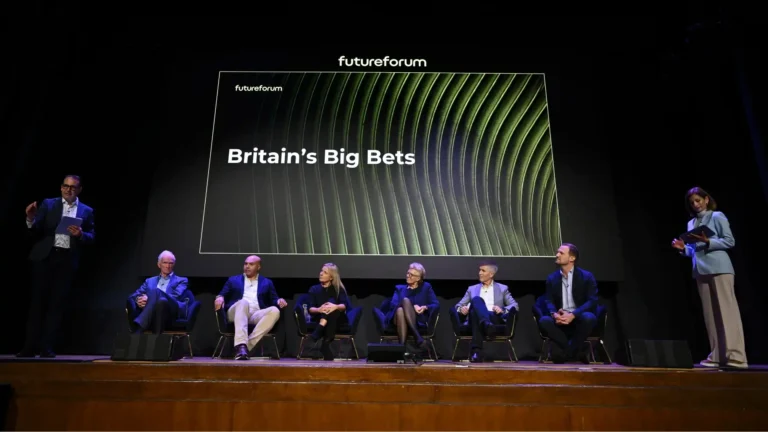
As AI transforms the world of work, we have an opportunity to rethink how we learn, collaborate and develop talent. At Future Forum, leaders from education, business and social mobility explored what it will take to build a more adaptable, inclusive future of work.
What if preparing for the jobs of tomorrow meant fundamentally rethinking how we learn today?
As technology reshapes industries and changes the skills employers need, traditional approaches to education and career development are being challenged.
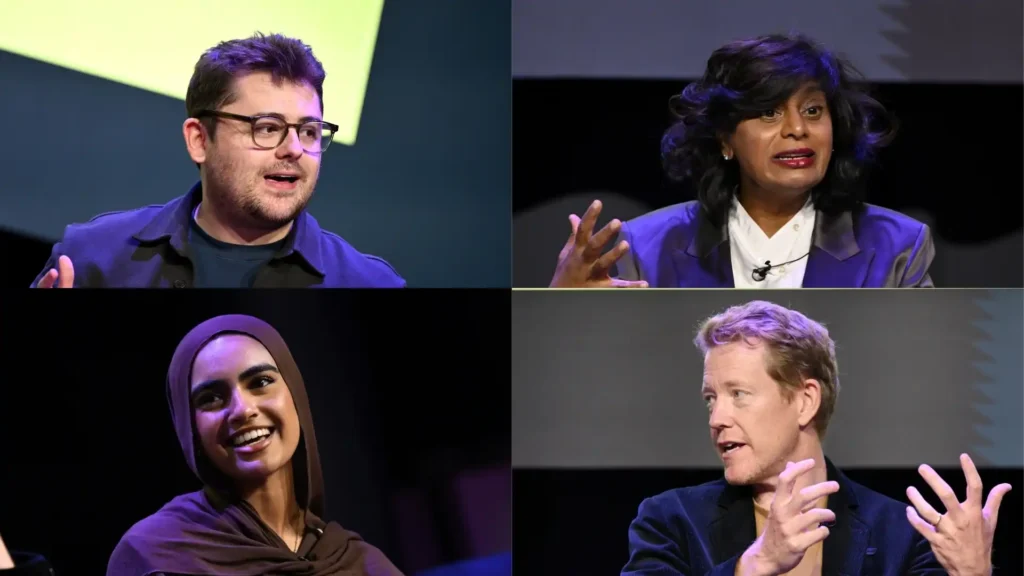
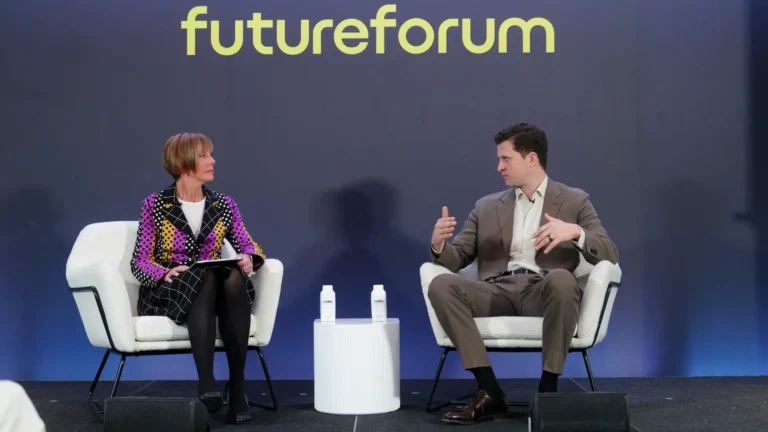
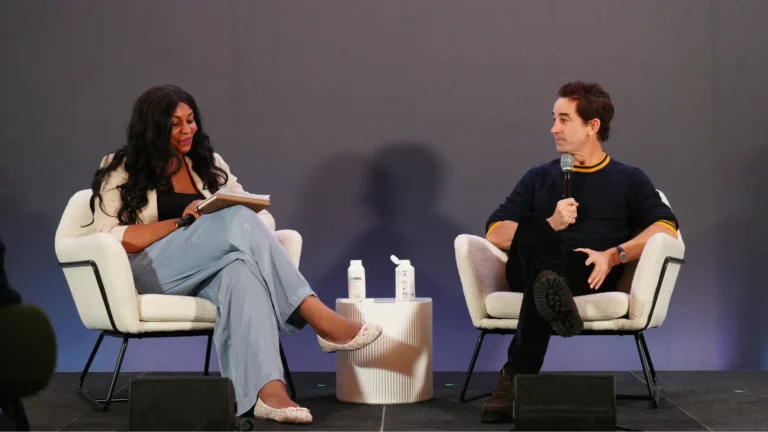
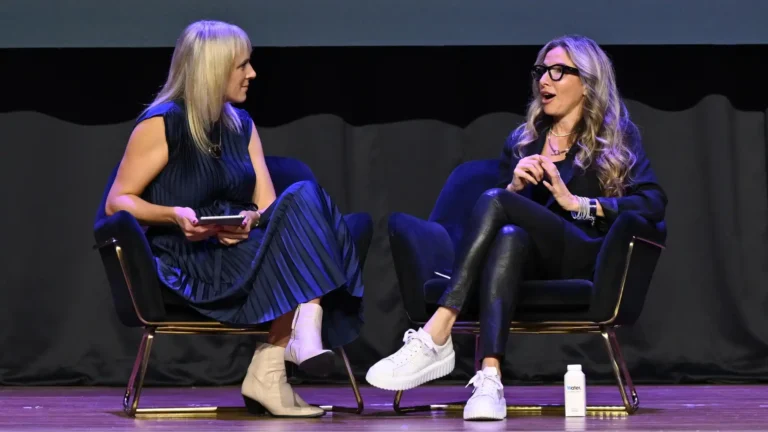
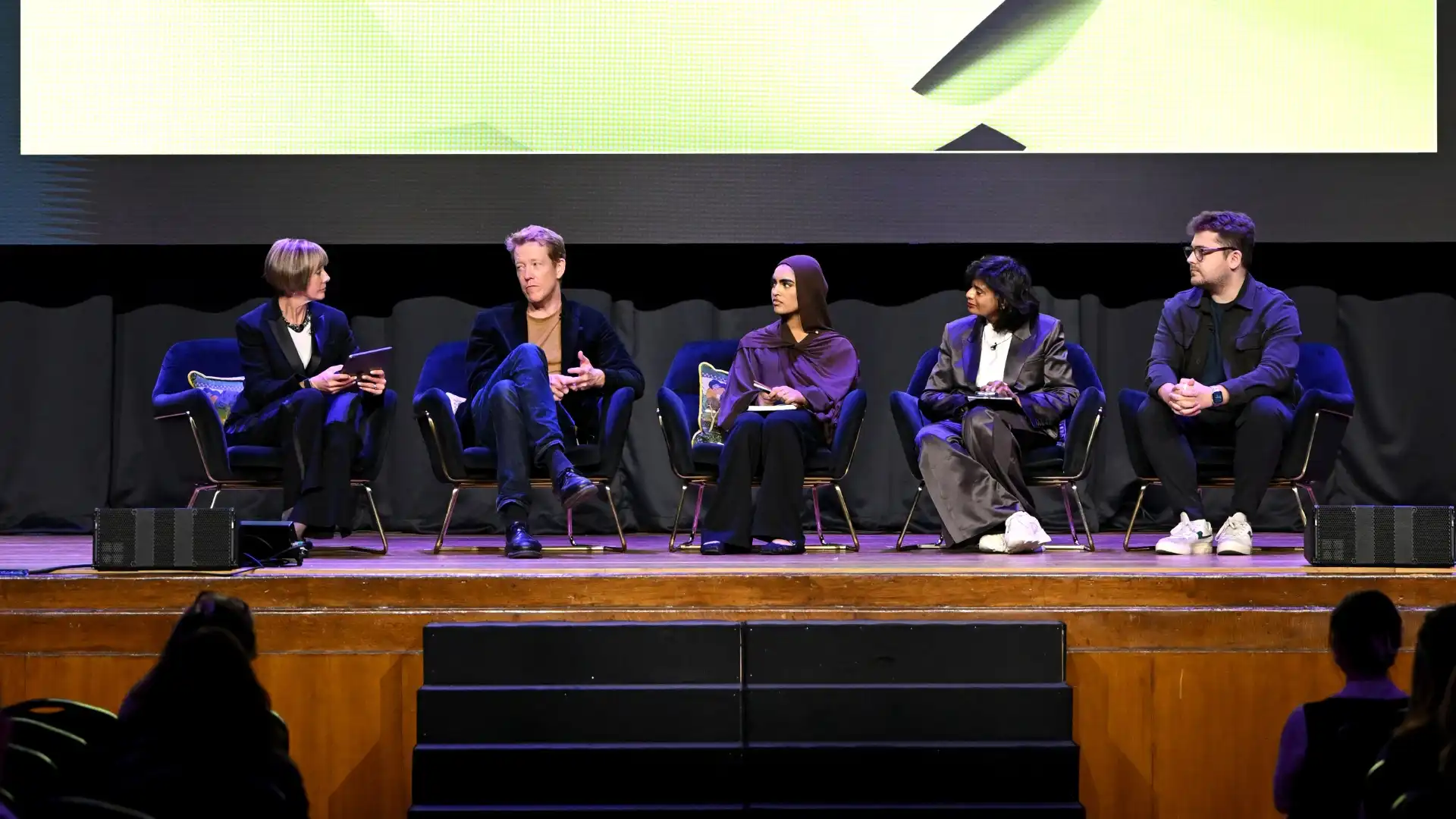
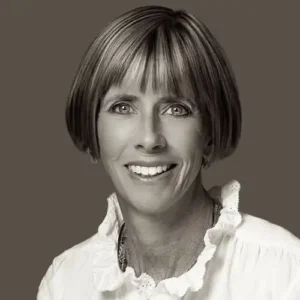
At Future Forum, Jobs of Tomorrow, moderated by Edie Lush, brought together Ed Fidoe, Dr Sharmla Chetty, Joe Seddon and Rushma Khan to explore how we can prepare people for an increasingly unpredictable world of work.
The conversation went beyond AI and automation to ask a more fundamental question: how do we create opportunities for people to thrive in whatever comes next?
Learning beyond traditional boundaries
Ed Fidoe, CEO of The London Interdisciplinary School, challenged the way education is organised around separate academic disciplines.
He compared traditional education systems to libraries, where knowledge is neatly divided into subjects, despite the fact that real-world problems rarely fit into such categories.
At LIS, students explore challenges such as climate change and technology ethics by combining perspectives from philosophy, data science, social sciences and other disciplines.
Fidoe suggested that unusual combinations of knowledge could become increasingly valuable, allowing individuals to develop expertise that doesn’t fit conventional career paths.
Rushma Khan, Assistant Programme Director at Debate Mate Training, reflected on how early young people are expected to make decisions about their futures.
She welcomed an approach that encourages broader learning, giving students the freedom to develop different interests and apply their knowledge in new ways.
The intelligence we develop together
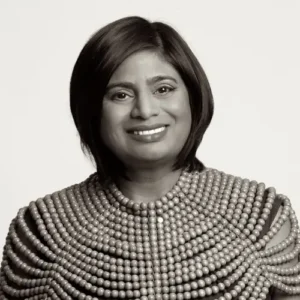
Dr Sharmla Chetty, CEO of Duke Corporate Education, explored what becomes possible when people learn and solve problems together.
In a world where information is increasingly accessible, she argued that human strengths such as judgement, curiosity and collaboration become even more important.
With five generations now working alongside one another, organisations have an opportunity to bring together different experiences, perspectives and ways of thinking.
But making the most of that diversity requires adaptability.
Chetty emphasised the importance of continuous learning, being comfortable with uncertainty and recognising that nobody has all the answers.
Rather than seeing knowledge as something passed from one generation to another, she encouraged organisations to embrace learning as a shared experience.
Can AI help level the playing field?
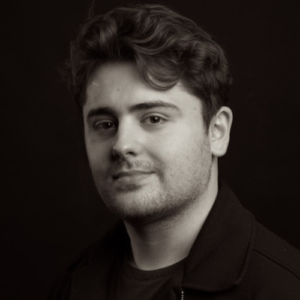
Joe Seddon, Founder and CEO of Zero Gravity, brought the conversation towards social mobility and access to opportunity.
Drawing on his experience growing up in West Yorkshire, he highlighted how background, geography and professional networks continue to shape educational and career outcomes.
For Seddon, AI presents an opportunity to challenge some of those inequalities.
Personalised tutoring, traditionally accessible mainly to families who can afford it, could become available to far more young people.
That could transform how students access support, develop confidence and fulfil their potential.
But Seddon also offered an important note of caution.
Previous technological revolutions have left communities behind, and we shouldn’t assume that everyone displaced by AI will simply be able to retrain.
Creating a fairer future of work will require more than technological innovation. It will require deliberate decisions about who benefits.
Preparing for uncertainty
Throughout the discussion, one theme kept emerging: preparing for tomorrow isn’t about predicting every change.
It’s about developing the capacity to respond.
Fidoe highlighted the value of interdisciplinary thinking and learning through complex problems. Chetty emphasised adaptability and collective intelligence. Seddon challenged us to ensure technological progress expands opportunity rather than concentrating it.
And Khan offered a perspective from a generation already navigating changing expectations around education, careers and success.
The jobs of tomorrow may be impossible to predict, but that doesn’t mean we can’t prepare for them.
By rethinking how we learn, bringing different perspectives together and making new opportunities accessible to more people, we have a chance to build a future of work that unlocks more human potential – not less.
Related podcasts
Inside London’s Innovation Hub | Jodie Eastwood on the Future & Why Curiosity Matters
What happens when AI companies, scientists, universities, cultural institutions and local communities become neighbours? Jodie Eastwood, CEO of London’s Knowledge Quarter, believes some of the world’s biggest problems could be solved by bringing very different worlds together. In this episode of Tomorrow: The Future Forum, Jodie joins Oli Barrett MBE…
Universities Are the UK’s Innovation Engine | Vivienne Stern MBE on AI, Skills & the Future of Work
What will universities become in the age of AI? In this episode of Tomorrow: The Future Forum, Oli Barrett MBE sits down with Vivienne Stern MBE, Chief Executive of Universities UK, to explore how universities, technology and the world of work are changing and what the next decade could look…
The Future Needs Human Connection | Martina McDonnell on Marketing, Creativity & Connection
What happens to marketing when AI can translate, create and optimise at a scale we’ve never seen before? In this episode of Tomorrow, the Future Forum, Oli Barrett MBE speaks with Martina McDonnell, International Marketing Director at Meta, about the future of marketing, AI, global brands, creators, cultural relevance and…
Related speakers
-
Ed Fidoe CEO of London Interdisciplinary School (LIS)
An education founder who stopped organising learning around subjects – and started organising it around problems.
Ed’s profile -
Dr Sharmla Chetty CEO of Duke Corporate Education
A banking leader who left security behind to build something new – and ended up leading it globally.
Sharmla’s profile -
Joe Seddon Founder and CEO of Zero Gravity
A first-generation Oxford graduate who got through the door – then built a way for others to follow.
Joe’s profile -
Edie Lush Co-Host of We're All Going to Die!
A journalist drawn to the point where progress becomes risk.
Edie’s profile