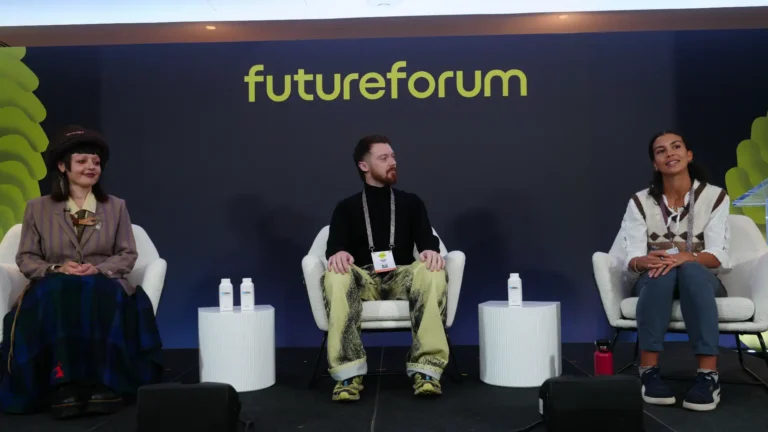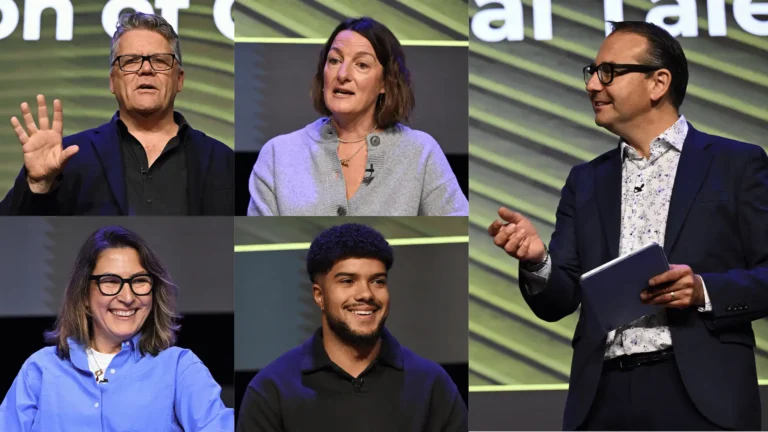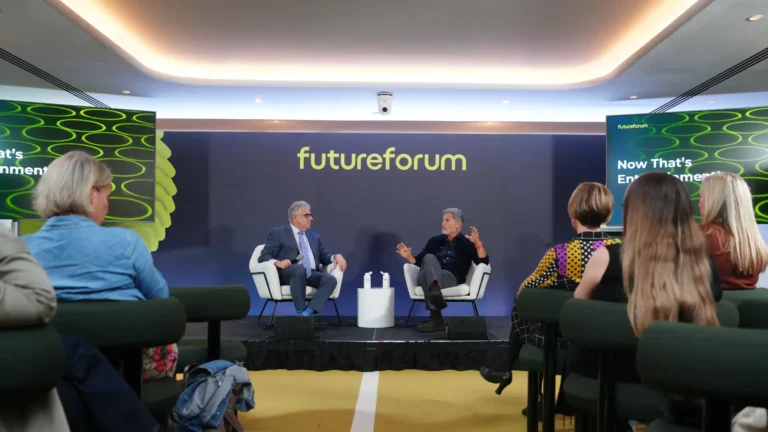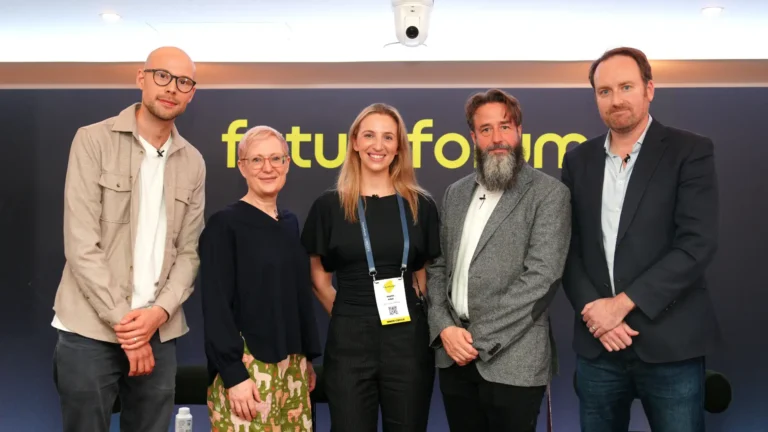
Most events still follow a familiar formula: a stage, a speaker, an audience, repeat. Future Forum is being built differently.
Across two days, the format changes depending on what the idea needs. Sometimes that means listening. Sometimes arguing. Sometimes making something. Sometimes getting close to an unfinished idea. Sometimes sitting in a circle with people from completely different worlds and seeing where the conversation goes.
Because different ideas need different spaces.
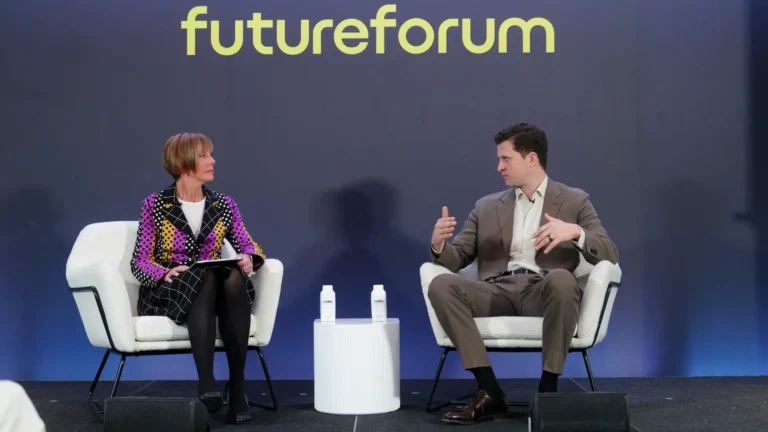
In Future Forum Circles, there are no presentations and no fixed positions. A small group gathers around one defining question, building on each other’s thinking before the conversation opens out to the wider room. The aim isn’t consensus. It’s to uncover perspectives no one person could reach alone.
Show & Tell makes ideas tangible. Across the programme, that could mean seeing radically redesigned musical instruments in action, exploring new approaches to brain rehabilitation or discovering how a smartphone might become an early health-screening tool. Less telling people what the future might look like. More showing them.
At The Forge, things are deliberately less finished. Sparks are short encounters with prototypes, experiments, early research and new ideas still taking shape.
No slides. No polish. Turn up, get close and ask the question that might change what happens next.
Elsewhere, Speed Mentoring creates fast, focused conversations between young people and experienced figures from business, technology, science, finance and culture. Bring a question or challenge. Leave with a perspective from someone you might never normally meet.
And some sessions are designed to make you do the work yourself. In the Vibe Coding Lab, young people and senior leaders will tackle real business challenges together, building and testing working prototypes using AI. It’s part reverse mentoring, part rapid prototyping and very definitely not a lecture. Future Forum 2026 Programme_Mas…
There are debates, workshops, live installations, Town Halls and smaller closed-door conversations too.
The point isn’t novelty for novelty’s sake.
It’s to create different conditions for different kinds of thinking – big shared moments in Vision Hall, ideas in motion at Network Central, participation in The Salon, experimentation at The Forge and deeper discussion in The Study.
You shouldn’t leave Future Forum having simply heard a lot of interesting people speak.
You should leave having met someone you wouldn’t normally meet, challenged an assumption, contributed something of your own and experienced a few ideas differently.
Because the future probably isn’t going to emerge from all of us sitting quietly in rows.