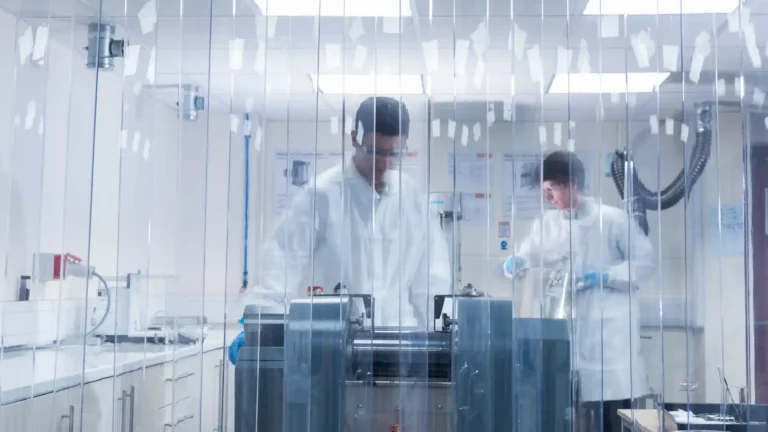
Scientists in Singapore have built a leaf-inspired device that produces clean hydrogen from seawater while removing a toxic pollutant at the same time. The interesting bit is what happens when one technology is designed to do two jobs.
What if producing clean energy could also clean up pollution?
Researchers at Nanyang Technological University in Singapore have developed an “artificial leaf” that uses sunlight to generate hydrogen directly from seawater. At the same time, it breaks down hydrazine – a highly toxic pollutant found in some industrial wastewater.
No external power source is needed. Like a leaf, the device captures light and turns it into the energy that drives the reaction.
That matters because hydrogen comes with a problem of its own.
Producing green hydrogen usually means using electricity to split water into hydrogen and oxygen. Using seawater could reduce reliance on freshwater, but salt makes the chemistry harder. Chloride can interfere with the process and produce corrosive chlorine compounds that damage equipment.
The NTU team approached that constraint differently.
Instead of simply trying to overcome it, they built a system where another problem – pollution – becomes part of the solution. A specially designed catalyst breaks down hydrazine, requiring less energy than conventional water electrolysis while producing additional hydrogen in the process. The system also suppresses the formation of harmful chlorine compounds.
So one device does two jobs: generate cleaner fuel and remove a dangerous contaminant.
In testing, it maintained stable performance for more than 72 hours under light equivalent to bright surface sunlight. It also reduced hydrazine to 0.5 parts per billion – more than twenty times below the US Environmental Protection Agency limit cited by the researchers.
That doesn’t mean an artificial leaf is about to solve the hydrogen economy. This is still research, and the team is now exploring how the same approach could work with other pollutants and waste materials.
But the principle is worth paying attention to.
We tend to organise big challenges into separate boxes: energy over here, pollution over there, water somewhere else. The systems themselves don’t work that way.
Perhaps some of the better solutions won’t either.
Instead of asking how technology can become more efficient at doing one thing, there’s another question worth asking:
What else could we solve at the same time?
That’s exactly the kind of thinking Future Forum exists to bring into the room – crossing disciplines, industries and assumptions to find ideas that don’t stay neatly in one lane.
Related podcasts

Can Britain Lead the Renewable Energy Revolution? Jürgen Maier CBE on AI, Energy & Manufacturing
Can Britain become the world’s next clean energy superpower? In this episode of Tomorrow – The Future Forum Podcast, Oli Barrett MBE sits down with Jürgen Maier CBE, Chair of Great British Energy and former CEO of Siemens UK, to explore how renewable energy, AI and advanced manufacturing could reshape…

The Trillion-Dollar Space Economy Is Just Getting Started | Melissa Quinn on Space & Innovation
What happens when space becomes the next great economic frontier? On this episode of Tomorrow: The Future Forum Podcast, Oli Barrett MBE and Victoria Usher are joined by Melissa Quinn, Senior Director at MDA Space, to explore the rapidly emerging orbital economy — and the huge opportunities and challenges that…

How to Stay Healthier for Longer with Dr Sophia Pathai On The Future of Ageing & Prevention
What if the biggest challenge facing healthcare isn’t helping us live longer—but helping us stay healthier for longer? In this episode of Tomorrow: Future Forum, Oli Barrett MBE is joined by Dr Sophia Pathai, Founder & CEO of AZM, physician, scientist and author of The Longevity Code. Together they explore…
Join the conversation at our event

Flagship Event 2026
Three days of focused discussion, cross-sector sessions, hands-on studios and unforgettable gatherings.
Related speakers
-

Kresse Wesling CBE Co-Founder of Elvis & Kresse
An entrepreneur who sees waste as a failure of imagination – and built a luxury brand to prove it.
Kresse’s profile -

Gurjeet Grewal CEO of Octopus Electric Vehicles
An investor who swapped deploying billions for building an EV business from the ground up.
Gurjeet’s profile