From university spinouts and pension funds to a new investment ‘Big Bang’, Future Forum brought together leading entrepreneurs, investors and business voices to make their case for Britain’s next big opportunity.
If you could put all your chips on one thing to secure Britain’s future prosperity, what would it be?
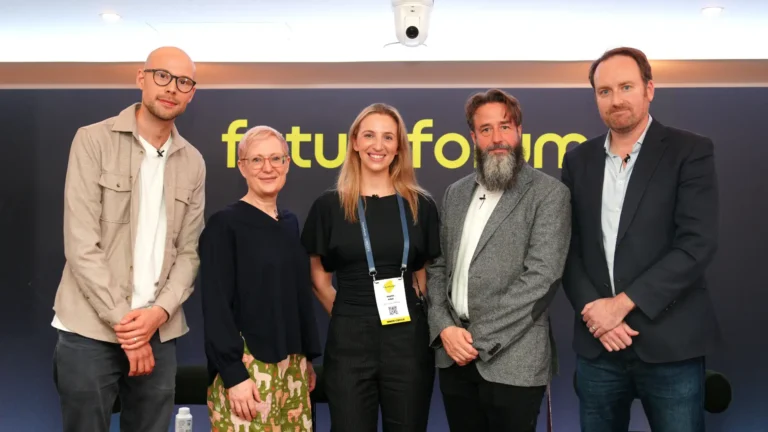
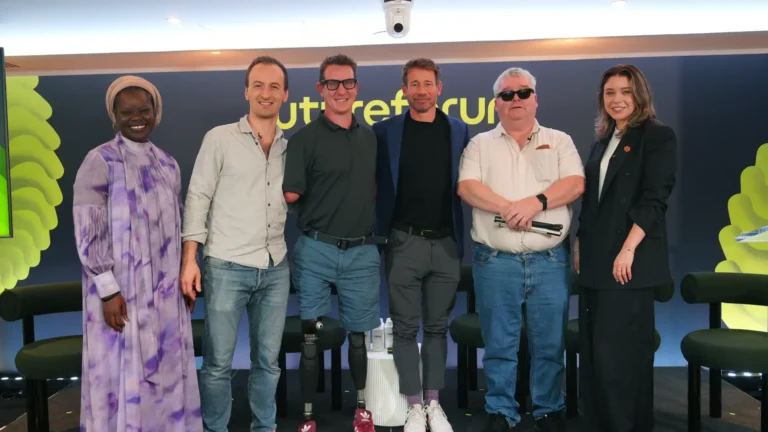
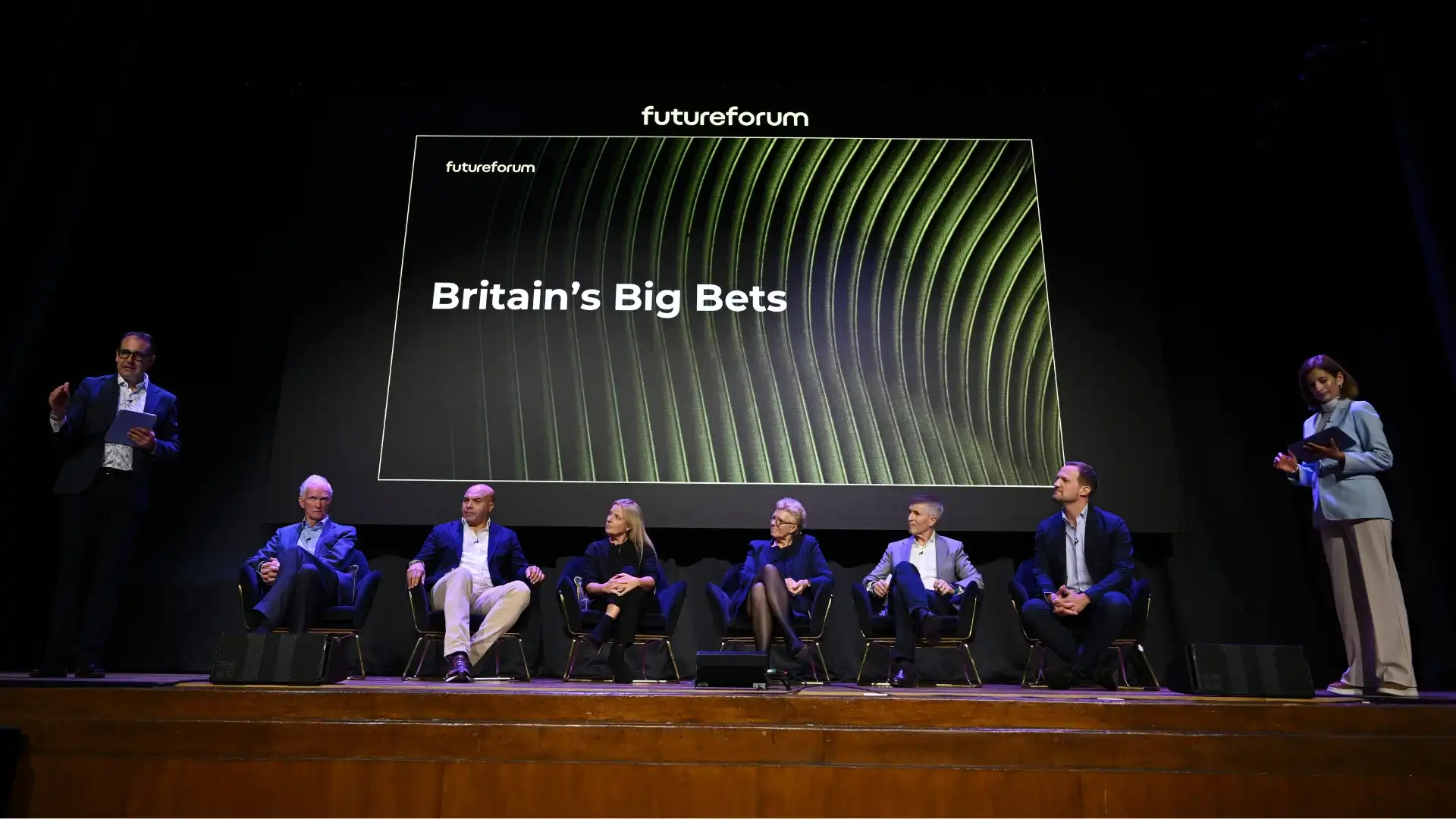
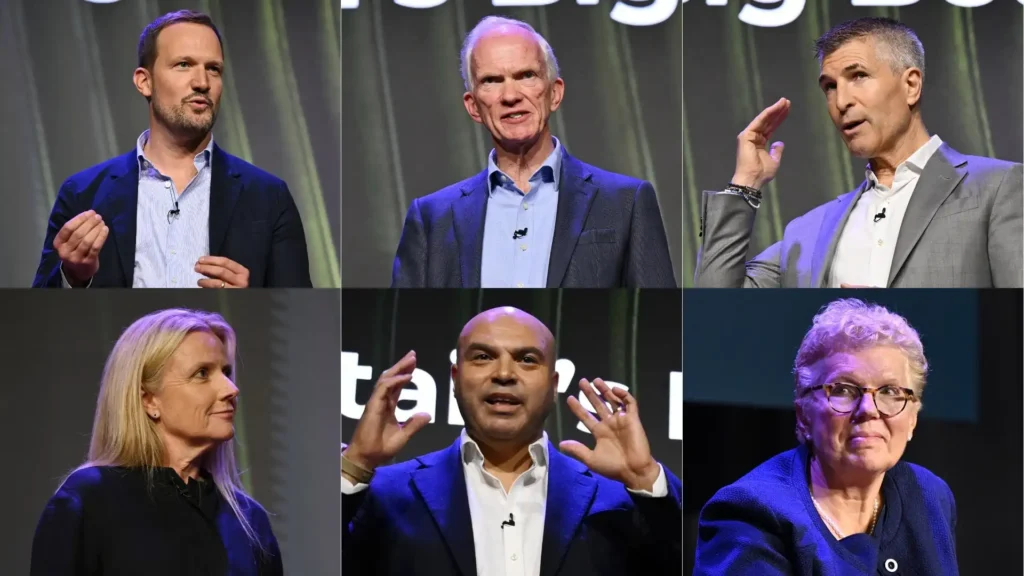
That was the challenge at Future Forum’s Britain’s Big Bets session, where six contributors put forward their ideas for unlocking economic growth, creating globally competitive businesses and making more of the country’s strengths.
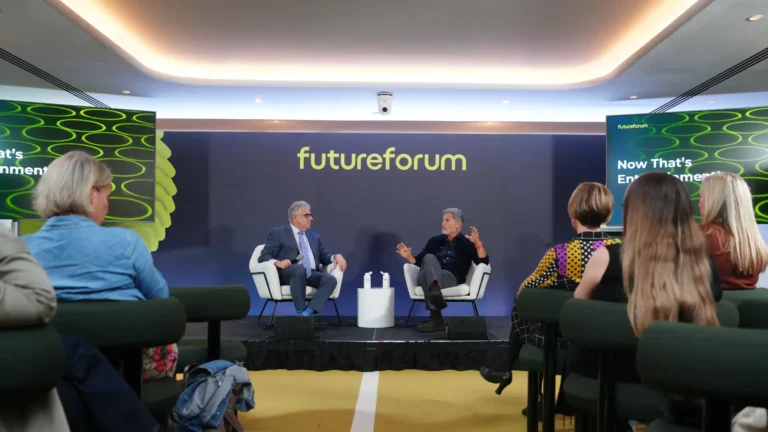
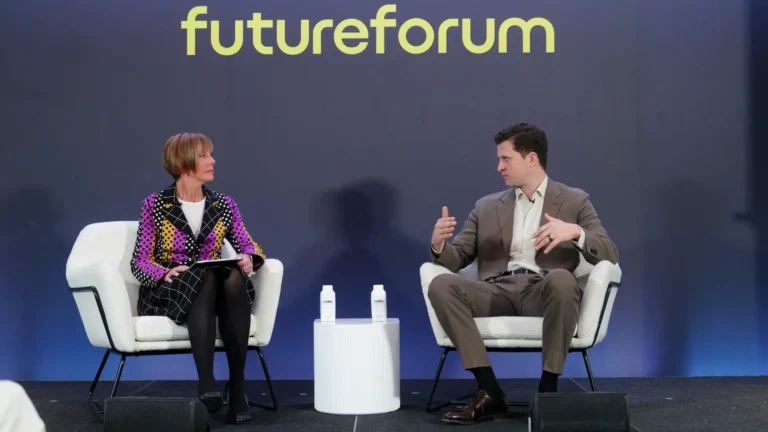
Hosted by Oli Barrett MBE and Nisha Pillai, the session offered different perspectives on a shared challenge: Britain has talent, ideas and innovation. How does it turn them into lasting prosperity?
Back talent early – and back it hard
Victoria Gosling OBE, Chair of GB Snowsport and the Invictus Games Foundation, opened with lessons from elite sport.
For Gosling, winning requires more than individual talent. It takes focus, resilience, belief and the ability to direct limited resources where they will have the greatest impact.
She pointed to innovations developed for elite athletes, from advanced fabrics to performance sensors, that could find applications far beyond sport, including defence and industry.
Her big bet? Build globally competitive British companies using the same principles that develop world-class sporting talent.
Turn world-leading science into world-leading companies
Ed Bussey, CEO of Oxford Science Enterprises, argued that Britain’s universities offer one of its greatest competitive advantages.
His ambition was clear: create the UK’s first trillion-pound company by turning world-leading scientific research into globally significant businesses.
Bussey described how Oxford Science Enterprises has developed a model combining university partnerships, hands-on company building and investment. He said the organisation had helped create three unicorns in nine months.
The challenge now, he argued, is scale – particularly in deep technologies such as quantum computing and advanced chips.
Put pension savings to work
Sherry Coutu CBE, entrepreneur, investor and Senior Independent Director at Raspberry Pi, made the case for connecting Britain’s growing technology businesses with the people whose savings could help finance them.
Her big bet was that pensioners could become more prosperous by benefiting from investments in Britain’s most promising companies.
Drawing comparisons with Canadian and Australian pension funds, she questioned why more UK savers couldn’t share in the success of homegrown innovation.
It was an argument for changing not just where capital flows, but who benefits when businesses succeed.
A Big Bang for British investment
Ryan Mendy, Co-Founder and Co-Chair of the Unicorn Council for UK Fintech, proposed something more radical: a Big Bang 2.0 for British capital.
His vision was to make investing in Britain so compelling that international investors would reconsider where they put their money.
Borrowing from the urgency of a Black Friday sale, Mendy called for a reinvestment cycle that would help Britain retain more of the value created by its entrepreneurs.
Later in the discussion, he suggested a ‘Best of British’ investment vehicle connecting pension capital with high-growth companies.
Build the financial plumbing
Stephen Welton CBE, Chair of the British Business Bank, agreed that Britain needed more capital for ambitious businesses – but argued that the money already exists.
His concern was the gap between substantial UK savings and the relatively small proportion reaching promising private companies.
Welton described the challenge as a problem of financial infrastructure: connecting savers, investment funds and businesses capable of scaling.
He emphasised that government alone could not provide all the capital required, but could act as a catalyst for private investment.
Invest in productive assets – and reconnect with Europe
Owen Wyatt, Chief Growth Officer at DC Thomson, offered two interconnected bets.
First, Britain should invest in productive assets – the ports, manufacturing facilities and infrastructure that create jobs and support long-term growth.
He cited examples from Scotland and Bristol where investment in physical infrastructure and engineering was already creating opportunities.
His second proposal was to rejoin the European single market, arguing that easier access to European customers would help British businesses expand.
From big ideas to action
As the speakers challenged one another, a recurring frustration emerged.
Britain has the research, entrepreneurs, financial institutions and talent. Yet too often, the connections between them fail to deliver at sufficient scale.
Bussey warned against returning in a year’s time to diagnose the same problems. Coutu challenged the sector to make pension investments more visible. Welton pointed to emerging mechanisms that could help connect capital with companies.
The session ended without a single winning bet.
Instead, it revealed something potentially more useful: several different routes to growth, and a recognition that ambition means little without the partnerships and practical changes needed to deliver it.
At Future Forum, perhaps the biggest bet of all was on what happens when people from different worlds stop talking about possibilities – and start building them together.
Related podcasts
What It Really Takes to Build a Winning Team with Victoria Gosling OBE
What does it really take to build a high-performing team? In this episode, Oli Barrett is joined by Victoria Gosling OBE, CEO of GB Snowsport to explore the reality behind elite performance, from culture and leadership to mental health and marginal gains. They discuss why the best athletes aren’t superhuman,…
Related speakers
-
Victoria Gosling OBE CEO of GB Snowsport
A former RAF Group Captain who took military leadership into the world of sport.
Victoria’s profile -

Stephen Welton CBE Non-executive Chair of British Business Bank
Stephen’s profile -

Owen Wyatt Chief Growth Officer of DC Thomson
A journalist who turned media from something people consume into something industries can organise around.
Owen’s profile -
Ryan Mendy Co-Founder, Co-Chair of Unicorn Council for UK Fintech
An investment banker who crossed from global finance to helping its fintech challengers build influence.
Ryan’s profile