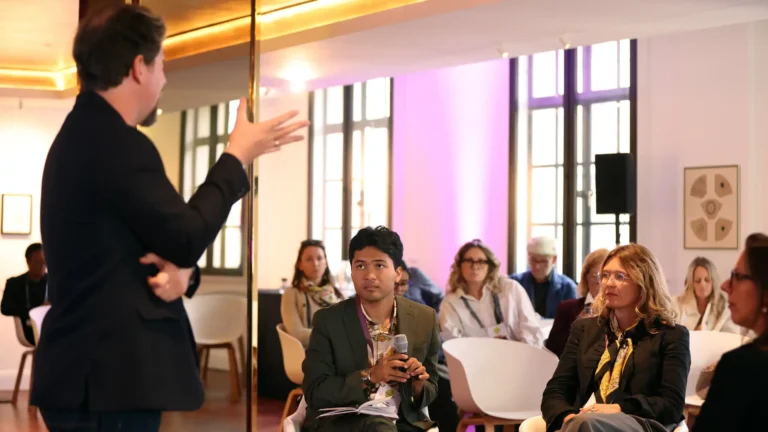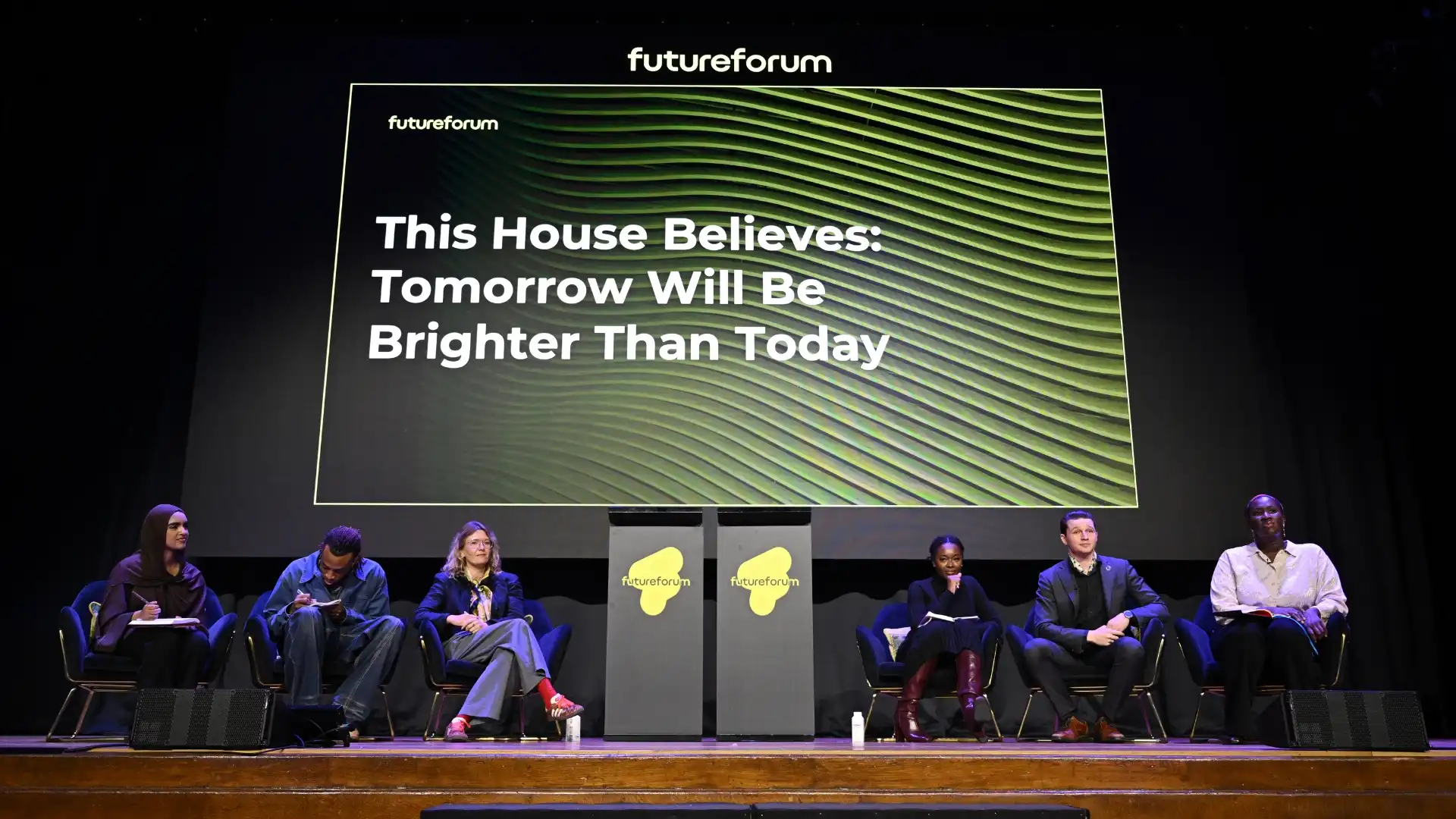
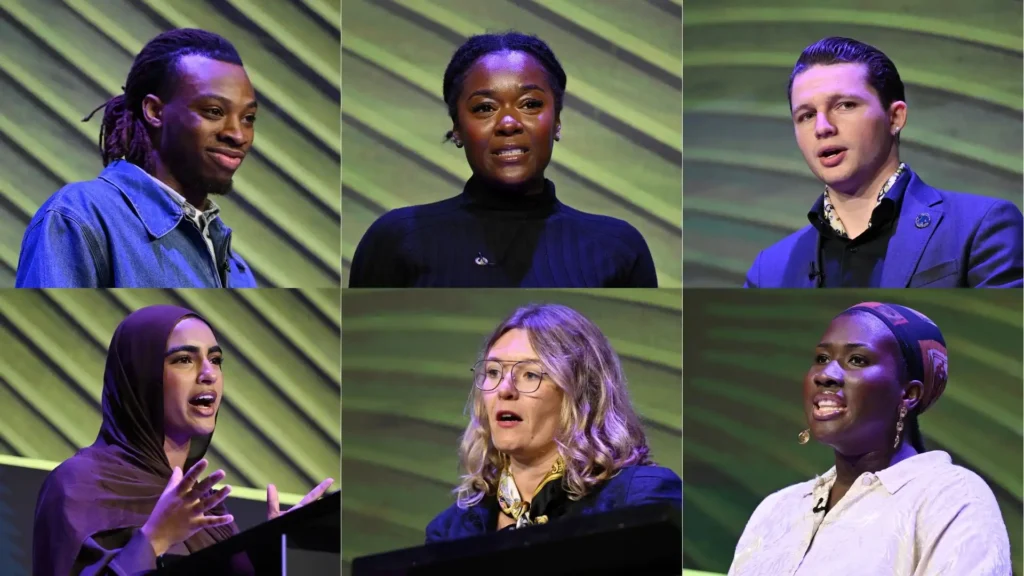
Six speakers debated whether progress is inevitable or something we have to fight for. From climate change and inequality to human agency and the power of the next generation, the audience had a difficult decision to make.
Will tomorrow be brighter than today?
It’s a question that sounds simple enough – until you have to defend your answer.
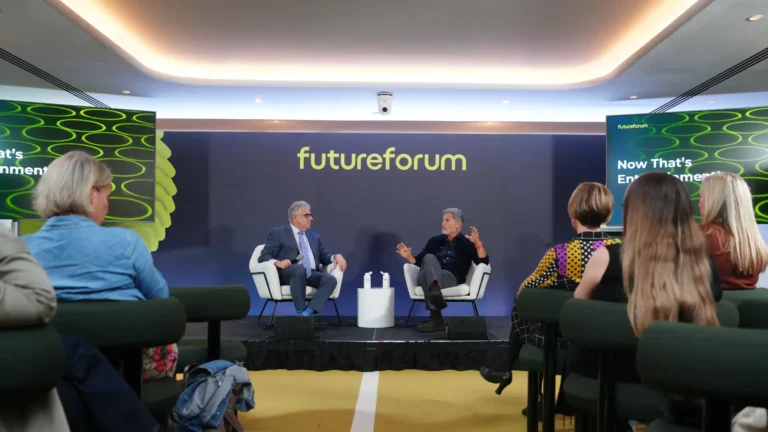
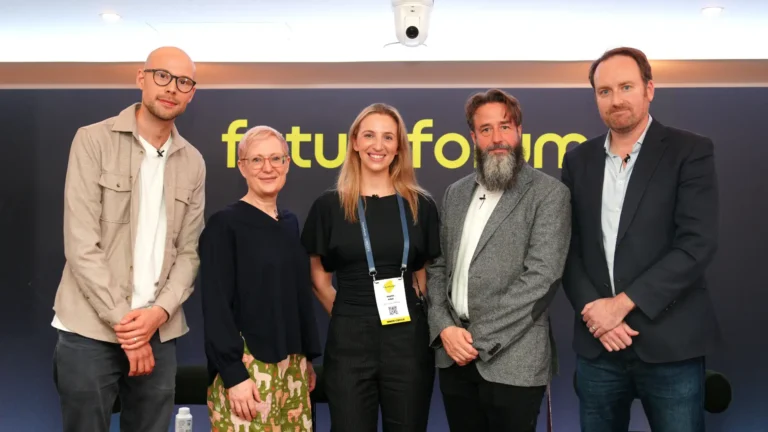
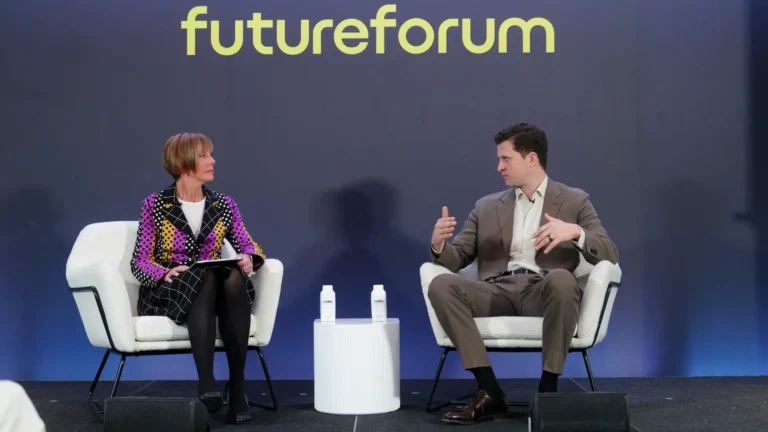
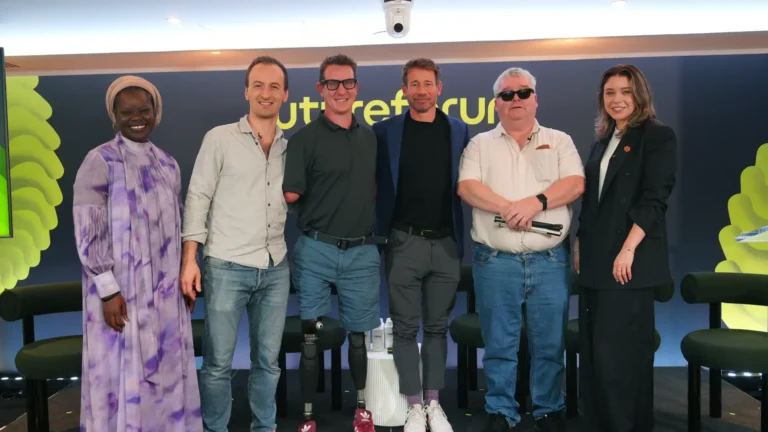
At Future Forum, six speakers took opposing sides in a lively Debate Mate session exploring whether humanity is heading towards a better future, or whether optimism risks distracting us from the challenges already unfolding.
Moderated by Scarlett McCabe, Founder and CEO of Debate Mate Training, the debate brought together entrepreneurs, social innovators and young voices to test the case for hope.
And the room was far from unanimous.
FOR: We have the power to shape what comes next
Opening for the proposition, Lavinya Stennett, Founder of The Black Curriculum, argued that human agency is the foundation of progress.
History, she suggested, demonstrates our ability to challenge established systems, mobilise communities and create institutions that improve people’s lives.
From advances in healthcare to civil rights and global connectivity, Stennett pointed towards the choices people have made to create change.
Her case wasn’t that tomorrow automatically becomes better, but that humanity has the creativity and collective power to make it so.
Kyle Mathews, CEO of TRIIBE, built on that argument by focusing on a new generation of changemakers.
He highlighted entrepreneurs and organisations prioritising social impact over personal financial reward, arguing that philanthropy and purpose-led innovation could become powerful routes to addressing global challenges.
For Mathews, greater investment in young people creating social value could accelerate positive change.
AGAINST: Progress cannot be taken for granted
Marta Krupinska, CEO and Co-Founder of CUR8, challenged the assumption that yesterday’s progress guarantees tomorrow’s prosperity.
Drawing on her experience of climate technology, she argued that environmental pressures, widening inequality and the concentration of wealth and power are putting existing gains at risk.
Krupinska distinguished between passive optimism and confronting uncomfortable realities.
Rather than simply believing everything will improve, she suggested, society needs to recognise what’s going wrong and take responsibility for changing it.
Emmanuel Areoye, a Debate Mate student, questioned whether the systems previous generations built are still delivering what they promised.
He pointed to pressures on public services, the consequences of social media and the danger of relying on historical improvements as evidence of future success.
His challenge was to consider how tomorrow might be judged with the benefit of hindsight.
Hope versus complacency
The closing speeches brought the central disagreement into sharper focus.
For the proposition, Esther Mark, Programme Director Consultant at Debate Mate Online, acknowledged the seriousness of the opposition’s concerns.
But she argued that history offers compelling evidence of humanity’s capacity to overcome major challenges.
The progress achieved in healthcare, rights and international cooperation, she suggested, should give people the confidence to keep working towards something better.
Hope, in her argument, is not a guarantee of progress. It is a necessary part of making progress possible.
Closing for the opposition, Rushma Khan, Assistant Programme Director at Debate Mate Training, drew an important distinction between hope and action.
She challenged the idea that greater global connectivity necessarily produces greater cooperation, pointing to fragmentation, inequality and the erosion of shared priorities.
Her argument was that a brighter future requires deliberate structural change, not simply confidence that progress will continue.
The audience decides
Questions from the floor introduced further challenges: the erosion of democracy, climate anxiety among young people, and whether the resources needed to create change are reaching those most capable of delivering it.
When the room voted, the result was exceptionally close.
The opposition narrowly took the debate.
But perhaps the most revealing outcome was how much the two sides agreed on one essential point: the future is shaped by human choices.
For one side, that was reason to believe tomorrow could be brighter.
For the other, it was precisely why we shouldn’t assume it will be.
At Future Forum, where different perspectives come together to challenge accepted thinking, the debate offered something more useful than easy reassurance.
A reminder that believing in a better future and doing the work to create it are not the same thing.
Related podcasts
Inside London’s Innovation Hub | Jodie Eastwood on the Future & Why Curiosity Matters
What happens when AI companies, scientists, universities, cultural institutions and local communities become neighbours? Jodie Eastwood, CEO of London’s Knowledge Quarter, believes some of the world’s biggest problems could be solved by bringing very different worlds together. In this episode of Tomorrow: The Future Forum, Jodie joins Oli Barrett MBE…

Universities Are the UK’s Innovation Engine | Vivienne Stern MBE on AI, Skills & the Future of Work
What will universities become in the age of AI? In this episode of Tomorrow: The Future Forum, Oli Barrett MBE sits down with Vivienne Stern MBE, Chief Executive of Universities UK, to explore how universities, technology and the world of work are changing and what the next decade could look…
The Future Needs Human Connection | Martina McDonnell on Marketing, Creativity & Connection
What happens to marketing when AI can translate, create and optimise at a scale we’ve never seen before? In this episode of Tomorrow, the Future Forum, Oli Barrett MBE speaks with Martina McDonnell, International Marketing Director at Meta, about the future of marketing, AI, global brands, creators, cultural relevance and…
Related speakers
-
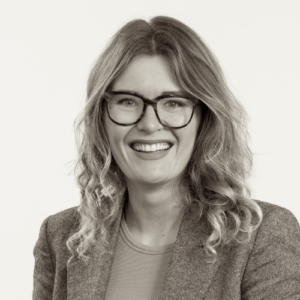
Marta Krupinska CEO and Co-Founder / Chair of CUR8 / Youth Business International
A fintech founder who moved from moving money to removing carbon – and demanding results from both.
Marta’s profile -
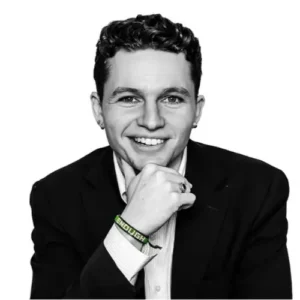
Kyle Matthys Founder and CEO of TRIIBE
A founder who saw young nonprofit leaders hitting a funding cliff – and decided to build the infrastructure around them.
Kyle’s profile