If we want people to embrace the future, we need to give them something worth believing in. At Future Forum, four marketing and advertising leaders explored how trust, creativity and a sense of control could help turn anxiety about tomorrow into optimism – and action.
What if the future’s biggest problem isn’t technology, innovation or even imagination?
What if it’s that we haven’t made a convincing case for why people should want it?
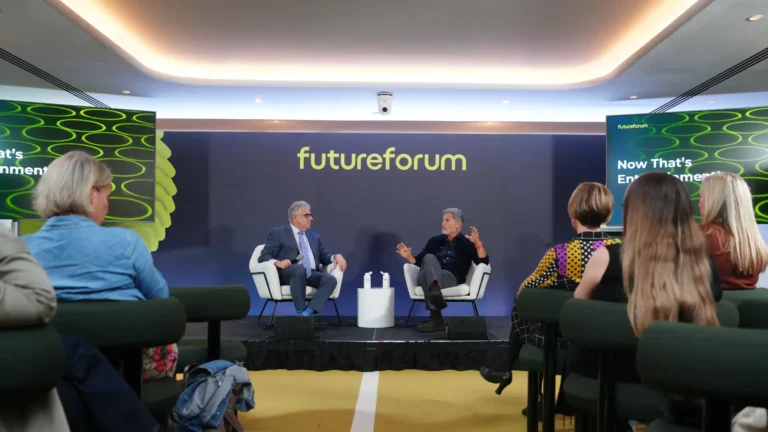
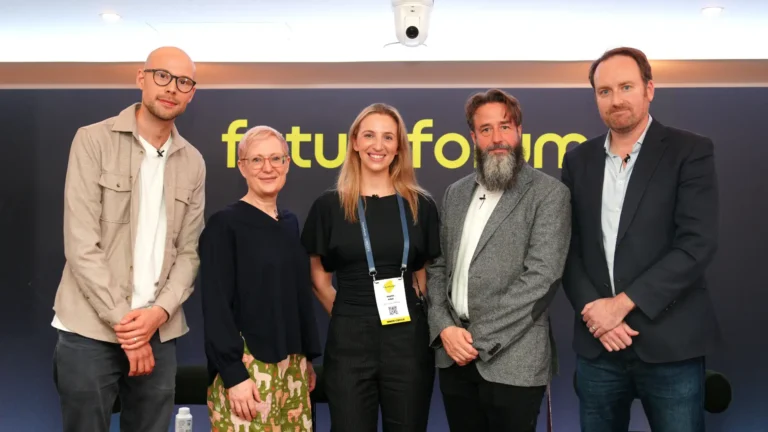
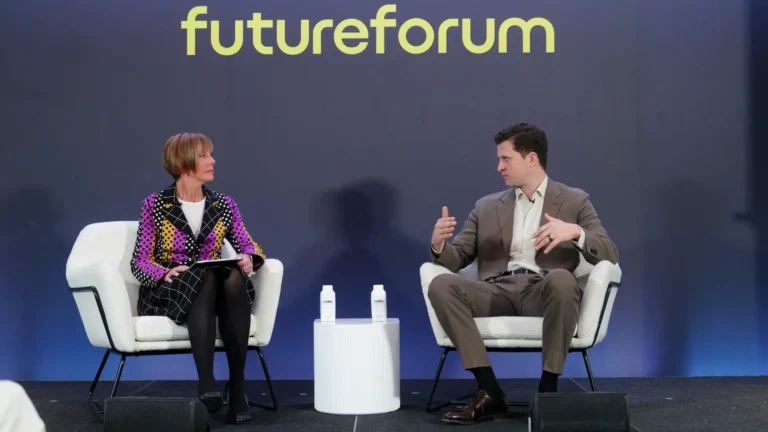
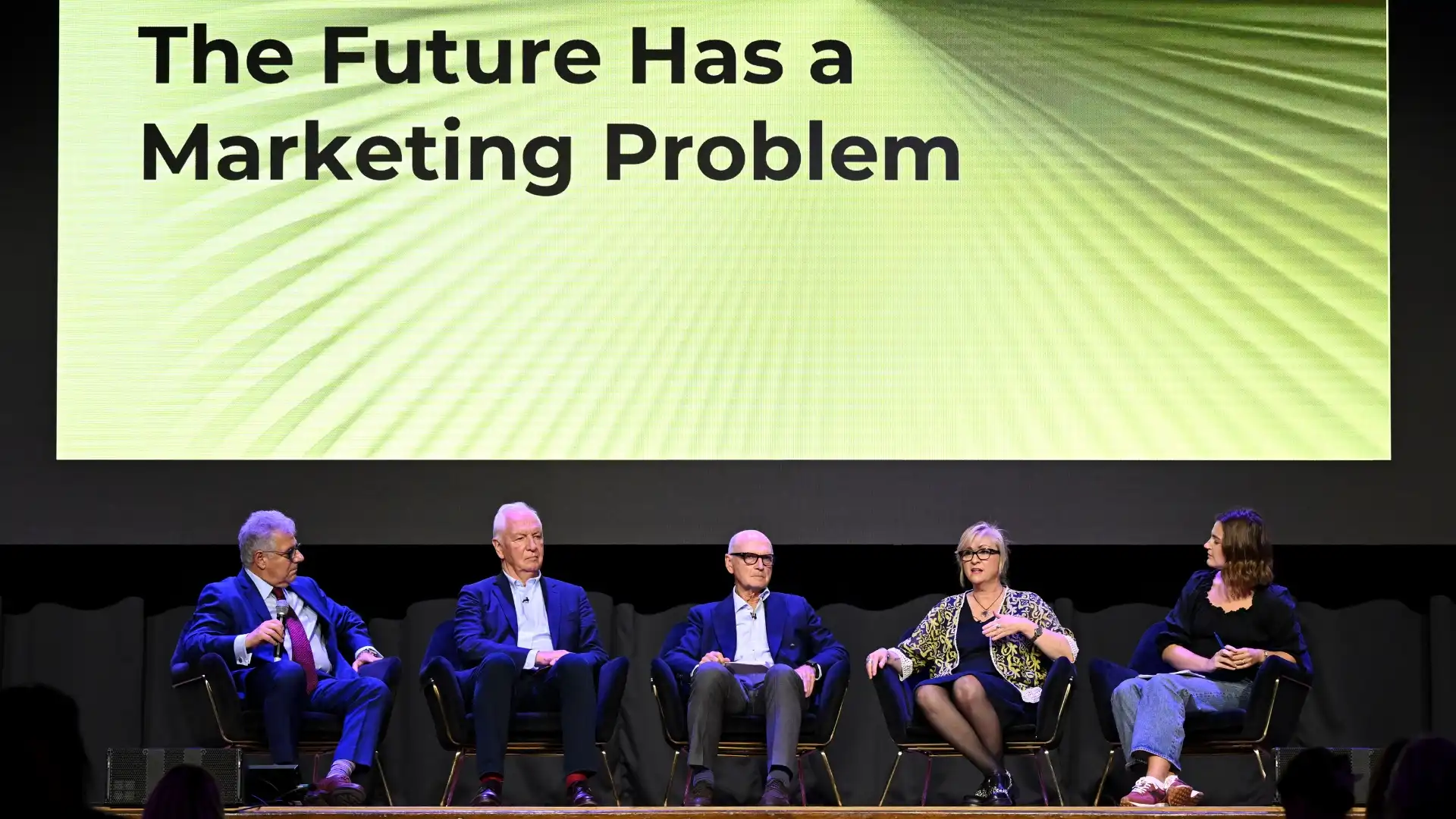
Following Sarah Housley’s exploration of more hopeful futures, Future Forum Founder Matt Scheckner brought together four marketing leaders to tackle a provocative challenge: can we sell the future?
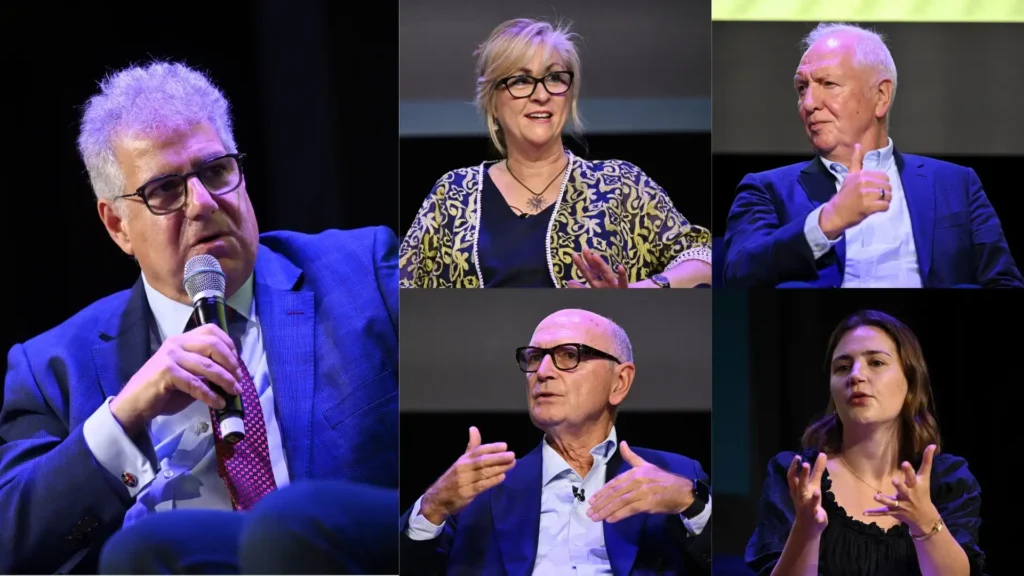
Their conversation revealed that the answer might have less to do with advertising and more to do with giving people a meaningful role in what comes next.
What’s in it for me?
Sara Denby, Director of the Oxford Future of Marketing Initiative at Saïd Business School, argued that the future has forgotten one of marketing’s most fundamental questions.
What’s in it for the audience?
In advertising, understanding what people need and why they should care is essential. But when it comes to technological progress, Denby suggested, we too often expect people to embrace changes without explaining how they’ll benefit.
AI offered a particularly revealing example.
While consumers have spent years expressing a desire for authenticity, representation and trust, they’re now encountering a flood of AI-generated content, synthetic imagery and misinformation.
For Denby, the result is a growing disconnect between the values people care about and the future they’re being presented with.
If we want people to believe in tomorrow, we need to start by listening to them.
Technology should serve humanity
David Wheldon OBE, President of the World Federation of Advertisers, encouraged the audience to think about who the future is really for.
Reflecting on his young grandson learning to read, he offered a simple reminder: the future we’re building belongs to the next generation.
That means putting human wellbeing at the centre of progress.
Wheldon challenged the tendency to organise society around the demands of technology, rather than using technology to improve people’s lives.
He also argued for pragmatic optimism – recognising the scale of today’s challenges while taking practical steps towards something better.
For businesses, that means accepting responsibility for positive change, rather than waiting for governments or institutions to lead.Make the future feel real
Paul Bainsfair, Director General of the Institute of Practitioners in Advertising, highlighted how people have historically struggled to recognise the benefits of unfamiliar innovations.
From the printing press to electricity, transformative technologies have often encountered scepticism before becoming part of everyday life.
His suggestion was to make tomorrow more tangible.
Instead of relying on abstract promises, show people examples of innovation already improving lives.
The future, he argued, is often visible in small ways long before its benefits become widespread.
For the creative industries, that presents an opportunity to help people recognise possibilities they might otherwise overlook.
From passive audiences to active participants
Ziba Goddard, CEO of Cowry Consulting, brought behavioural science into the discussion.
Humans are naturally alert to threats, she explained, and more immediate concerns often take priority over distant possibilities.
That makes an uncertain future particularly difficult to embrace.
But Goddard argued that optimism grows when people feel they have control.
Rather than simply communicating a more positive vision, organisations should create opportunities for people to participate in shaping it.
Even small experiences of progress and agency can make tomorrow feel less like something happening to us – and more like something we’re building together.
A future worth choosing
Across the discussion, the panel returned to a shared challenge.
Trust needs to be rebuilt. Progress needs to feel relevant. Technology must work for people. And optimism must be supported by meaningful action.
That might require a different approach to marketing the future – one that begins not with promises, but with understanding what people value.
Because creating a future people want isn’t simply about persuading them that tomorrow will be better.
It’s about giving them a reason to believe it, and an opportunity to help make it happen.
Related podcasts
Inside London’s Innovation Hub | Jodie Eastwood on the Future & Why Curiosity Matters
What happens when AI companies, scientists, universities, cultural institutions and local communities become neighbours? Jodie Eastwood, CEO of London’s Knowledge Quarter, believes some of the world’s biggest problems could be solved by bringing very different worlds together. In this episode of Tomorrow: The Future Forum, Jodie joins Oli Barrett MBE…

Universities Are the UK’s Innovation Engine | Vivienne Stern MBE on AI, Skills & the Future of Work
What will universities become in the age of AI? In this episode of Tomorrow: The Future Forum, Oli Barrett MBE sits down with Vivienne Stern MBE, Chief Executive of Universities UK, to explore how universities, technology and the world of work are changing and what the next decade could look…

The Future Needs Human Connection | Martina McDonnell on Marketing, Creativity & Connection
What happens to marketing when AI can translate, create and optimise at a scale we’ve never seen before? In this episode of Tomorrow, the Future Forum, Oli Barrett MBE speaks with Martina McDonnell, International Marketing Director at Meta, about the future of marketing, AI, global brands, creators, cultural relevance and…
Related speakers
-
Matt Scheckner Founder of Future Forum
A convenor who has spent his career building the rooms where unlikely worlds meet.
Matt’s profile -

Sara Denby Director of Oxford Future of Marketing Initiative (FOMI), Saïd Business School
Sara’s profile -
David Wheldon OBE President Emeritus of World Federation of Advertisers (WFA)
A marketer who knows what changes when you move from selling the idea to owning the outcome.
David’s profile -
Paul Bainsfair Director General of Institute of Practitioners in Advertising (IPA)
A former agency chief who moved from winning business to raising the standards of the business itself.
Paul’s profile