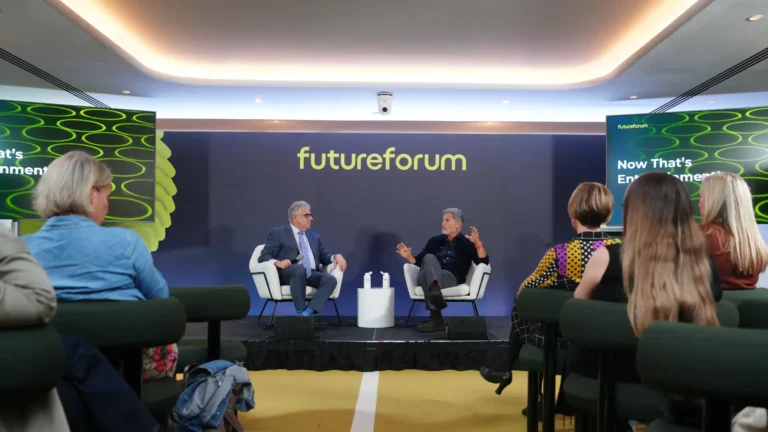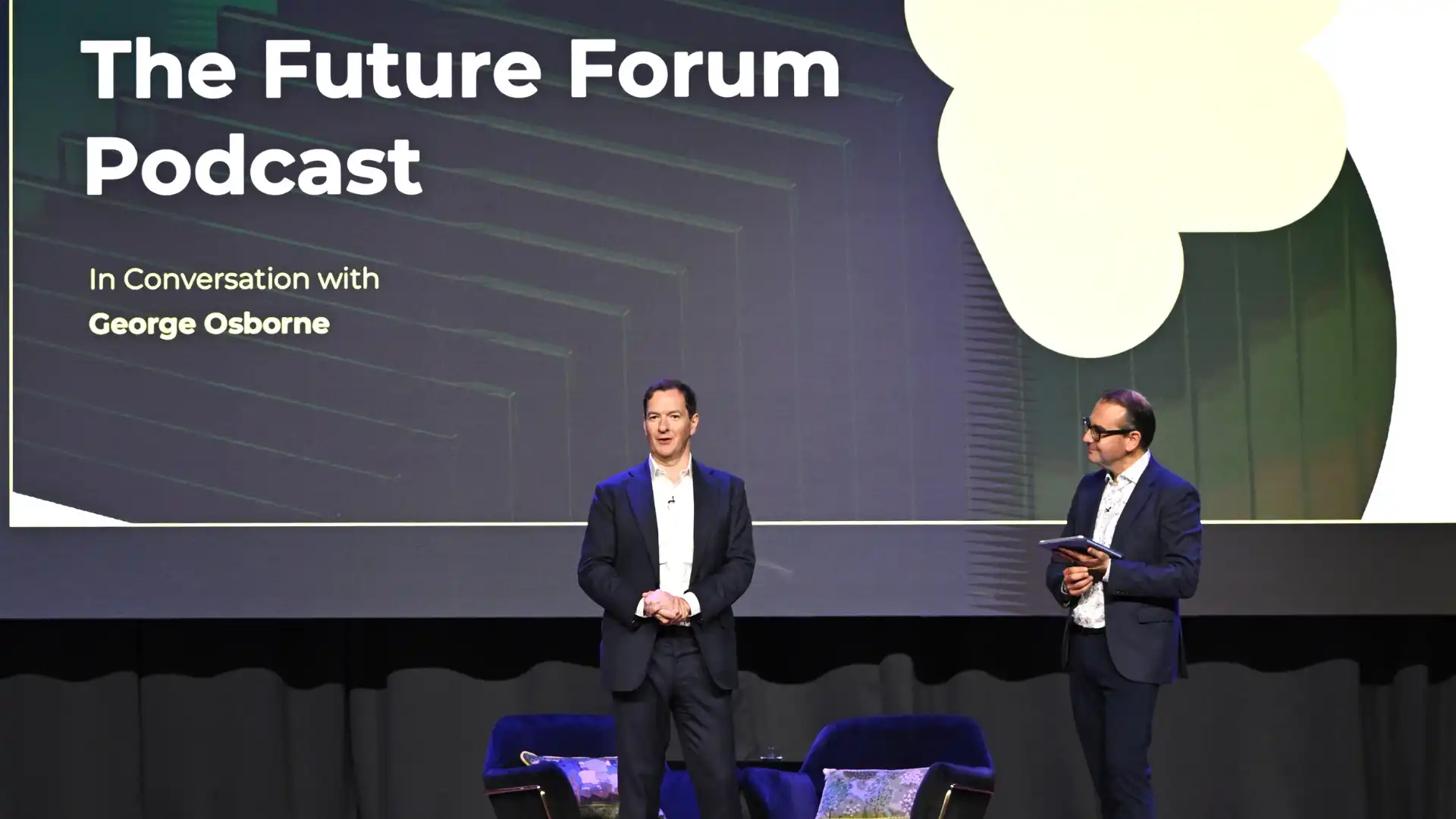
From transforming public services to giving individuals greater control over their lives, AI promises extraordinary opportunities. But how do we ensure those benefits reach everyone? At Future Forum, former Chancellor George Osborne joined Oli Barrett MBE for a live recording of the Tomorrow podcast to explore the possibilities – and challenges – of the AI revolution.
What if the greatest opportunity presented by artificial intelligence isn’t simply doing things faster, but making knowledge, expertise and opportunity available to more people?
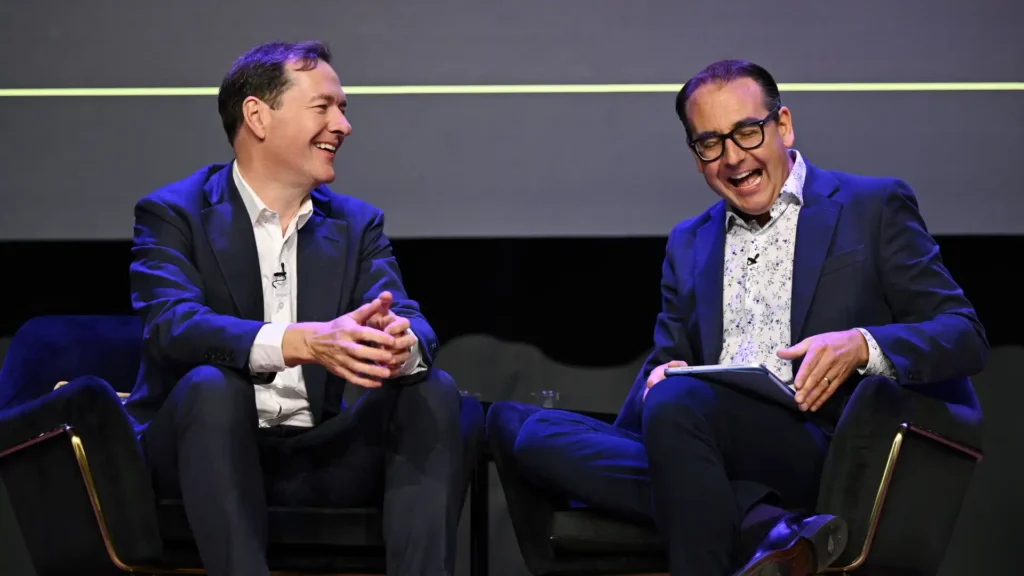
That was the central argument George Osborne brought to Future Forum, where he joined Oli Barrett for a conversation spanning technological change, economic prosperity and the future of public services.
Now working with OpenAI on its relationships with countries around the world, the former Chancellor offered an optimistic vision of AI’s potential – while acknowledging the disruption and difficult decisions that come with it.
Putting more power into more hands
For Osborne, one of AI’s most significant possibilities is the democratisation of expertise.
Services and advice that once required access to expensive specialists could become more widely available.
From financial information to professional guidance, AI is already changing how people access knowledge and make decisions.
Osborne suggested this represents a broader redistribution of capability, giving individuals greater influence over their own lives.
But he also recognised a familiar tension. We can usually identify what new technologies might disrupt long before we understand the opportunities they will create.
He pointed to the transformation of King’s Cross as an example. Having been involved in early efforts to regenerate the area, he reflected on how difficult it would have been to anticipate its emergence as a major technology hub.
Could AI unlock economic prosperity?
Osborne’s more ambitious prediction concerned economic growth.
He argued that AI has the potential to improve productivity, raise living standards and help governments confront some of their most difficult financial challenges.
For countries struggling to fund healthcare, education and other public services, technological advances could offer new ways to deliver better outcomes without proportionately increasing costs.
But the promise comes with an important qualification.
The benefits depend on how AI is deployed, managed and made accessible. Greater technological capability does not automatically translate into greater prosperity for everyone.
What governments need to get right
Through his work with OpenAI, Osborne said he encounters two recurring concerns from national leaders.
The first is whether their countries are participating fully in the AI revolution.
The second is sovereignty – how much control they can retain over technology that is increasingly fundamental to their economies.
He highlighted Greece’s efforts to introduce AI into education as an example of government-led adoption, beginning with teacher training rather than placing technology directly into students’ hands.
For the UK, he saw particular strengths in its research institutions, technology companies and growing AI ecosystem.
Yet he also questioned whether government was being ambitious enough about applying AI to public services.
Could schools, healthcare and other institutions use the technology to improve outcomes? And what organisational changes would make that possible?
For Osborne, political leadership and a willingness to overcome institutional resistance will be crucial.
The gap between possibility and reality
Despite the pace of technological development, Osborne noted that AI’s capabilities are already moving faster than many organisations can adopt them.
That creates a gap between what the technology can do and what people are currently using it for.
Questions around regulation, safety and security remain essential, particularly as AI becomes more integrated into national infrastructure.
But Osborne’s challenge was to ensure that caution doesn’t prevent governments from exploring opportunities to improve people’s lives.
The real measure of success won’t simply be how sophisticated AI becomes.
It will be whether public services work better, businesses become more productive and more people experience the benefits.
A future worth embracing
Asked what advice he would offer future generations, Osborne encouraged people to get involved in shaping the world around them.
Drawing on his own move from finance into artificial intelligence in his fifties, he also made the case for remaining open to new challenges throughout life.
And when asked what he hoped to see more of in the future, his answer was simple.
Prosperity.
His vision was undoubtedly optimistic. But it also left Future Forum with a question that extends far beyond the technology itself.
If AI gives us the tools to create greater prosperity, what wi
Related podcasts

Inside London’s Innovation Hub | Jodie Eastwood on the Future & Why Curiosity Matters
What happens when AI companies, scientists, universities, cultural institutions and local communities become neighbours? Jodie Eastwood, CEO of London’s Knowledge Quarter, believes some of the world’s biggest problems could be solved by bringing very different worlds together. In this episode of Tomorrow: The Future Forum, Jodie joins Oli Barrett MBE…

Universities Are the UK’s Innovation Engine | Vivienne Stern MBE on AI, Skills & the Future of Work
What will universities become in the age of AI? In this episode of Tomorrow: The Future Forum, Oli Barrett MBE sits down with Vivienne Stern MBE, Chief Executive of Universities UK, to explore how universities, technology and the world of work are changing and what the next decade could look…

The Future Needs Human Connection | Martina McDonnell on Marketing, Creativity & Connection
What happens to marketing when AI can translate, create and optimise at a scale we’ve never seen before? In this episode of Tomorrow, the Future Forum, Oli Barrett MBE speaks with Martina McDonnell, International Marketing Director at Meta, about the future of marketing, AI, global brands, creators, cultural relevance and…
Related speakers
-
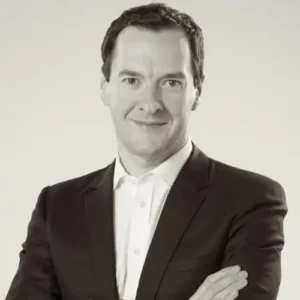
Rt Hon George Osborne CH Managing Director and Head of OpenAI for Countries of OpenAI
A former Chancellor who moved from setting economic policy to helping governments prepare for the AI era.
Rt’s profile -
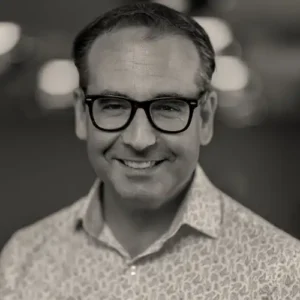
Oli Barrett CHIEF CONTENT OFFICER
Oli’s profile