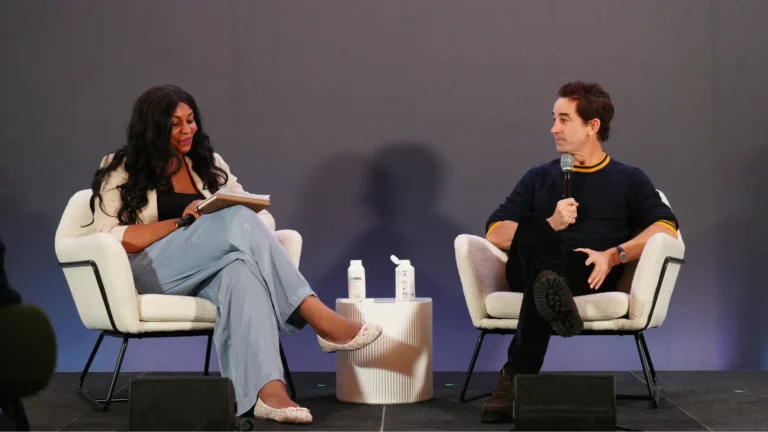
A chance encounter in an Indian village inspired an invention designed to give women back something invaluable – their time. At Future Forum, Dr Navjot Sawhney explained why the best innovation begins with the problem, not the product.
For many of us, doing the laundry involves pressing a button and getting on with our day. For millions of households without reliable electricity or running water, washing clothes by hand remains a physically demanding task that can consume hours every week.
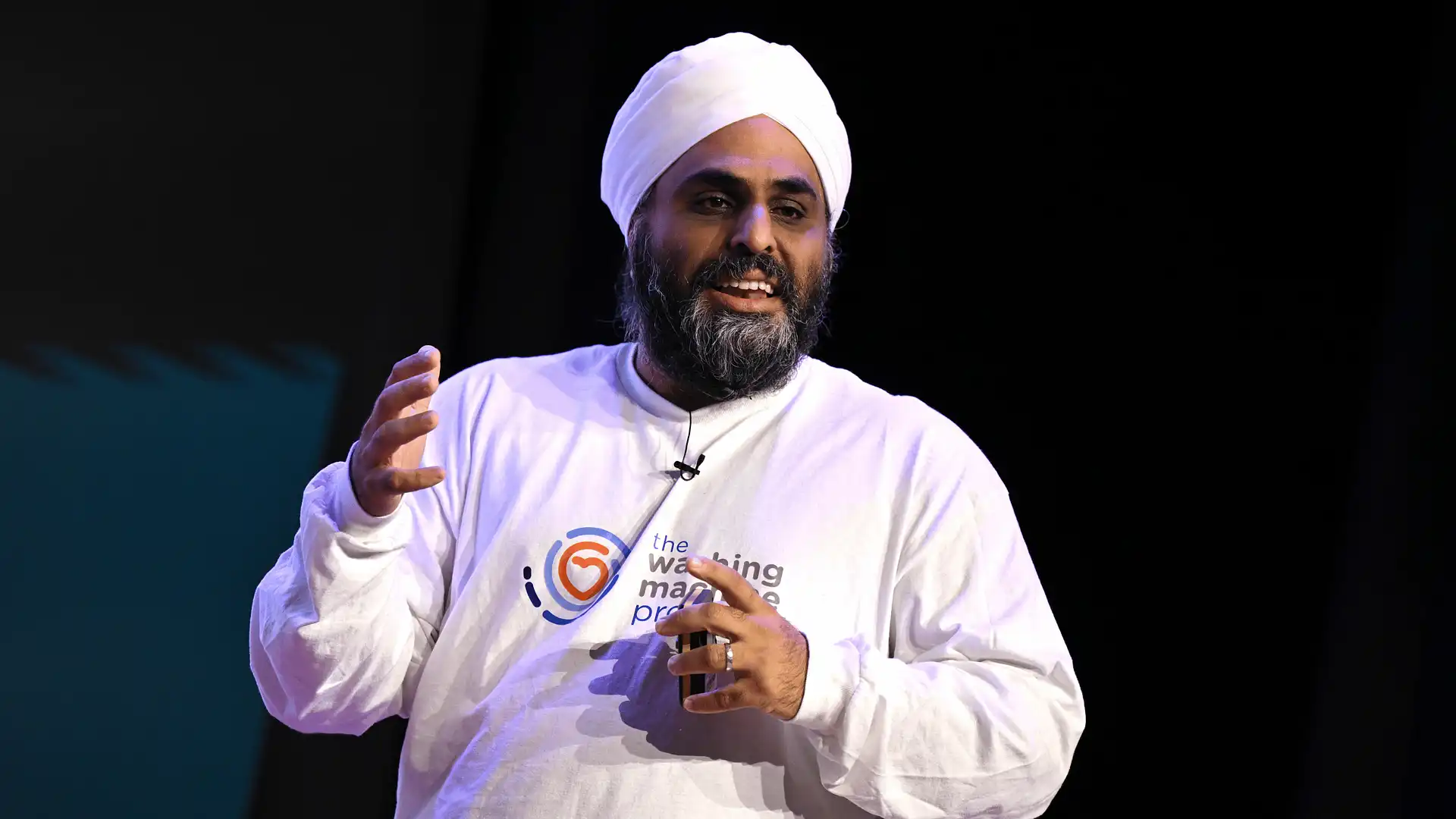
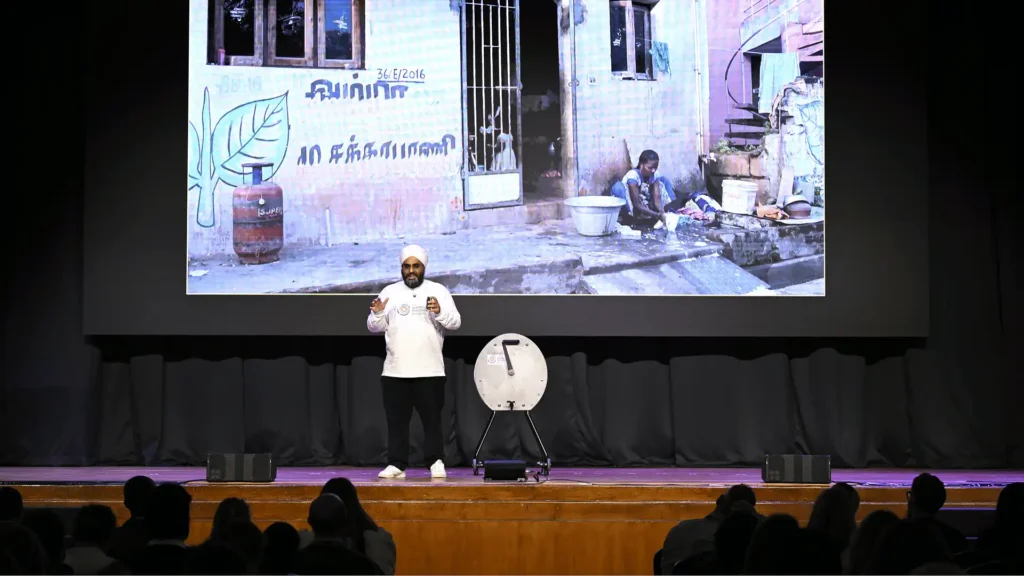
At Future Forum, Dr Navjot Sawhney, Founder of The Washing Machine Project, challenged the audience to see this familiar household chore through a different lens: as an obstacle to education, paid work and independence.
A promise that became a project
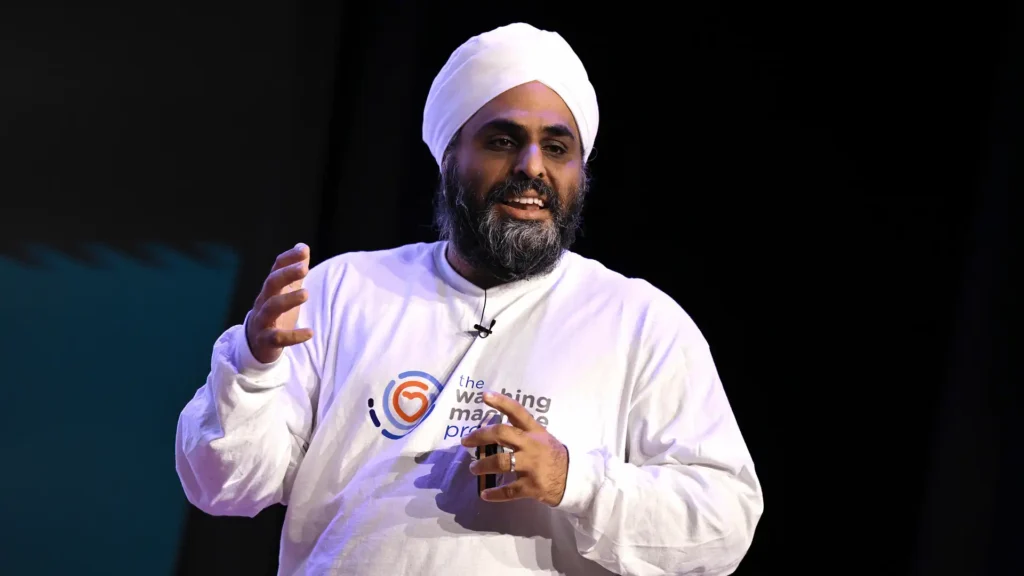
Sawhney described how he left a career developing consumer appliances to volunteer in India. There he met his neighbour Divya, who wanted to work but spent much of her time on unpaid household labour. When he offered to buy her an electric washing machine, she explained why it wouldn’t help: she had neither a reliable electricity supply nor running water.
He promised to find another solution. Back in the UK, his earliest prototypes involved washing socks in a salad spinner around his mother’s kitchen table. That experimentation ultimately became a portable, manually operated washing machine requiring no electricity or fixed water supply.
According to Sawhney, the design can reduce washing time by 75% and water use by 50% compared with hand washing. These are the project’s reported performance figures, rather than independent findings established in the session.
The real product is opportunity
The most powerful part of the presentation wasn’t the machinery. It was the stories of people using it.
Sawhney described a family running a laundry service in Uganda who, he said, tripled their income in their first month using the machine. That additional income helped them secure a school report card needed for their child’s progression. Elsewhere, the project has supported refugee communities, schools and low-income households.
These examples turned a product demonstration into a much larger argument about dignity and the value of time. The project said it had already reached more than 100,000 lives and was working towards helping one million people by 2030.
Build with people, not just for them
Sawhney’s experience of rapid prototyping in the field shaped his approach. Instead of designing in isolation and hoping a product finds a market, his team starts with people experiencing the problem and tests solutions in their real environments.
It is a useful challenge for anyone working in innovation: are we making an existing product more sophisticated, or solving a problem that matters?
Sometimes changing the future doesn’t require the latest technology. It requires understanding whose time, opportunities and potential are being overlooked.
Related podcasts

How to Stay Healthier for Longer with Dr Sophia Pathai On The Future of Ageing & Prevention
What if the biggest challenge facing healthcare isn’t helping us live longer—but helping us stay healthier for longer? In this episode of Tomorrow: Future Forum, Oli Barrett MBE is joined by Dr Sophia Pathai, Founder & CEO of AZM, physician, scientist and author of The Longevity Code. Together they explore…

Can Manchester Become Europe’s Innovation Capital with Dr Karim Bahou
In this episode, Oli Barrett MBE sits down with Dr Karim Bahou, Head of Innovation at Sister, Manchester’s £1.7 billion innovation district, to explore the future of technology, entrepreneurship and economic growth. From artificial intelligence and synthetic biology to startup ecosystems and the power of place, Karim shares why the…
Why Britain Is Wasting Its Greatest Source of Talent with Maggie Philbin OBE
Maggie Philbin OBE, CEO TeenTech and Technology Broadcaster joins Oli Barrett for a fascinating conversation about technology, education, opportunity and the future of work. Drawing on decades spent exploring innovation and her work as founder of TeenTech, Maggie explains why Britain’s biggest untapped resource is the talent sitting in classrooms…
Related speakers
-
Dr Navjot Sawhney Founder of The Washing Machine Project
A Dyson engineer who left consumer design to tackle a problem measured in hours of unpaid labour.
Navjot’s profile