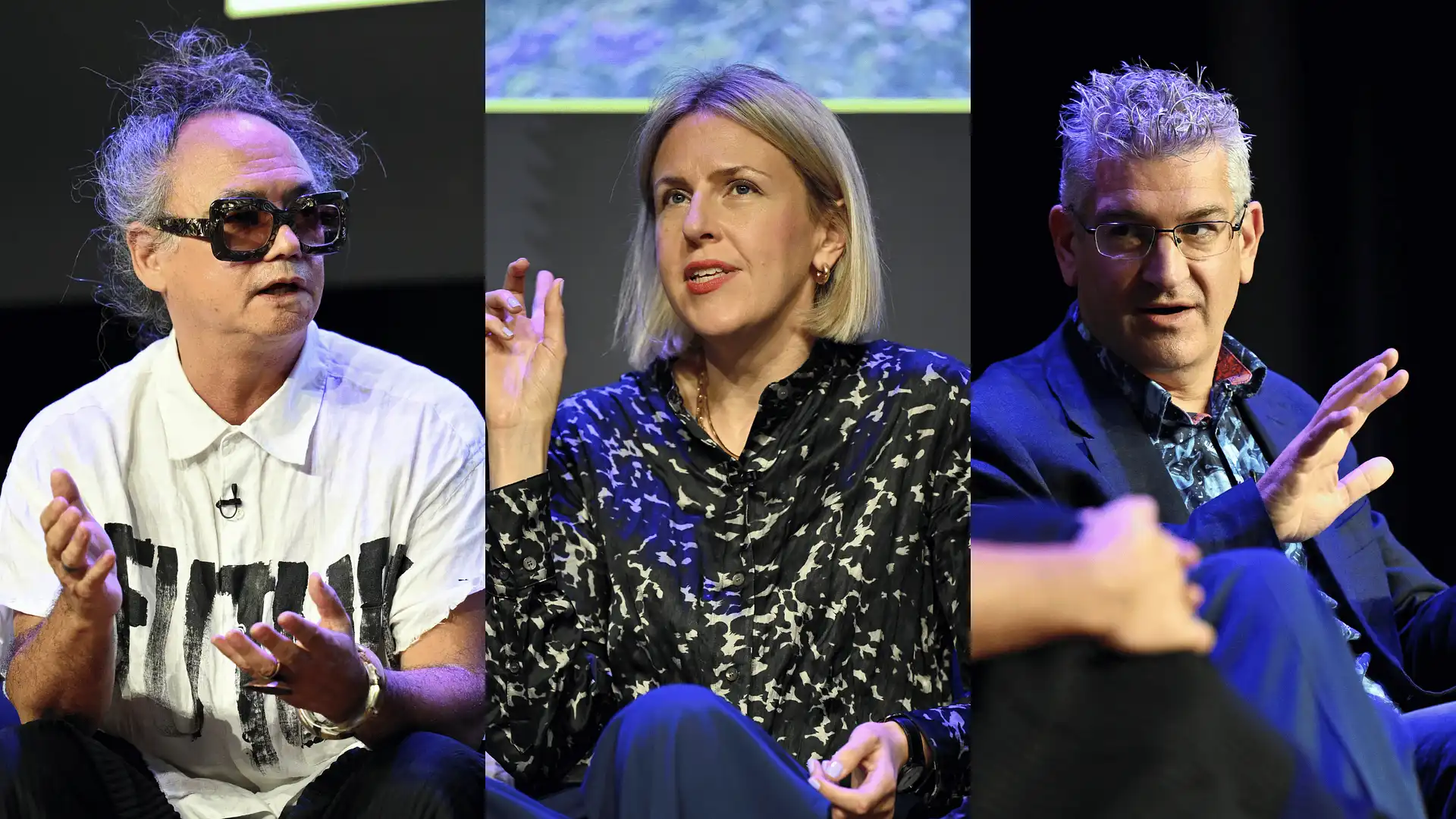
AI promises to make creative work faster and more accessible. But artist Alexandra Daisy Ginsberg and Adobe’s Simon Morris asked whether the friction it removes is sometimes the very thing that gives work meaning.
When does a creative tool become a creative replacement? And what do we lose when we automate a process we once performed ourselves?
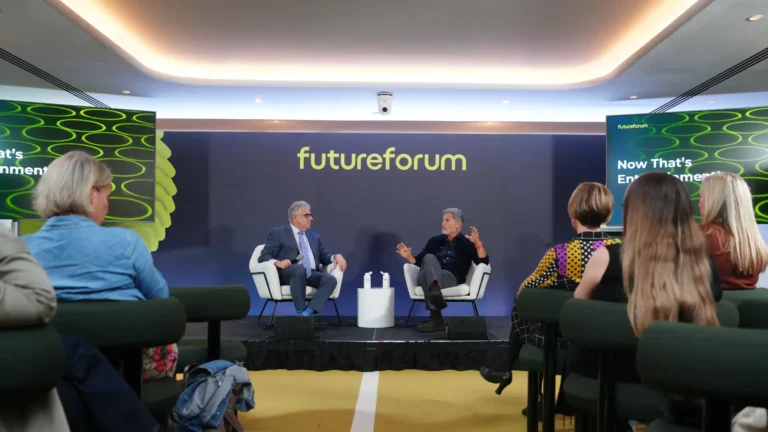
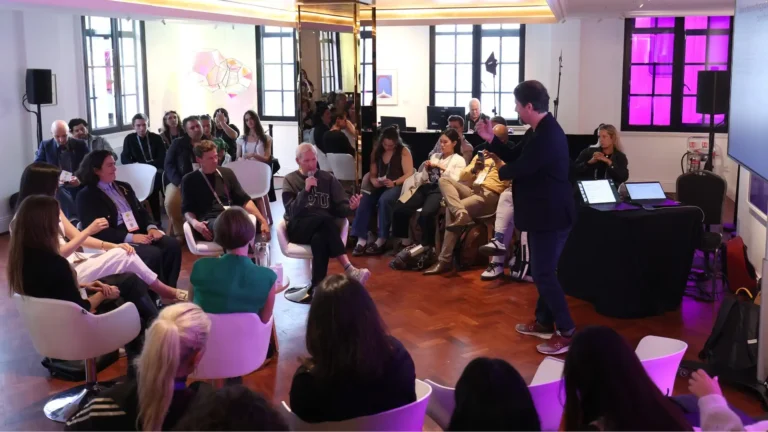
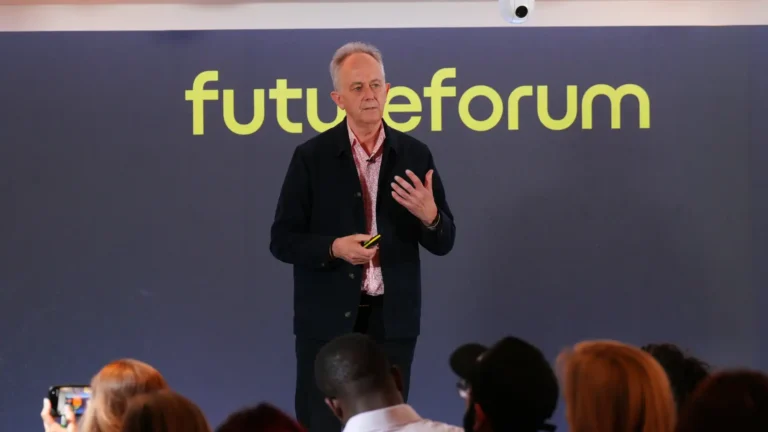
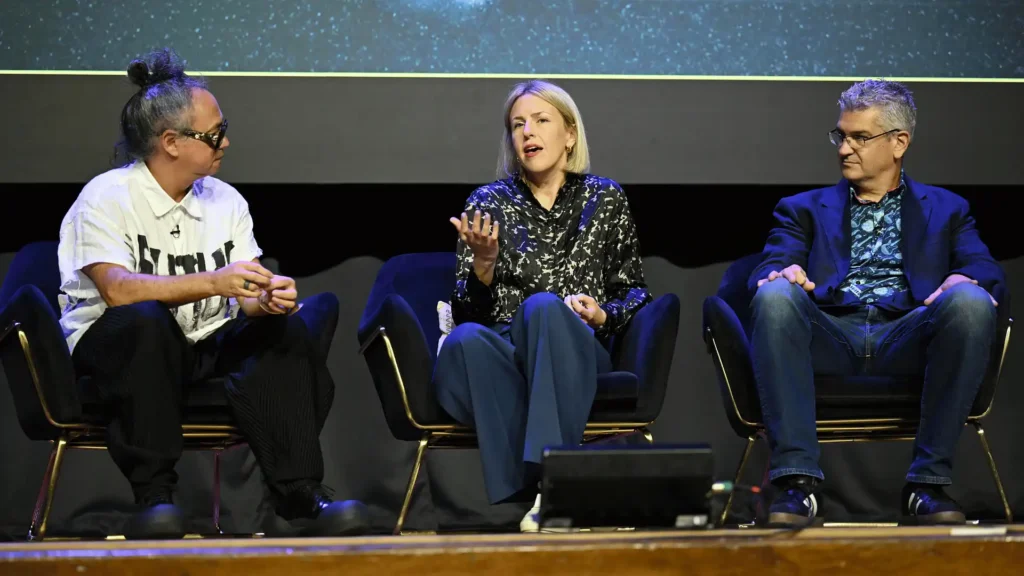
Those questions animated one of Future Forum’s most thought-provoking conversations, featuring multidisciplinary artist Dr Alexandra Daisy Ginsberg and Simon Morris, Vice President of International Marketing at Adobe. Moderator David Shing brought the two perspectives together: the artist wrestling with what technology should do, and the company building tools to help creators use it.
The problem with automating a flower
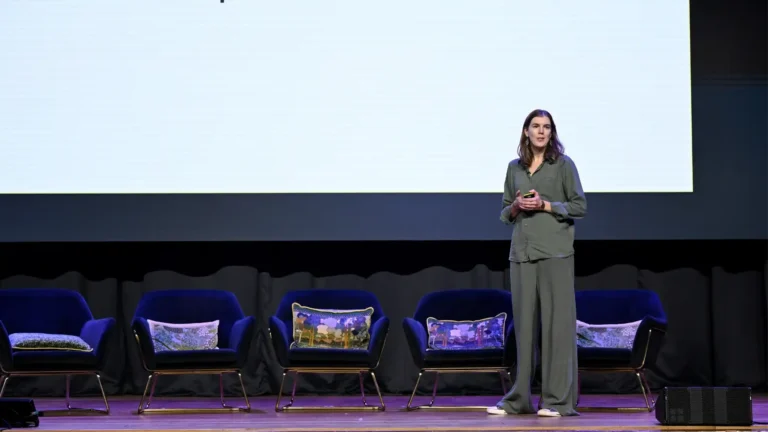
Ginsberg described Pollinator Pathmaker, a project using an algorithm to design gardens for pollinating insects rather than human aesthetics.
Creating its visual interface has required hundreds of detailed botanical paintings. She has spent considerable time trying to use AI to help reproduce her style – with frustrating results.
The models struggle with the accuracy required, she explained, partly because many wildflowers lack the photographic data that common subjects enjoy. Even when the results look convincing, they can invent details. And reviewing large quantities of imperfect output risks turning the artist into an assistant to the machine.
The process prompted a more fundamental question: which parts of making art are worth preserving, even when they are laborious?
More time for the work that matters
Morris approached the same dilemma from the perspective of commercial creativity. Adobe’s customers, he argued, often want AI to remove repetitive tasks such as resizing assets or adapting content across formats.
He offered a campaign example in which nine original artworks were expanded into tens of thousands of assets for international use. The initial ideas came from human creators; AI enabled the work to reach more people with less repetitive production.
For Morris, taste, judgement, storytelling and emotional connection remain central to creative value. The question is how technology can leave more time for them.
Who stays in control?
Ginsberg described experimenting with ways to direct AI more precisely, so that her own drawings, artistic decisions and accidents remain at the heart of the work. Morris discussed Adobe’s approaches to provenance, attribution and commercially safer AI workflows.
They did not resolve every tension. Ginsberg worried that the pressure to make everything faster could crowd out the time required to observe, practise and discover. Morris believed the tools could help protect that creative time by removing other demands.
What emerged was a productive disagreement rather than a simple choice between embracing and rejecting AI.
The future of creativity may depend less on whether we use intelligent tools, and more on who gets to decide which parts of the creative process matter most.
Related podcasts
The Future of Creativity: Why AI Won’t Replace Human Imagination with Julian Douglas
What happens when one of the world’s leading creative agency CEOs looks at the future of AI, creativity and human potential? In this episode of Future Forum, Oli Barrett MBE sits down with Julian Douglas (Dougie), Group CEO of VCCP, Chair of UK Advertising and one of the most influential…
The Future Needs Original Thinkers | Stuart Worden OBE on Curiosity, Creativity & Ambition
What can the BRIT School teach us about the future of education, creativity, leadership and work? In this episode of Future Forum, Oli Barrett MBE is joined by Stuart Worden OBE, Principal of the BRIT School, to explore what it takes to develop original thinkers in a rapidly changing world.…
Related speakers
-
Simon Morris Vice President International Marketing of Adobe
A would-be diplomat who found his way into technology – then built a career making it mean something to people.
Simon’s profile -
Dr Alexandra Daisy Ginsberg Artist
Alexandra’s profile -
David 'Shingy' Shing The Digital Prophet
A designer who invented a job title for the kind of career that didn’t yet have one.
David’s profile