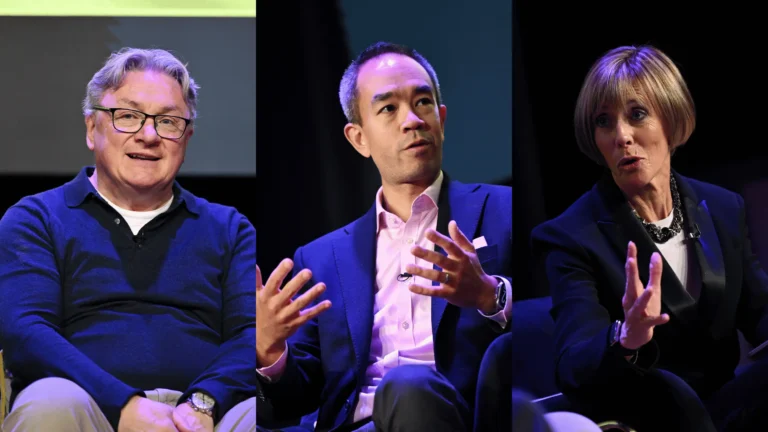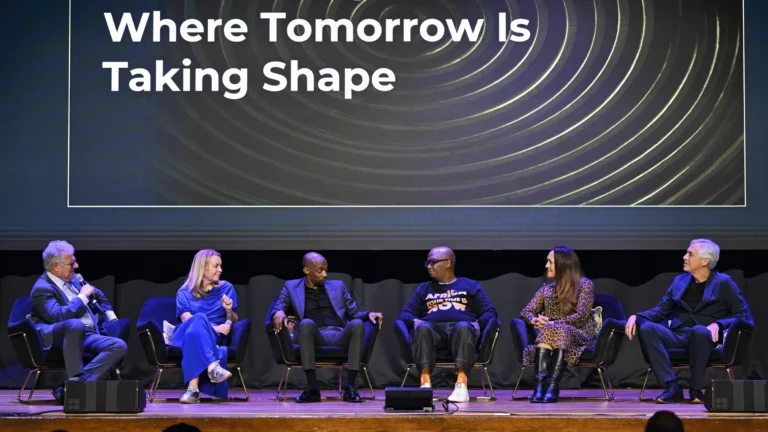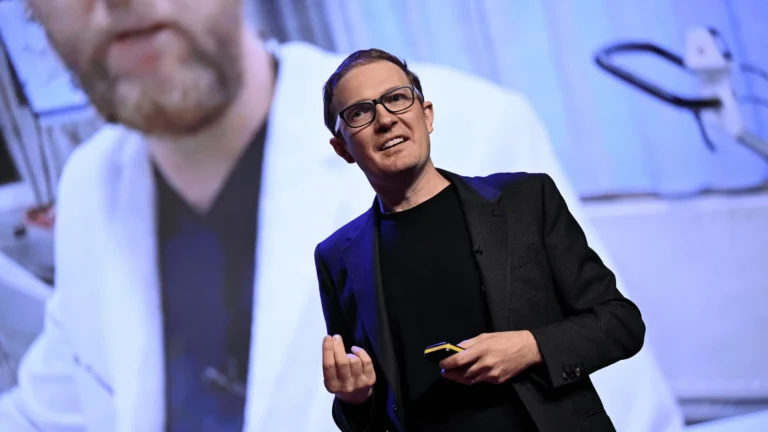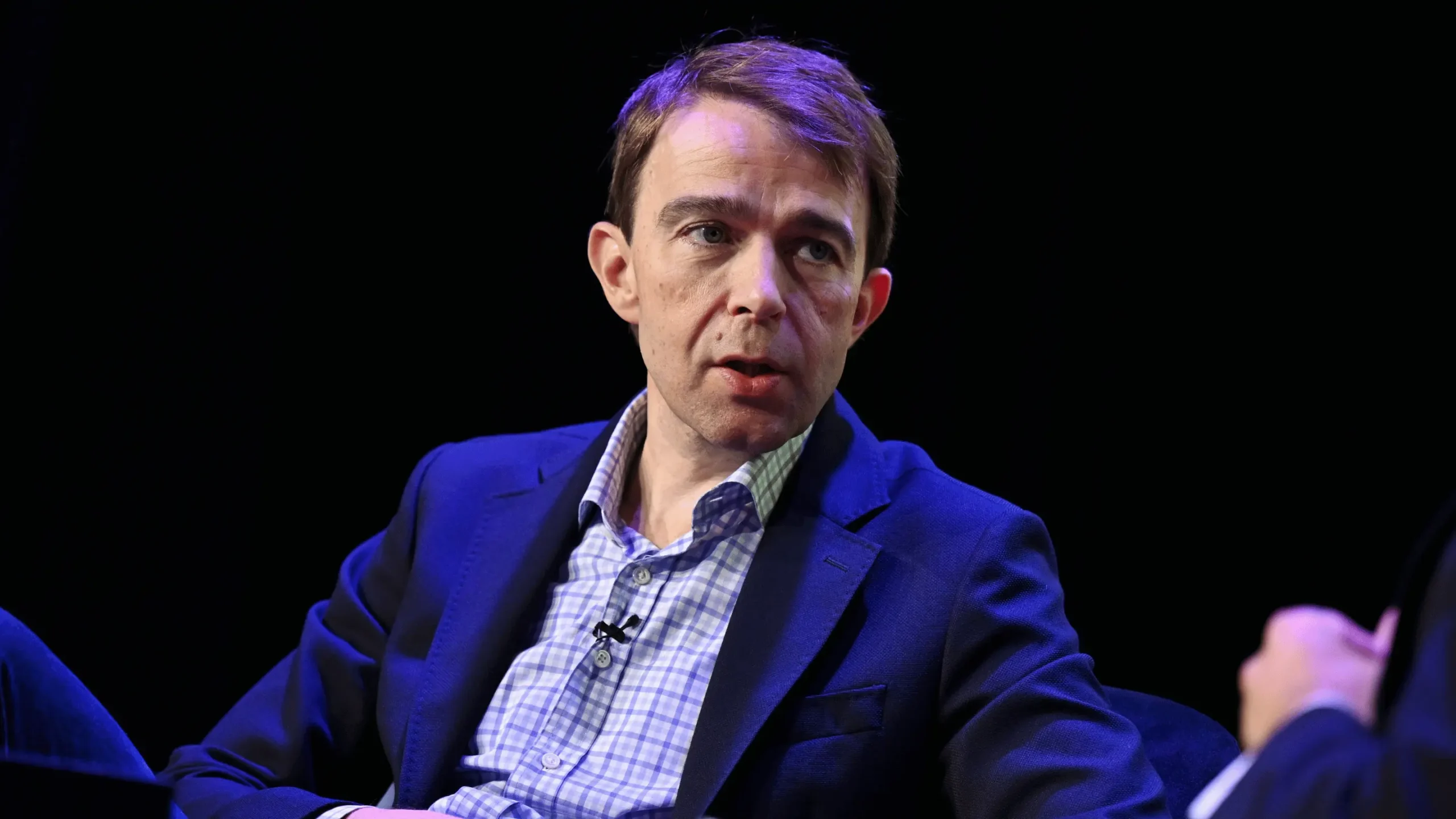
The BBC has spent more than a century adapting to new technologies and changing audiences. At Future Forum, Chief Strategy and Transformation Officer John Curbishley joined Oli Barrett MBE to explore what meaningful transformation looks like – and why knowing what to stop doing can be just as important as knowing what comes next.
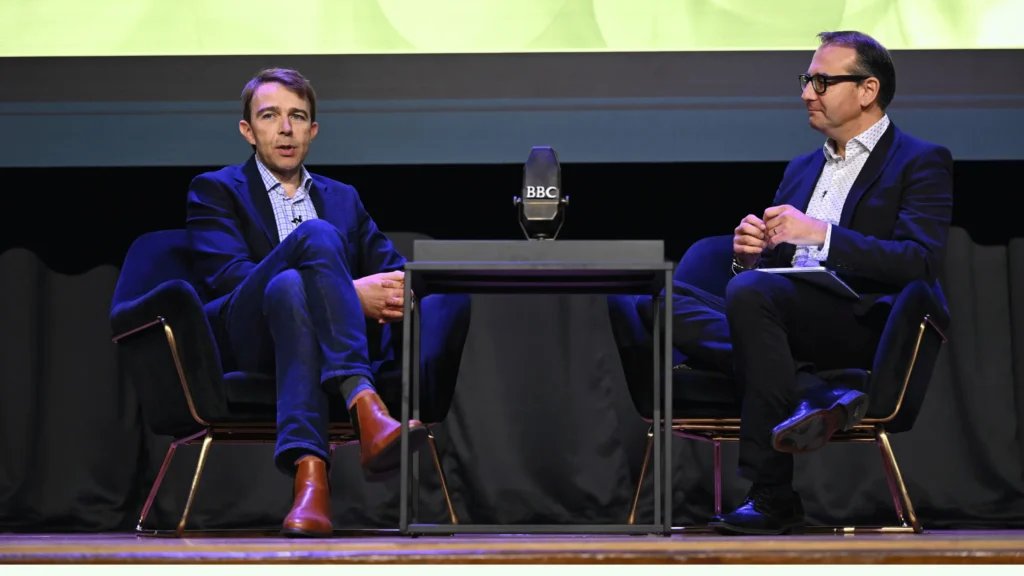
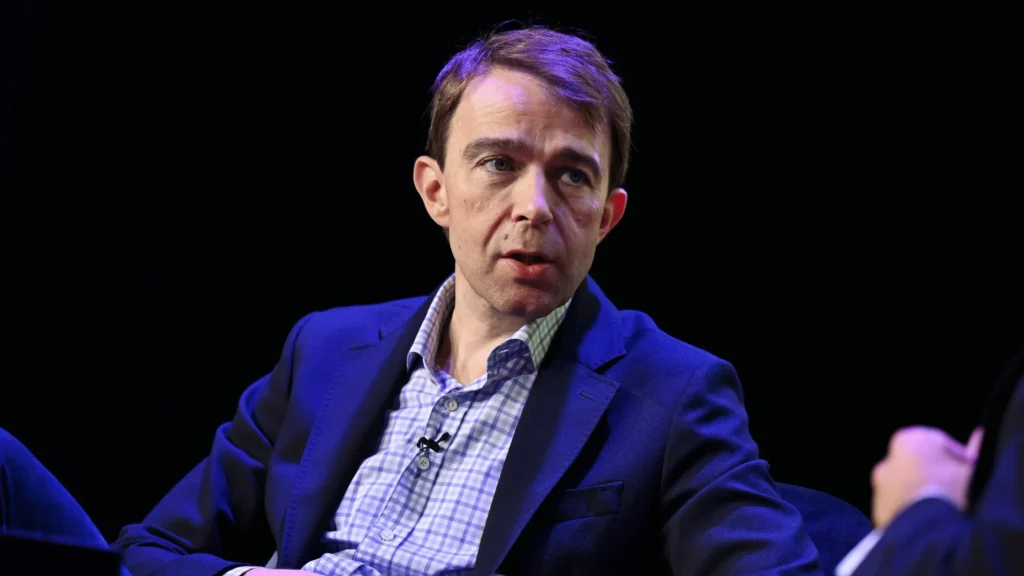
John Curbishley arrived on the Vision Hall stage carrying a piece of BBC history: one of its original radio microphones, borrowed from the organisation’s archive.
It was a fitting starting point for a conversation about innovation. Founded in 1922, the BBC has navigated the arrival of television, digital broadcasting, streaming and social media. Now, it faces another period of profound change as AI reshapes how audiences discover and consume content.
The mission stays. The methods change.
For Curbishley, the BBC’s founding purpose – to inform, educate and entertain – remains as relevant as ever.
He argued that trusted news, British storytelling and public service content are increasingly important in a fragmented, globalised media landscape.
But fulfilling that mission means meeting audiences where they are.
Alongside developing its own services, including BBC iPlayer, the BBC is expanding its presence on third-party platforms such as YouTube and experimenting with new distribution opportunities, including Spotify.
The challenge isn’t simply to protect established services. It’s to ensure that public service media continues reaching new generations.
Innovation means knowing what to stop
One of Curbishley’s clearest observations concerned the difficult choices behind organisational transformation.
Launching something new is often easier than deciding what should end. At the BBC, even long-established services with smaller audiences have loyal supporters who value them.
But preserving everything comes with its own risks.
As Curbishley explained, organisations must weigh the immediate discomfort of change against the longer-term danger of becoming irrelevant.
You can’t transform an organisation with a PowerPoint
Asked how to bring thousands of colleagues through change, Curbishley emphasised the importance of evidence, honest evaluation and listening.
Successful transformation requires engaging the people who understand an organisation best – in the BBC’s case, its journalists, programme makers and other specialists.
But listening must eventually lead to decisions.
He also distinguished between changes that can be tested and reversed, and major commitments that are harder to undo. Experiments with content and platforms can provide valuable learning without requiring permanent decisions.
The important thing is not to wait for perfect information before acting.
Why partnerships matter
Curbishley’s final point was particularly relevant to Future Forum.
Asked which transformations the BBC could achieve without outside help, he struggled to identify any.
From independent production companies and musicians to educators and scientists, collaboration is fundamental to the organisation’s work.
His message extended well beyond broadcasting: transformation isn’t something leaders can deliver alone.
It requires the confidence to experiment, the judgement to make difficult choices and the willingness to work with people beyond your own organisation.
For an institution more than a century old, perhaps the greatest lesson is that staying true to your purpose sometimes means changing almost everything else.
Related podcasts

Inside London’s Innovation Hub | Jodie Eastwood on the Future & Why Curiosity Matters
What happens when AI companies, scientists, universities, cultural institutions and local communities become neighbours? Jodie Eastwood, CEO of London’s Knowledge Quarter, believes some of the world’s biggest problems could be solved by bringing very different worlds together. In this episode of Tomorrow: The Future Forum, Jodie joins Oli Barrett MBE…

Universities Are the UK’s Innovation Engine | Vivienne Stern MBE on AI, Skills & the Future of Work
What will universities become in the age of AI? In this episode of Tomorrow: The Future Forum, Oli Barrett MBE sits down with Vivienne Stern MBE, Chief Executive of Universities UK, to explore how universities, technology and the world of work are changing and what the next decade could look…

The Future Needs Human Connection | Martina McDonnell on Marketing, Creativity & Connection
What happens to marketing when AI can translate, create and optimise at a scale we’ve never seen before? In this episode of Tomorrow, the Future Forum, Oli Barrett MBE speaks with Martina McDonnell, International Marketing Director at Meta, about the future of marketing, AI, global brands, creators, cultural relevance and…
Related speakers
-
John Curbishley Group Strategy Officer of BBC
John’s profile