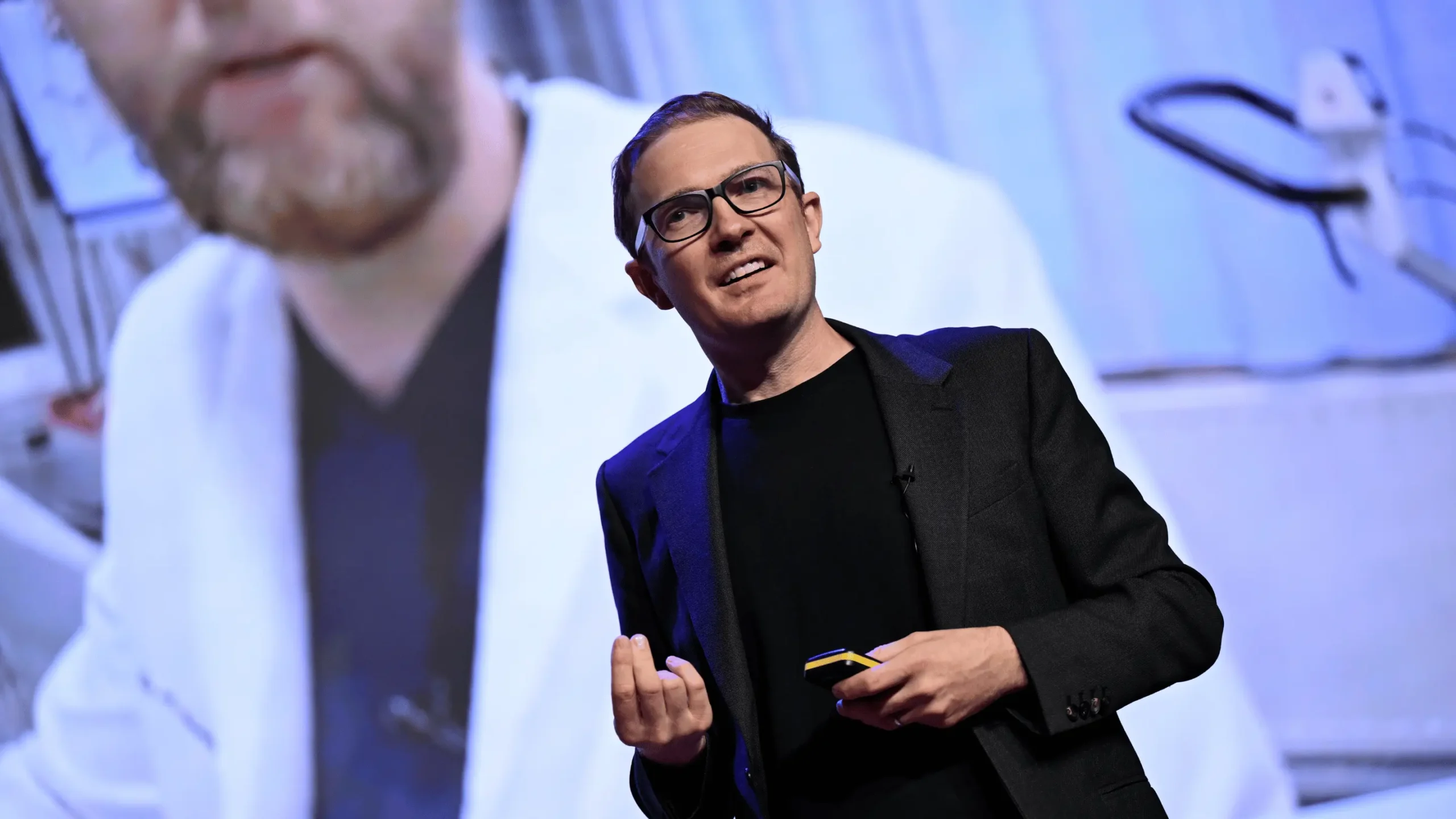
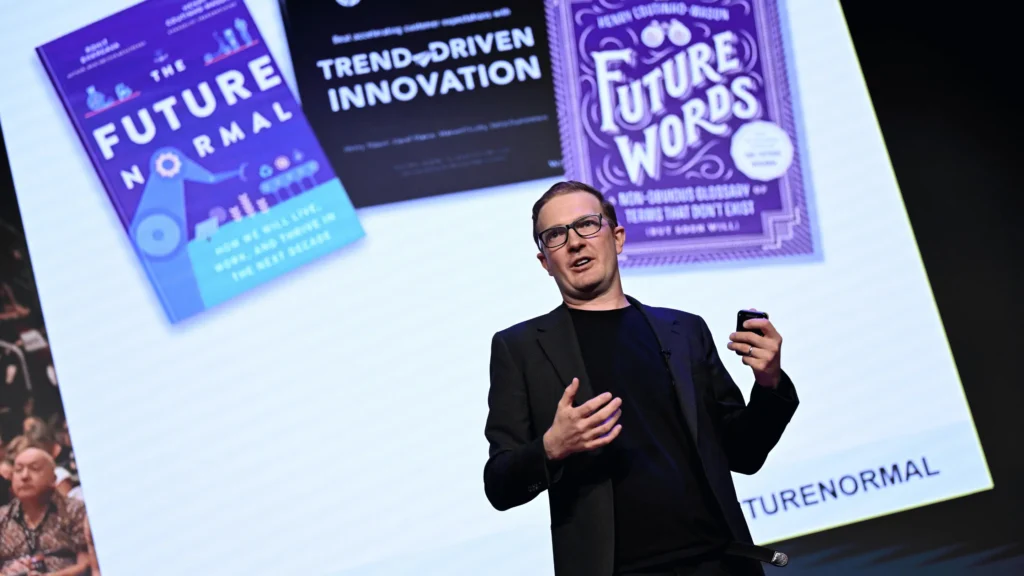
At Future Forum, Henry Coutinho-Mason turned an audience into a collective imagination engine – using AI to bring hundreds of individual ideas into a shared picture of what comes next.
Most organisations ask a relatively small number of people to decide what the future should look like. Those plans are then handed to everyone else to deliver.
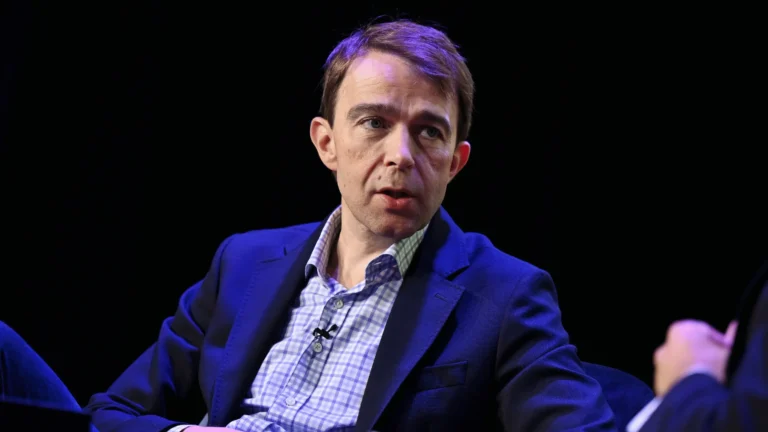
At Future Forum, author and futurist Henry Coutinho-Mason challenged that model – and invited the audience to try a different approach.
Beyond top-down imagination
Coutinho-Mason began with a tension between rapidly advancing technologies and institutions that are often much slower to change. We have tools that can process and combine extraordinary amounts of information, he argued, but we still give relatively few people the opportunity to contribute their ideas.
His proposition wasn’t to use AI simply to replace workers or generate more content. It was to help more people participate in shaping a future they care about.
A room full of possibilities
Audience members were invited to sketch their visions on paper and submit them. Coutinho-Mason then demonstrated how the contributions could be gathered and analysed, allowing common themes, disagreements and overlooked ideas to become visible.
The audience saw an early synthesis of its ideas only minutes after they were collected. He explained how the material could be developed further into a visual narrative and shared back with participants.
The technology made the analysis possible at speed. But the source of the insight remained the people in the room.
Not more content – more collective intelligence
Coutinho-Mason was clear that the point wasn’t to flood organisations with AI-generated material. The value lay in hearing a wider range of perspectives and finding connections that would otherwise remain invisible.
He also challenged the assumption that such experiences must be created by specialist engineers. As an author rather than a software developer, he had been able to build a new way for his audiences to take part.
For organisations, the question is no longer simply how AI might make existing processes faster.
It is whether these new capabilities could allow them to do things they previously couldn’t – particularly when it comes to listening, imagining and deciding together.
Related podcasts
Inside London’s Innovation Hub | Jodie Eastwood on the Future & Why Curiosity Matters
What happens when AI companies, scientists, universities, cultural institutions and local communities become neighbours? Jodie Eastwood, CEO of London’s Knowledge Quarter, believes some of the world’s biggest problems could be solved by bringing very different worlds together. In this episode of Tomorrow: The Future Forum, Jodie joins Oli Barrett MBE…

Universities Are the UK’s Innovation Engine | Vivienne Stern MBE on AI, Skills & the Future of Work
What will universities become in the age of AI? In this episode of Tomorrow: The Future Forum, Oli Barrett MBE sits down with Vivienne Stern MBE, Chief Executive of Universities UK, to explore how universities, technology and the world of work are changing and what the next decade could look…
The Future Needs Human Connection | Martina McDonnell on Marketing, Creativity & Connection
What happens to marketing when AI can translate, create and optimise at a scale we’ve never seen before? In this episode of Tomorrow, the Future Forum, Oli Barrett MBE speaks with Martina McDonnell, International Marketing Director at Meta, about the future of marketing, AI, global brands, creators, cultural relevance and…
Related speakers
-

Henry Coutinho-Mason Author of 'The Future Normal' & 'Trend-Driven Innovation'
A trend strategist who believes spotting what comes next only matters if you do something with it.
Henry’s profile